



Question: 4) 5) 6) b) Do they carry opposite or like charges? c) Were they charged before you pulled them apart? d) Where did the charge
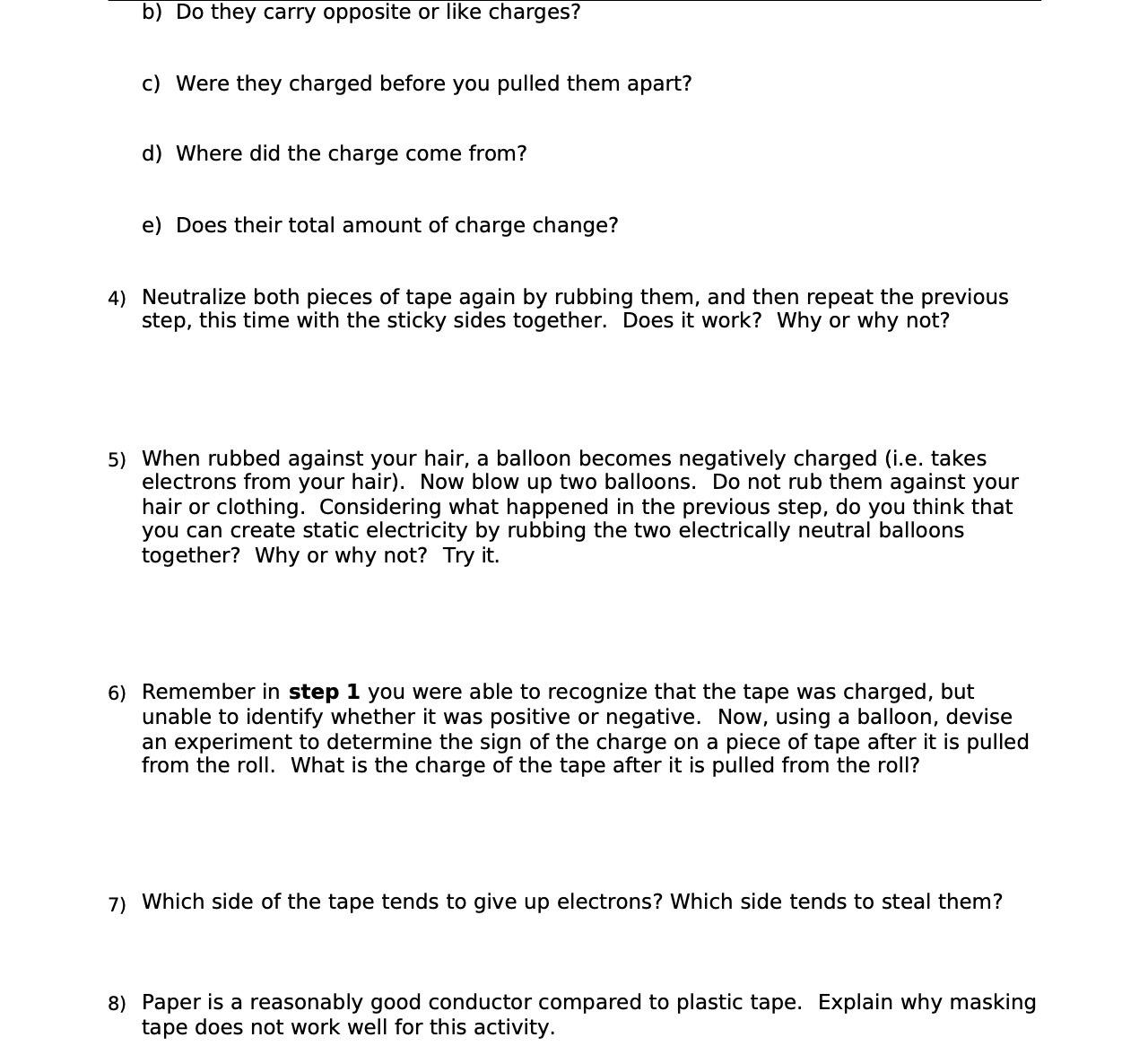
4) 5) 6) b) Do they carry opposite or like charges? c) Were they charged before you pulled them apart? d) Where did the charge come from? e) Does their total amount of charge change? Neutralize both pieces of tape again by rubbing them, and then repeat the previous step. this time with the sticky sides together. Does it work? Why or why not? When rubbed against your hair, a balloon becomes negatively charged (i.e. takes electrons from your hair). Now blow up two balloons. Do not rub them against your hair or clothing. Considering what happened in the previous step. do you think that you can create static electricity by rubbing the two electrically neutral balloons together? Why or why not? Try it. Remember in step 1 you were able to recognize that the tape was charged. but unable to identify whether it was positive or negative. Now. using a balloon. devise an experiment to determine the sign of the charge on a piece of tape after it is pulled from the roll. What is the charge of the tape after it is pulled from the roll? 7) Which side of the tape tends to give up electrons? Which side tends to steal them? 8) Paper is a reasonably good conductor compared to plastic tape. Explain why masking tape does not work well for this activity
Step by Step Solution
There are 3 Steps involved in it

Get step-by-step solutions from verified subject matter experts