



Question: 4. A farmer grows and sells wheat, while a food manufacture purchases and uses wheat to make its products. The sale and purchase of wheat
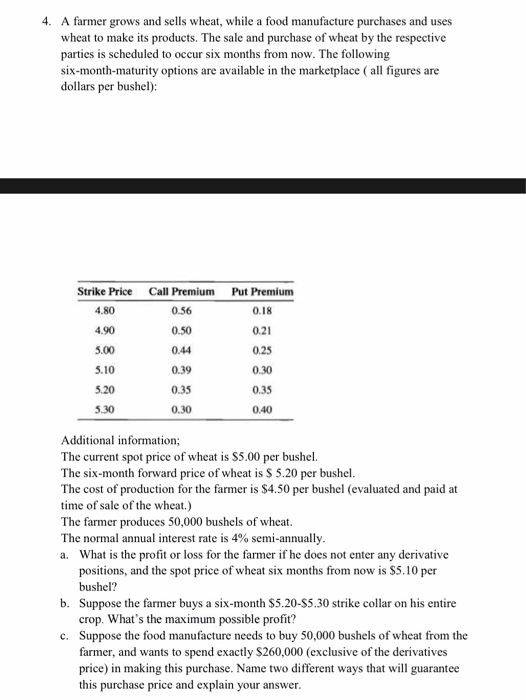
4. A farmer grows and sells wheat, while a food manufacture purchases and uses wheat to make its products. The sale and purchase of wheat by the respective parties is scheduled to occur six months from now. The following six-month-maturity options are available in the marketplace (all figures are dollars per bushel): Strike Price 4.80 4.90 5.00 5.10 5.20 5.30 Call Premium 0.56 0.50 0.44 0.39 0.35 0.30 Put Premium 0.18 0.21 0.25 0.30 0.35 0.40 Additional information; The current spot price of wheat is S5.00 per bushel. The six-month forward price of wheat is S 5.20 per bushel. The cost of production for the farmer is $4.50 per bushel (evaluated and paid at time of sale of the wheat.) The farmer produces 50,000 bushels of wheat The normal annual interest rate is 4% semi-annually a. What is the profit or loss for the farmer if he does not enter any derivative positions, and the spot price of wheat six months from now is $5.10 per bushel? Suppose the farmer buys a six-month $5.20-S5.30 strike collar on his entire crop. What's the maximum possible profit? Suppose the food manufacture needs to buy 50,000 bushels of wheat from the farmer, and wants to spend exactly $260,000 (exclusive of the derivatives price) in making this purchase. Name two different ways that will guarantee this purchase price and explain your answer b. c
Step by Step Solution
There are 3 Steps involved in it

Get step-by-step solutions from verified subject matter experts