







Question: 4. Are there any data that should or should not be included in data mining for this purpose? Why or why not? nstructions C Austin
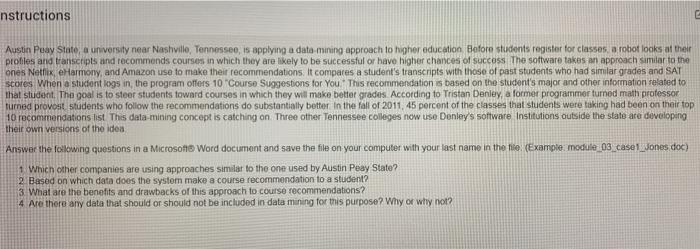
nstructions C Austin Puay State, a university near Nashville, Tennessee, is applying a data mining approach to higher education Before students register for classes, a robot looks at their probles and transcripts and recommends courses in which they are likely to be successful or have higher chances of success the software takes an approach similar to the ones Netflix eHarmony, and Amazon use to make their recommendations. It compares a student's transcripts with those of past students who had similar grades and SAT scores When a student logs in the program offers 10 Course Suggestions for You This recommendation is based on the student's major and other information related to that student. The goal is to steer students toward courses in which they will make better grades. According to Tristan Denley, a former programmer turned math professor turned provost students who follow the recommendations do substantially better in the fall of 2011, 45 percent of the classes that students were taking had been on their top 10 recommendations list This data mining concept is catching on Three other Tennessee colleges now use Denley's software Institutions outside the state are developing their own versions of the idea Answer the following questions in a Microsoft Word document and save the file on your computer with your last name in the file (Example module_03_case_Mones doc) 1 Which other companies are using approaches similar to the one used by Austin Peay Stato? 2. Based on which data does the system make a course recommendation to a student? 3. What are the benefits and drawbacks of this approach to course recommendations? 4 Are there any data that should or should not be included in data mining for this purpose? Why or why not
Step by Step Solution
There are 3 Steps involved in it

Get step-by-step solutions from verified subject matter experts
 Study Help