







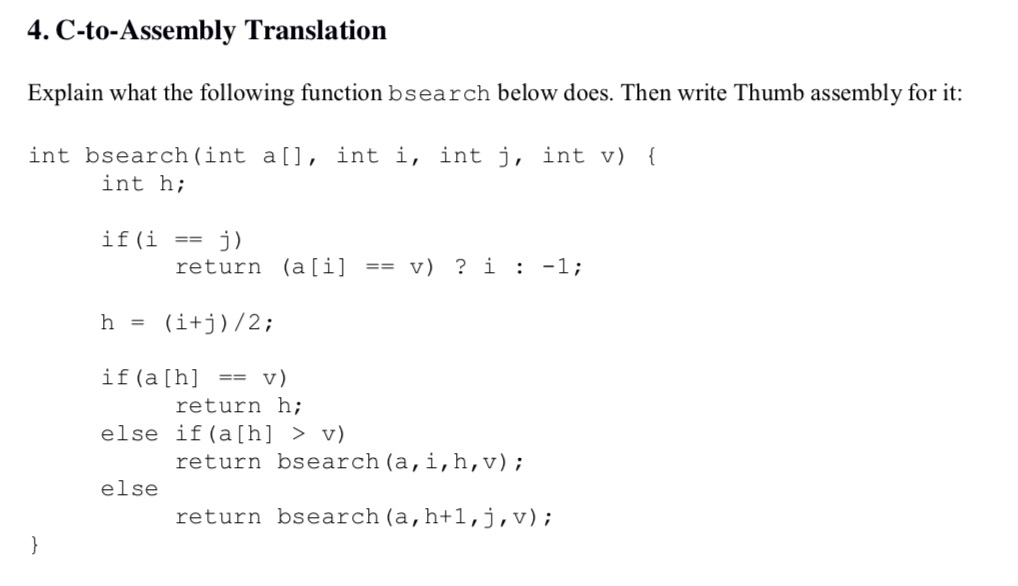
Question: 4. C-to-Assembly Translation Explain what the following function bsearch below does. Then write Thumb assembly for it: int bsearch(int a[], int i, int j, int
![Then write Thumb assembly for it: int bsearch(int a[], int i, int](https://dsd5zvtm8ll6.cloudfront.net/si.experts.images/questions/2024/09/66f0be5a616e5_40266f0be5a03f72.jpg)
4. C-to-Assembly Translation Explain what the following function bsearch below does. Then write Thumb assembly for it: int bsearch(int a[], int i, int j, int v) { int h; if(i == j) return (a[i] == v) ? i : -1; h = (i+j)/2; if(a[h] == v) return h; else if (a[h] > v) return bsearch (a,i,h, v); else return bsearch (a,h+1, j,v); 4. C-to-Assembly Translation Explain what the following function bsearch below does. Then write Thumb assembly for it: int bsearch (int a [], int i, int j, int v) { int h; if(i == j) return (a[i] == v) ? i : -1; h = (i+j)/2; if (a [h] == v) return h; else if (a[h] > v) return bsearch (a,i,h, v); else return bsearch (a,h+1, j, v); 4. C-to-Assembly Translation Explain what the following function bsearch below does. Then write Thumb assembly for it: int bsearch(int a[], int i, int j, int v) { int h; if(i == j) return (a[i] == v) ? i : -1; h = (i+j)/2; if(a[h] == v) return h; else if (a[h] > v) return bsearch (a,i,h, v); else return bsearch (a,h+1, j,v); 4. C-to-Assembly Translation Explain what the following function bsearch below does. Then write Thumb assembly for it: int bsearch (int a [], int i, int j, int v) { int h; if(i == j) return (a[i] == v) ? i : -1; h = (i+j)/2; if (a [h] == v) return h; else if (a[h] > v) return bsearch (a,i,h, v); else return bsearch (a,h+1, j, v)
Step by Step Solution
There are 3 Steps involved in it

Get step-by-step solutions from verified subject matter experts
 Study Help