







Question: 4. Does the problem behavior occur when it appears that he/she won't get his/her way? If so, describe the Yes, when denied Preferred or
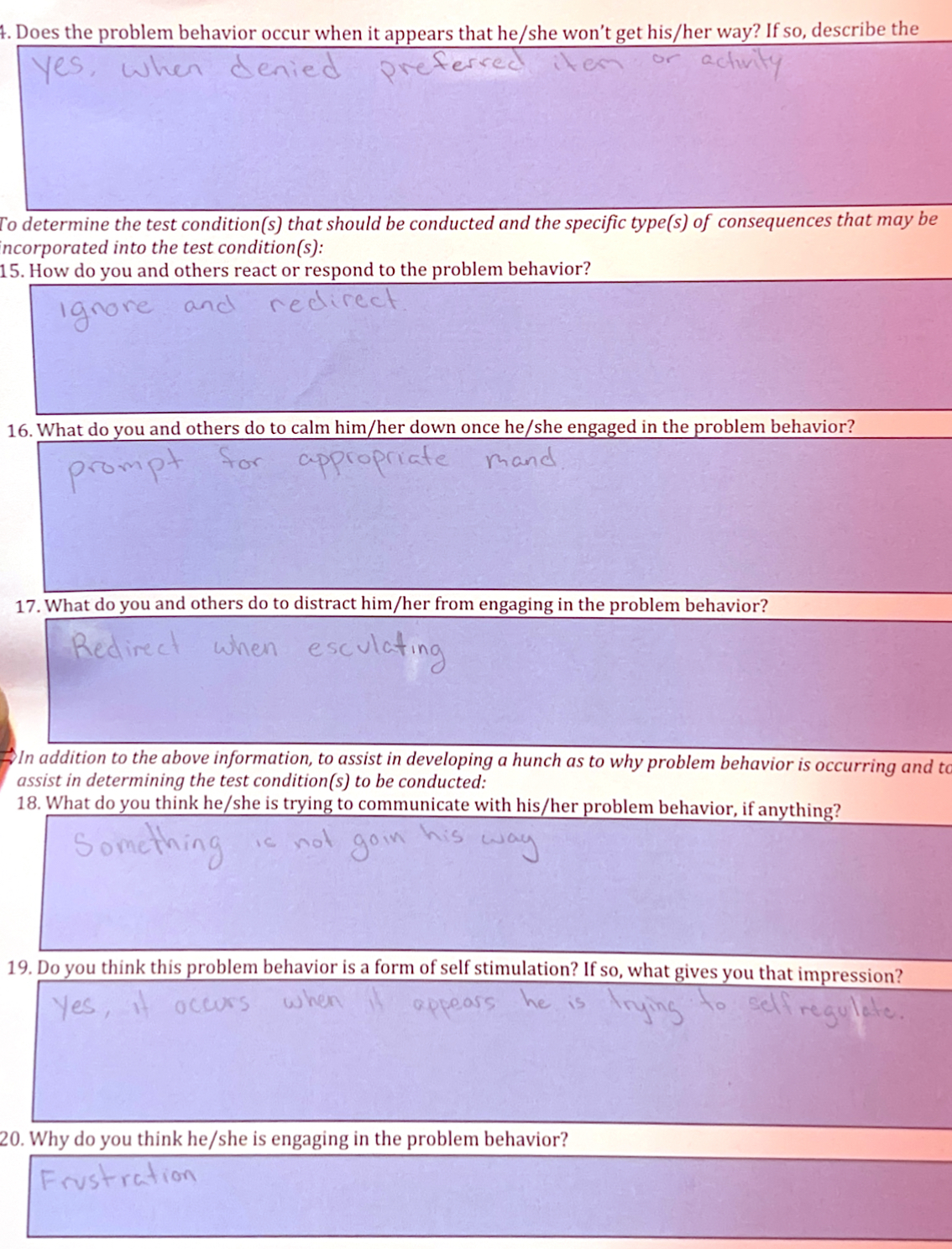
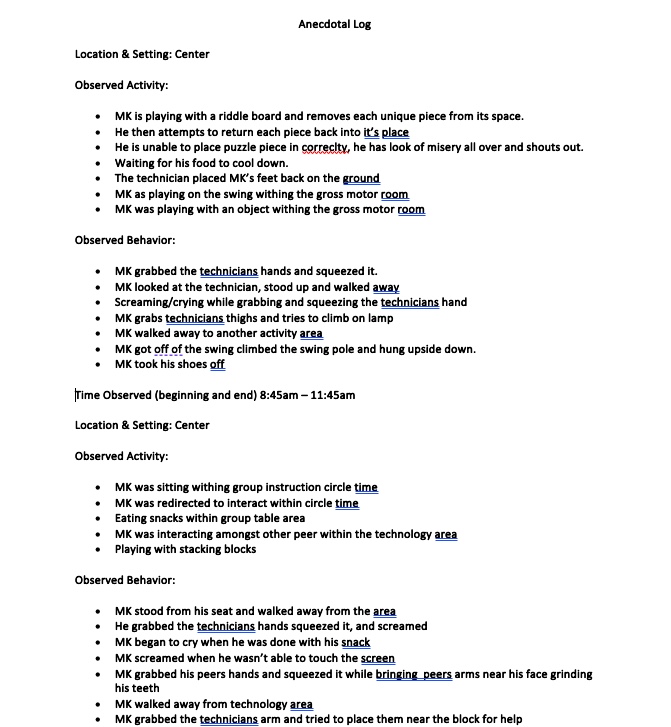
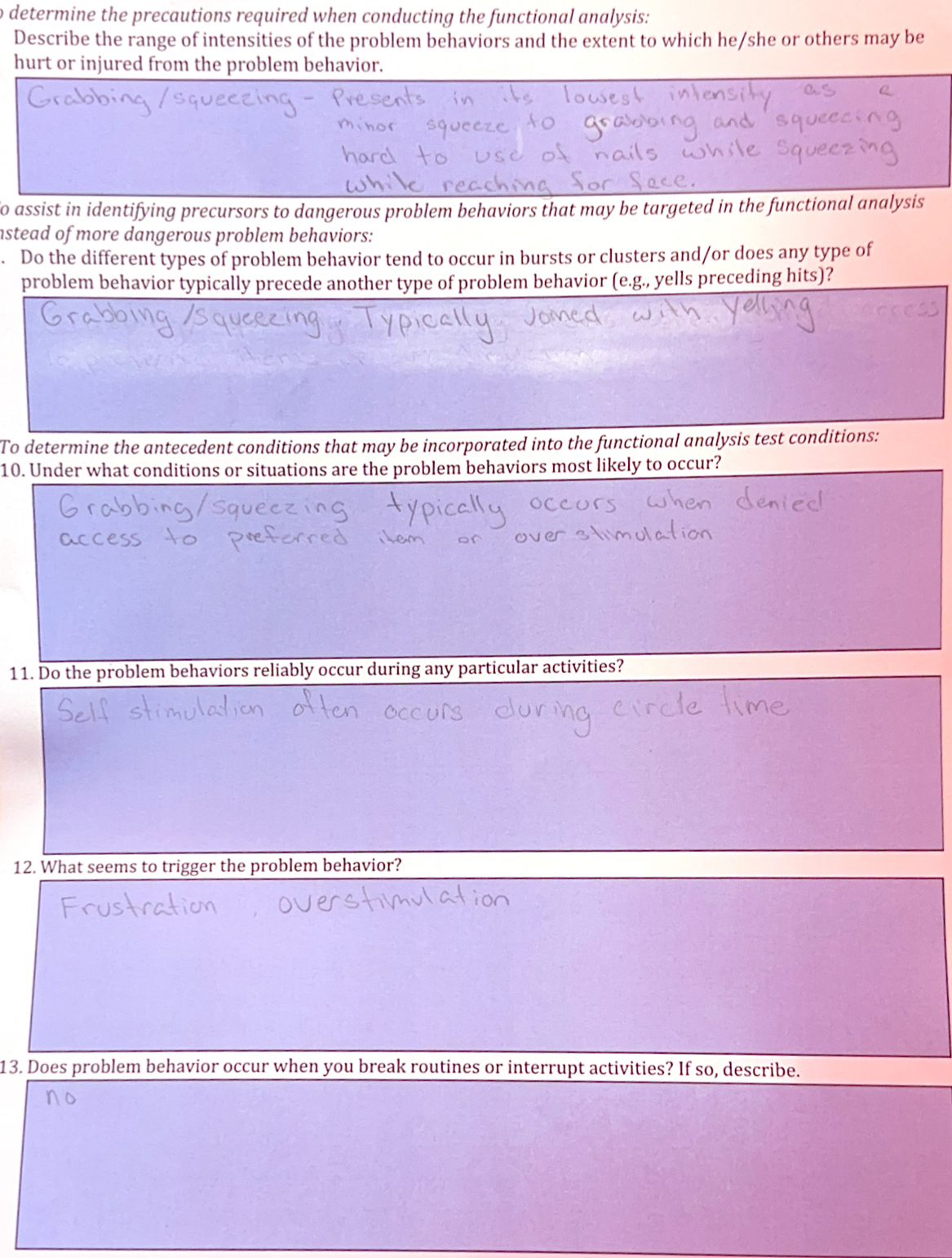
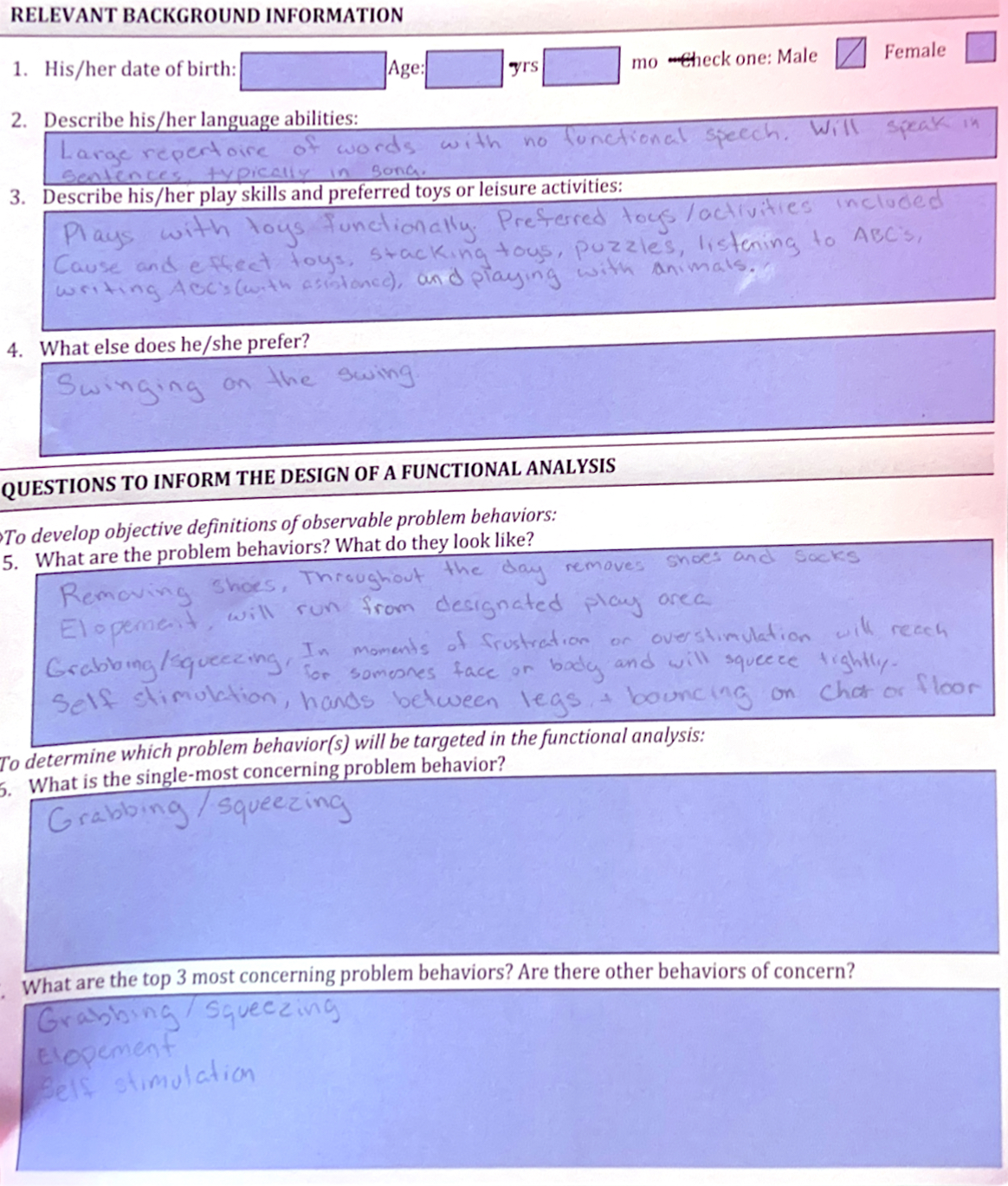
4. Does the problem behavior occur when it appears that he/she won't get his/her way? If so, describe the Yes, when denied Preferred or activity To determine the test condition(s) that should be conducted and the specific type(s) of consequences that may be incorporated into the test condition(s): 15. How do you and others react or respond to the problem behavior? Ignore and redirect 16. What do you and others do to calm him/her down once he/she engaged in the problem behavior? for appropriate mand. prompt 17. What do you and others do to distract him/her from engaging in the problem behavior? Redirect when esculating In addition to the above information, to assist in developing a hunch as to why problem behavior is occurring and to assist in determining the test condition(s) to be conducted: 18. What do you think he/she is trying to communicate with his/her problem behavior, if anything? Something is not goin his way 19. Do you think this problem behavior is a form of self stimulation? If so, what gives you that impression? Yes, it occurs when appears 20. Why do you think he/she is engaging in the problem behavior? Frustration Trying self regulate. Anecdotal Log Location & Setting: Center Observed Activity: MK is playing with a riddle board and removes each unique piece from its space. He then attempts to return each piece back into it's place He is unable to place puzzle piece in correcity, he has look of misery all over and shouts out. Waiting for his food to cool down. The technician placed MK's feet back on the ground MK as playing on the swing withing the gross motor room MK was playing with an object withing the gross motor room Observed Behavior: MK grabbed the technicians hands and squeezed it. MK looked at the technician, stood up and walked away Screaming/crying while grabbing and squeezing the technicians hand MK grabs technicians thighs and tries to climb on lamp MK walked away to another activity area MK got off of the swing climbed the swing pole and hung upside down. MK took his shoes off Time Observed (beginning and end) 8:45am - 11:45am Location & Setting: Center Observed Activity: MK was sitting withing group instruction circle time MK was redirected to interact within circle time Eating snacks within group table area MK was interacting amongst other peer within the technology area Playing with stacking blocks Observed Behavior: MK stood from his seat and walked away from the area He grabbed the technicians hands squeezed it, and screamed . MK began to cry when he was done with his snack MK screamed when he wasn't able to touch the screen MK grabbed his peers hands and squeezed it while bringing peers arms near his face grinding his teeth MK walked away from technology area MK grabbed the technicians arm and tried to place them near the block for help determine the precautions required when conducting the functional analysis: Describe the range of intensities of the problem behaviors and the extent to which he/she or others may be hurt or injured from the problem behavior. Grabbing/squeezing - Presents minor in its lowest intensity as squeeze P grabbing and squeecing hard to use of nails while Squeezing while reaching for face. o assist in identifying precursors to dangerous problem behaviors that may be targeted in the functional analysis stead of more dangerous problem behaviors: . Do the different types of problem behavior tend to occur in bursts or clusters and/or does any type of problem behavior typically precede another type of problem behavior (e.g., yells preceding hits)? Grabbing squeezing Typically Joined with yelling access To determine the antecedent conditions that may be incorporated into the functional analysis test conditions: 10. Under what conditions or situations are the problem behaviors most likely to occur? Grabbing/squeezing typically occurs when denied access to preferred item 12 over stimulation 11. Do the problem behaviors reliably occur during any particular activities? Self stimulation often occurs during 12. What seems to trigger the problem behavior? Frustration Overstimulation circle time 13. Does problem behavior occur when you break routines or interrupt activities? If so, describe. no . RELEVANT BACKGROUND INFORMATION 1. His/her date of birth: Age: yrs mo Check one: Male Female 2. Describe his/her language abilities: Large repertoire of words with Sentences typically in Song. no functional speech. Will speak in 3. Describe his/her play skills and preferred toys or leisure activities: Plays with toys functionally. Preferred toys /activities included Cause and effect toys, stacking toys, puzzles, listening to ABC's, writing Acc's (with asistance), and playing with animals. 4. What else does he/she prefer? Swinging on the swing. QUESTIONS TO INFORM THE DESIGN OF A FUNCTIONAL ANALYSIS To develop objective definitions of observable problem behaviors: 5. What are the problem behaviors? What do they look like? Removing Elopement the day removes shoes and Socks Shoes, Throughout will run from designated play area In moments of frustration or overstimulation will reach Grabbing/squeezing, for someones face or body and will squeece tightly- Self stimulation, hands between legs, bouncing on chat or floor To determine which problem behavior(s) will be targeted in the functional analysis: 5. What is the single-most concerning problem behavior? Grabbing/squeezing What are the top 3 most concerning problem behaviors? Are there other behaviors of concern? Grabbing/Squeezing Elopement Self stimulation
Step by Step Solution
There are 3 Steps involved in it

Get step-by-step solutions from verified subject matter experts
 Study Help