







Question: 4. Let A = [a], 22, ..., an be an array of numbers. Let's define a 'reverse' as a pair of distinct indices i, j
![4. Let A = [a], 22, ..., an be an array](https://dsd5zvtm8ll6.cloudfront.net/si.experts.images/questions/2024/09/66f2e66c6847a_73166f2e66be6ebb.jpg)
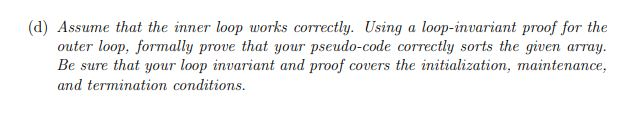
4. Let A = [a], 22, ..., an be an array of numbers. Let's define a 'reverse' as a pair of distinct indices i, j {1,2,...,n} such that i
Step by Step Solution
There are 3 Steps involved in it
1 Expert Approved Answer
Step: 1 Unlock

Question Has Been Solved by an Expert!
Get step-by-step solutions from verified subject matter experts
Step: 2 Unlock
Step: 3 Unlock
 Study Help