







Question: 4. Set-up: Consider the graph Q3; we encode the vertices using binary triples of indices: V = {000,001,010,011,100,101,110,111}. We can then encode each edge
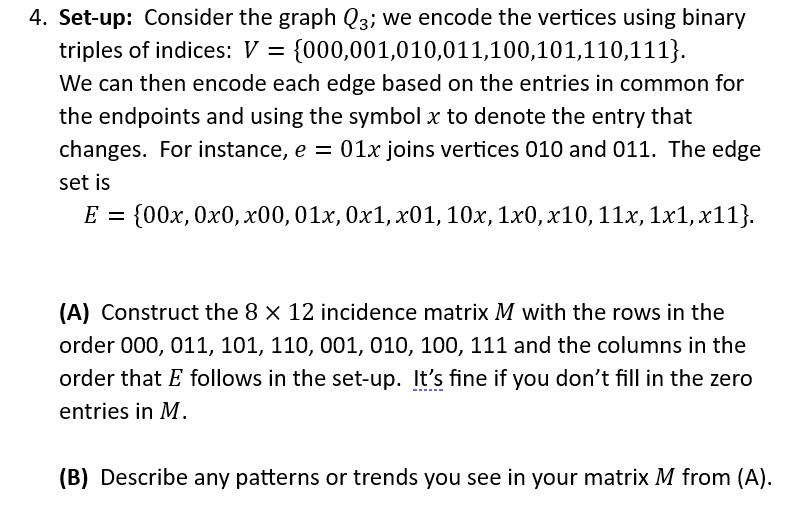
4. Set-up: Consider the graph Q3; we encode the vertices using binary triples of indices: V = {000,001,010,011,100,101,110,111}. We can then encode each edge based on the entries in common for the endpoints and using the symbol x to denote the entry that changes. For instance, e = 01x joins vertices 010 and 011. The edge set is E = {00x, 0x0, x00, 01x, 0x1, x01, 10x, 1x0,x10, 11x, 1x1, x11}. (A) Construct the 8 12 incidence matrix M with the rows in the order 000, 011, 101, 110, 001, 010, 100, 111 and the columns in the order that E follows in the set-up. It's fine if you don't fill in the zero entries in M. (B) Describe any patterns or trends you see in your matrix M from (A).
Step by Step Solution
3.37 Rating (147 Votes )
There are 3 Steps involved in it
A The incidence matrix M with the rows in the specified order and columns following the setup is as ... View full answer

Get step-by-step solutions from verified subject matter experts
 Study Help