



Question: The following graph shows the market for loanable funds in a dosed economy. The upward-sloping orange line represents the supply of loanable funds, and
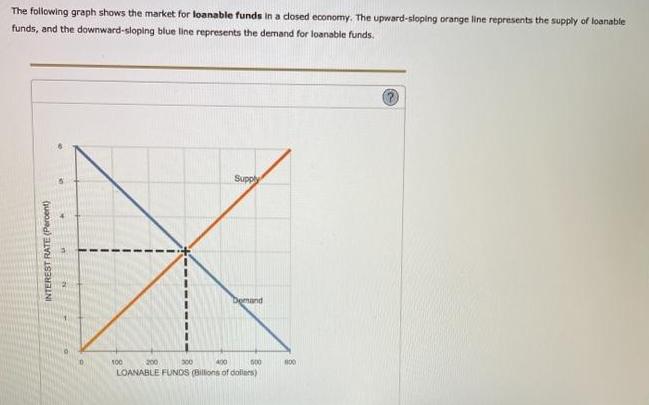
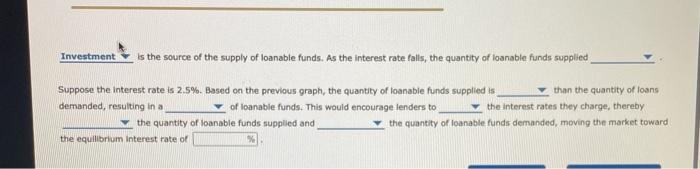
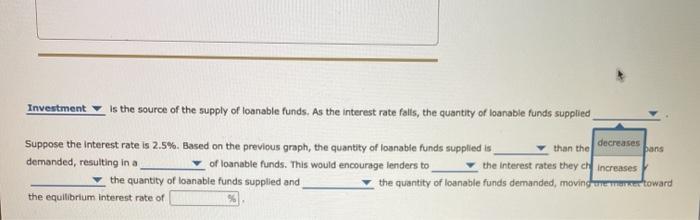
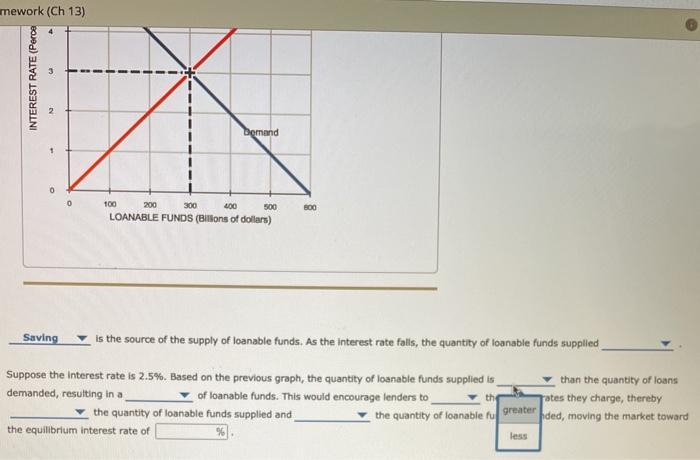
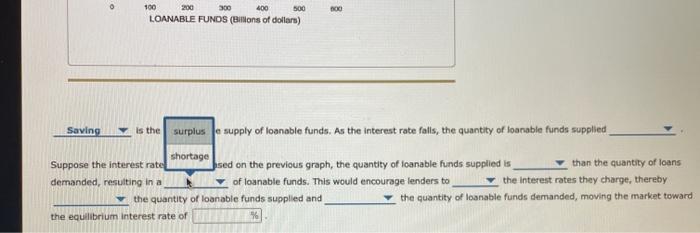
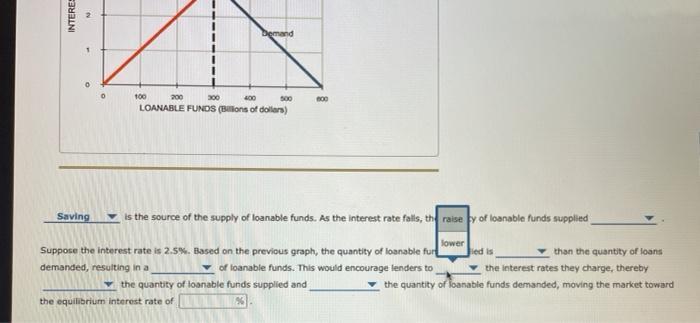
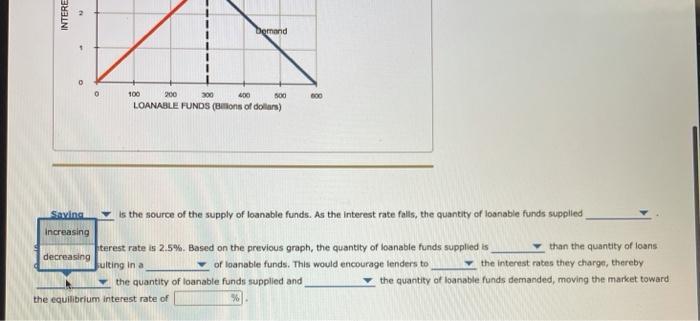
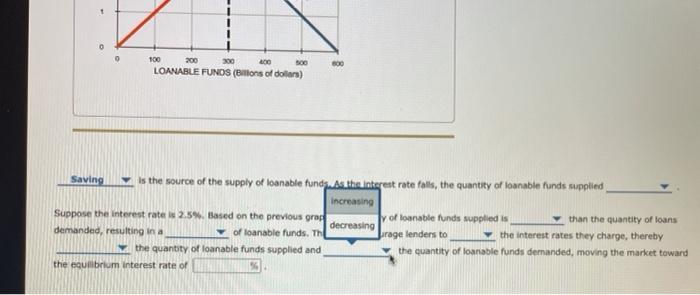
The following graph shows the market for loanable funds in a dosed economy. The upward-sloping orange line represents the supply of loanable funds, and the downward-sloping blue line represents the demand for loanable funds. Supply Demand 100 200 300 400 s00 LOANABLE FUNDS (BIllons of dollars) INTEREST RATE (Percent) Investment is the source of the supply of loanable funds. As the interest rate falls, the quantity of loanable funds supplied Suppose the interest rate is 2.5%. Based on the previous graph, the quantity of loanable funds supplied is demanded, resulting in a than the quantity of loans v of loanable funds. This would encourage lenders to v the interest rates they charge, thereby V the quantity of loanable funds supplied and the quantity of loanable funds demanded, moving the market toward the equilibrium interest rate of Investment Is the source of the supply of loanable funds. As the interest rate falls, the quantity of loanable funds supplied Suppose the Interest rate is 2.5%. Based on the previous graph, the quantity of loanable funds supplied is than the decreases pans demanded, resulting in a of loanable funds. This would encourage lenders to the interest rates they ch increases the quantity of loanable funds supplied and the quantity of loanable funds demanded, moving emanertoward the equilibrium Interest rate of mework (Ch 13) bemand 100 200 300 400 500 600 LOANABLE FUNDS (BIllons of dollars) Saving is the source of the supply of loanable funds. As the interest rate falls, the quantity of loanable funds supplied Suppose the interest rate is 2.5%. Based on the previous graph, the quantity of loanable funds supplied is than the quantity of loans demanded, resulting in a of loanable funds. This would encourage lenders to the greater rates they charge, thereby the quantity of loanable funds supplied and the quantity of loanable fu ded, moving the market toward the equilibrlum interest rate of less INTEREST RATE (Perce 100 200 300 400 500 LOANABLE FUNDS (BIlons of dollars) Saving is the surplus e supply of loanable funds. As the interest rate falls, the quantity of loanable funds supplied shortage Suppose the interest rate sed on the previous graph, the quantity of loanable funds supplied is than the quantity of loans demanded, resulting in a v of loanable funds. This would encourage lenders to the interest rates they charge, thereby v the quantity of loanable funds supplied and the quantity of loanable funds demanded, moving the market toward the equilibrium interest rate of Demand 100 200 300 400 500 LOANABLE FUNDS (Blons of dollars) Saving is the source of the supply of loanable funds. As the interest rate falls, the raise y of loanable funds supplied lower Suppose the interest rate is 2.5%. Based on the previous graph, the quantity of loanable fur ied is than the quantity of loans demanded, resulting in a v of loanable funds. This would encourage lenders to v the interest rates they charge, thereby - the quantity of loanable funds demanded, moving the market toward Y the quantity of loanable funds supplied and the equilibrium interest rate of INTERE Demand 100 200 300 400 500 600 LOANABLE FUNDS (Blons of dollars) Saving is the source of the supply of loanable funds. As the interest rate falls, the quantity of loanable funds supplied increasing terest rate is 2.5%. Based on the previous graph, the quantity of loanable funds supplied is v of loanable funds. This would encourage lenders to than the quantity of loans decreasing sulting in a v the interest rates they charge, thereby the quantity of loanable funds supplied and the quantity of loanable funds demanded, moving the market toward the equilibrium interest rate of INTERE 100 200 300 400 s00 600 LOANABLE FUNDS (BIllons of dollars) Saving is the source of the supply of loanable funds. As the interest rate falls, the quantity of loanable funds supplied increasing Suppose the interest rate is 2.5%. Based on the previous grap y of loanable funds supplied is than the quantity of loans v the interest rates they charge, thereby the quantity of loanable funds demanded, moving the market toward decreasing demanded, resulting in a v of loanable funds. Th Jarage lenders to the quantity of loanable funds supplied and the equilibrium interest rate of
Step by Step Solution
3.53 Rating (156 Votes )
There are 3 Steps involved in it
a Saving is the source of the loanable funds b As the interest rate falls the quantity ... View full answer

Get step-by-step solutions from verified subject matter experts