







Question: 4- Use the graph to determine a. the function's domain; b. the function's range; c. the x-intercepts, if any; d. the y-intercept, if there is
4-
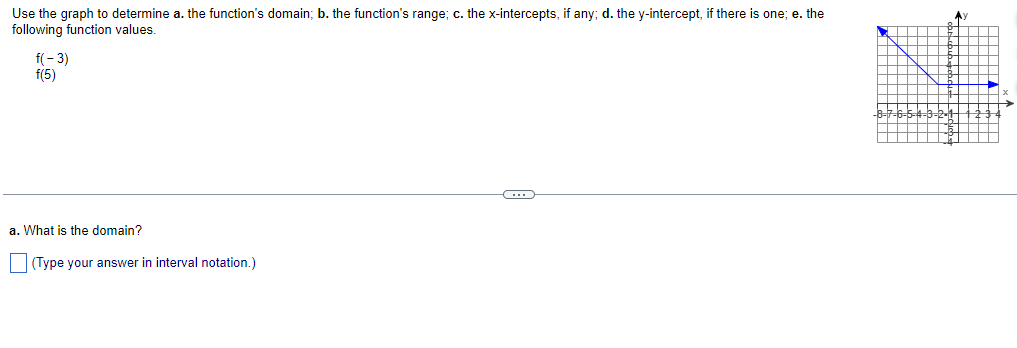
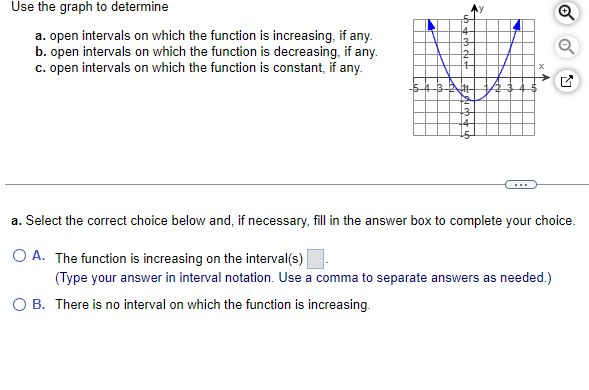
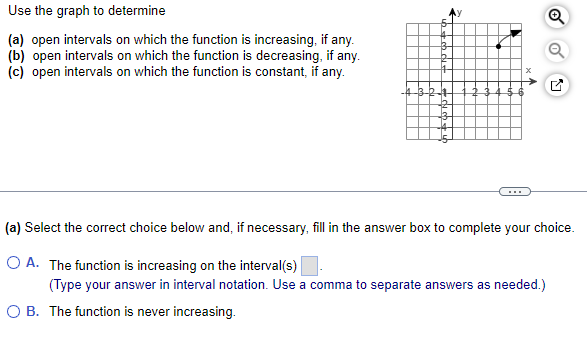
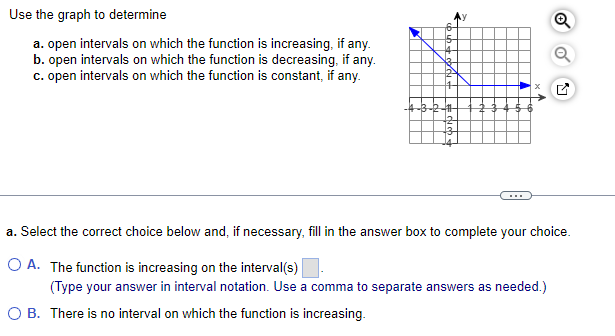
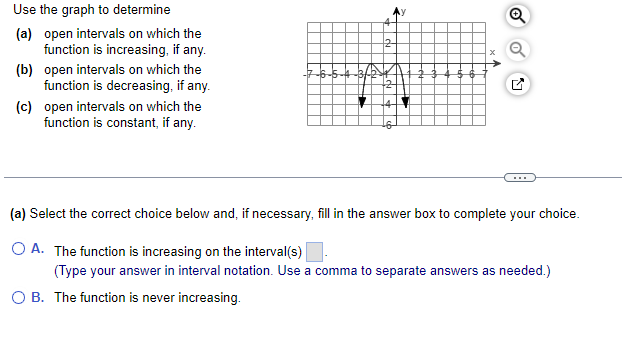
Use the graph to determine a. the function's domain; b. the function's range; c. the x-intercepts, if any; d. the y-intercept, if there is one; e. the following function values. f( - 3) f(5) 8-7-6-5-4-8 a. What is the domain? (Type your answer in interval notation.)Use the graph to determine a. open intervals on which the function is increasing, if any. b. open intervals on which the function is decreasing, if any. c. open intervals on which the function is constant, if any. da- a. Select the correct choice below and, if necessary, fill in the answer box to complete your choice. O A. The function is increasing on the interval(s) (Type your answer in interval notation. Use a comma to separate answers as needed.) O B. There is no interval on which the function is increasingUse the graph to determine (a) open intervals on which the function is increasing, if any. (b) open intervals on which the function is decreasing, if any. (c) open intervals on which the function is constant, if any. CA- (a) Select the correct choice below and, if necessary, fill in the answer box to complete your choice. O A. The function is increasing on the interval(s) (Type your answer in interval notation. Use a comma to separate answers as needed.) O B. The function is never increasing.Use the graph to determine a. open intervals on which the function is increasing, if any. b. open intarvals on which the function is decreasing, if any. c. open intervals on which the function is constant, if any. a. Select the correct choice below and, if necessary, fill in the answer box to complete your choice. O A. The function is increasing on the intarvalis) i Type your answer in interval notation. Use a comma to separate answers as neaded.) () B. There is no interval on which the function is increasing. Use the graph to determine (a) open intervals on which the function is increasing, if any. (b) open intervals on which the function is decreasing, if any. (c) open intervals on which the function is constant, if any. (a) Select the correct choice below and, if necessary, fill in the answer box to complete your choice. O A. The function is increasing on the interval(s) (Type your answer in interval notation. Use a comma to separate answers as needed.) O B. The function is never increasing
Step by Step Solution
There are 3 Steps involved in it

Get step-by-step solutions from verified subject matter experts
 Study Help