



Question: 4. You're developing a new type of biodegradable suture made of a copolymerization of poly-L-lactic acid and poly- D-lactic acid. Poly lactic acid: ha n
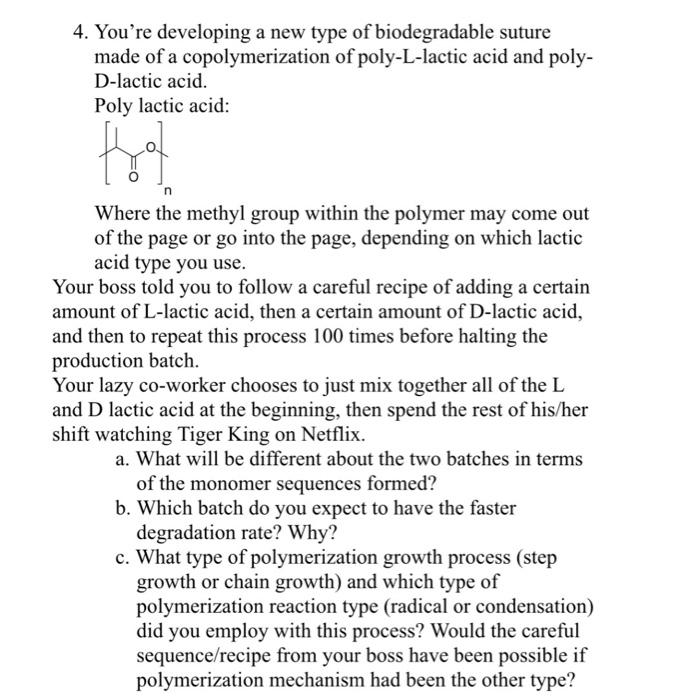
4. You're developing a new type of biodegradable suture made of a copolymerization of poly-L-lactic acid and poly- D-lactic acid. Poly lactic acid: ha n Where the methyl group within the polymer may come out of the page or go into the page, depending on which lactic acid type you use. Your boss told you to follow a careful recipe of adding a certain amount of L-lactic acid, then a certain amount of D-lactic acid, and then to repeat this process 100 times before halting the production batch. Your lazy co-worker chooses to just mix together all of the L and D lactic acid at the beginning, then spend the rest of his/her shift watching Tiger King on Netflix. a. What will be different about the two batches in terms of the monomer sequences formed? b. Which batch do you expect to have the faster degradation rate? Why? c. What type of polymerization growth process (step growth or chain growth) and which type of polymerization reaction type (radical or condensation) did you employ with this process? Would the careful sequence/recipe from your boss have been possible if polymerization mechanism had been the other type
Step by Step Solution
There are 3 Steps involved in it

Get step-by-step solutions from verified subject matter experts