







Question: 47. Differences between notes receivable and accounts receivable include: A. Notes receivable have a formal written note B. Notes receivables have explicit interest rates attached
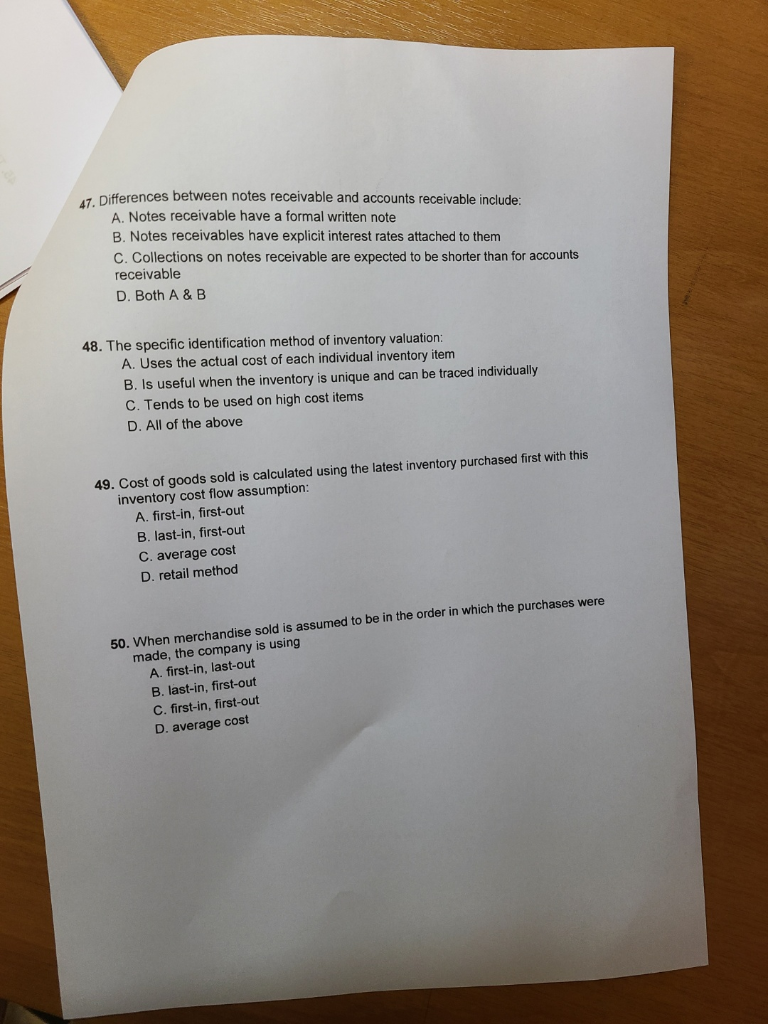
47. Differences between notes receivable and accounts receivable include: A. Notes receivable have a formal written note B. Notes receivables have explicit interest rates attached to them C. Collections on notes receivable are expected to be shorter than for accounts receivable D. Both A&B 48. The specific identification method of inventory valuation: A. Uses the actual cost of each individual inventory item B. Is useful when the inventory is unique and can be traced individually C. Tends to be used on high cost items D. All of the above 49. Cost of goods sold is calculated using the latest inventory purchased first with this inventory cost flow assumption: A. first-in, first-out B. last-in, first-out C. average cost D. retail method 50. When merchandise sold is assumed to be in the order in which the purchases were made, the company is using A. first-in, last-out B. last-in, first-out C. first-in, first-out D. average cost
Step by Step Solution
There are 3 Steps involved in it

Get step-by-step solutions from verified subject matter experts
 Study Help