Question: 5. Analyzing a binomial experiment using a tree diagram Data from the U.S. Bureau of Labor Statistics show a steady decline in the average workweek
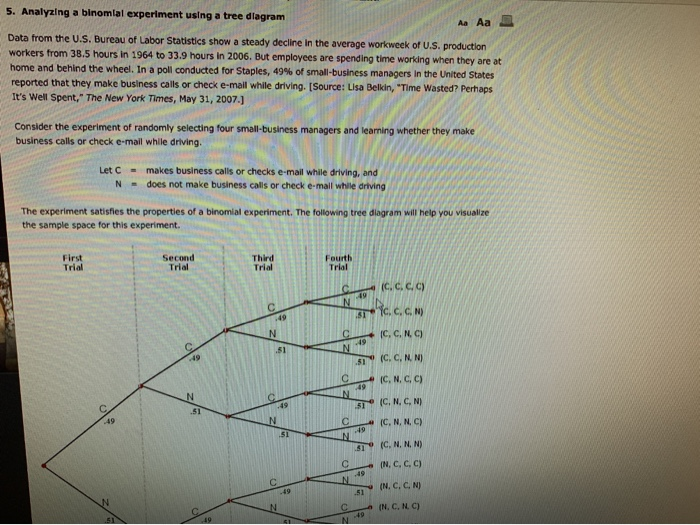
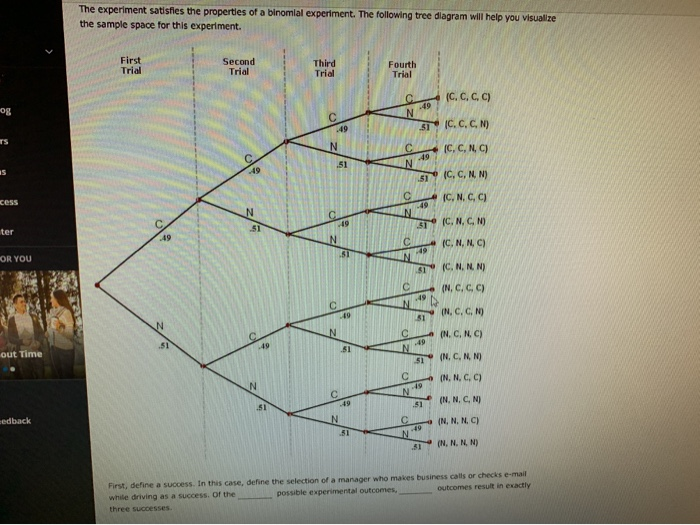
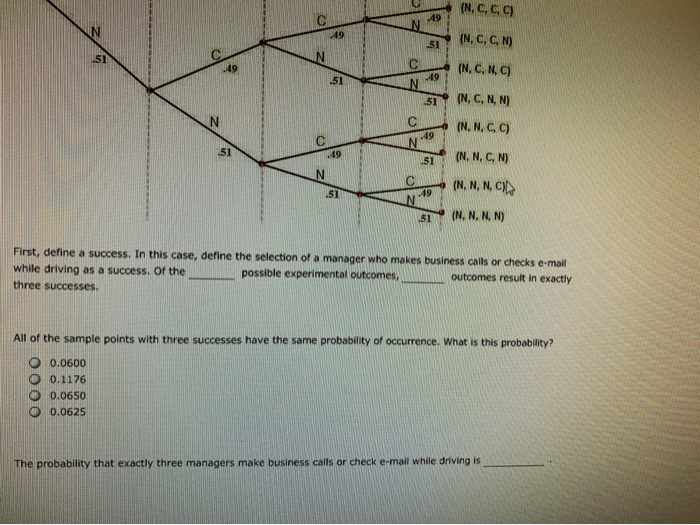
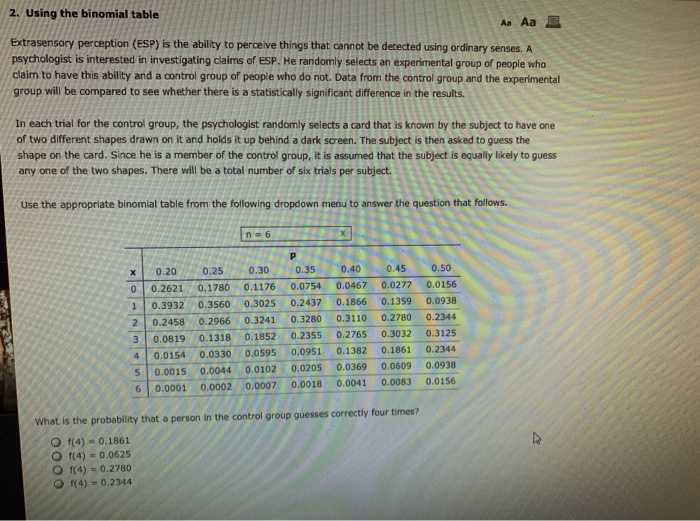
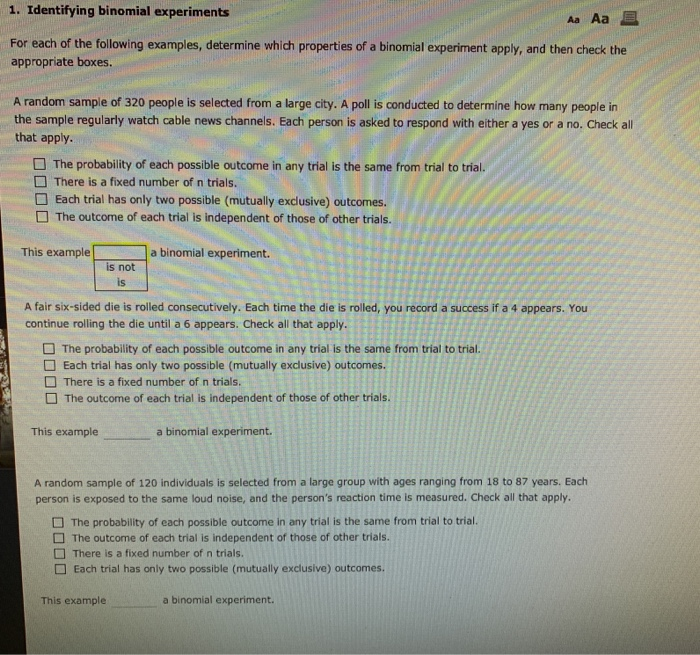
5. Analyzing a binomial experiment using a tree diagram Data from the U.S. Bureau of Labor Statistics show a steady decline in the average workweek of U.S. production workers from 38.5 hours in 1964 to 33.9 hours in 2006. But employees are spending time working when they are at home and behind the wheel. In a poll conducted for Staples, 49% of small business managers in the United States reported that they make business calls or check e-mail while driving. [Source: Lisa Belkin, "Time Wasted? Perhaps It's Well Spent." The New York Times, May 31, 2007.) Consider the experiment of randomly selecting four small-business managers and learning whether they make business calls or check e-mail while driving. Let C - makes business calls or checks e-mail while driving, and N does not make business calls or check e-mail while driving The experiment satisfies the properties of a binomial experiment. The following tree diagram will help you visualize the sample space for this experiment. Second Trial Trial C.C.C.C) C.C.CN C.C.N.C) N (N.C.C.N INC.NO Ine experiment satisfies the properties of a binomial experiment. The following tree diagram will help you visualize the sample space for this experiment. First Trial Second Trial Trial Fourth Trial C IC.CCC jole 311C.C.C.NO C (C.CNC TCCNN IC.N.CC IC.N.C.NO IC, N, NC zess ter DR YOU IC, N, NN) EO C out Time INC.CC INC.CN NCNC 51NC, N, NO - N, B, C, C) (N, N, C, ) NN, N. C) dback C 1 INN, NN First, define a success. In this case, define the selection of a manager who makes business calls or checks e-mail while driving as a success. Of the possible experimental outcomes, outcomes result in exactly three successes (N.C, CC (N.C, C, N) 51 (N.C.NC) (N, C, N, N) (N.N.CC) (N, N, C, D) (N, N, N, CIL (N,N,N,N 51 First, define a success. In this case, define the selection of a manager who makes business calls or checks e-mail while driving as a success. Of the possible experimental outcomes, outcomes result in exactly three successes. All of the sample points with three successes have the same probability of occurrence. What is this probability? O 0.0600 O 0.1176 O 0.0650 0.0625 0000 The probability that exactly three managers make business calls or check e-mail while driving is 2. Using the binomial table Aa 3 Extrasensory perception (ESP) is the ability to perceive things that cannot be detected using ordinary senses. A psychologist is interested in investigating claims of ESP. He randomly selects an experimental group of people who claim to have this ability and a control group of people who do not. Data from the control group and the experimental group will be compared to see whether there is a statistically significant difference in the results. In each trial for the control group, the psychologist randomly selects a card that is known by the subject to have one of two different shapes drawn on it and holds it up behind a dark screen. The subject is then asked to guess the shape on the card. Since he is a member of the control group, it is assumed that the subject is equally likely to guess any one of the two shapes. There will be a total number of six trials per subject. Use the appropriate binomial table from the following dropdown menu to answer the question that follows. P x 0.20 0.250 .300.350.400 .450 .50 0 0.2621 0.1780 0.1176 0.0754 0.0467 0.0277 0.0156 1 | 0.3932 0.3560 0.3025 0.2437 0.1866 0.1359 0.0938 0.2458 0.2966 0.3241 0.3280 0.3110 0.2780 0.2344 3 0.0819 0.1318 0.1852 0.2355 0.2765 0.3032 0.3125 0.0154 0.0330 0.0595 0.0951 0.1382 0.1861 0.2344 0.0015 0.0044 0.0102 0.0205 0.0369 0.06090.0938 6 0.0001 0.0002 0.0007 0.0018 0.0041 0.0083 0.0156 What is the probability that a person in the control group guesses correctly four times? f(4) - 0.1861 Of(4) = 0.0625 O f(4) = 0.2780 O f(4) = 0.2344 1. Identifying binomial experiments Aa Aa For each of the following examples, determine which properties of a binomial experiment apply, and then check the appropriate boxes. A random sample of 320 people is selected from a large city. A poll is conducted to determine how many people in the sample regularly watch cable news channels. Each person is asked to respond with either a yes or a no. Check all that apply. The probability of each possible outcome in any trial is the same from trial to trial. There is a fixed number of n trials. Each trial has only two possible (mutually exclusive) outcomes. The outcome of each trial is independent of those of other trials. This example 1 is not a binomial experiment is A fair six-sided die is rolled consecutively. Each time the die is rolled, you record a success if a 4 appears. You continue rolling the die until a 6 appears. Check all that apply. The probability of each possible outcome in any trial is the same from trial to trial. Each trial has only two possible (mutually exclusive) outcomes. There is a fixed number of n trials. The outcome of each trial is independent of those of other trials. This example a binomial experiment. A random sample of 120 individuals is selected from a large group with ages ranging from 18 to 87 years. Each person is exposed to the same loud noise, and the person's reaction time is measured. Check all that apply. The probability of each possible outcome in any trial is the same from trial to trial. The outcome of each trial is independent of those of other trials. There is a fixed number of n trials. Each trial has only two possible (mutually exclusive) outcomes. This example a binomial experiment









 Study Help