







Question: 5. Based on the book, write the code for a DFSMO function that can iterates through a state transition table[1..nstates, 1...Inputs) and determine if an
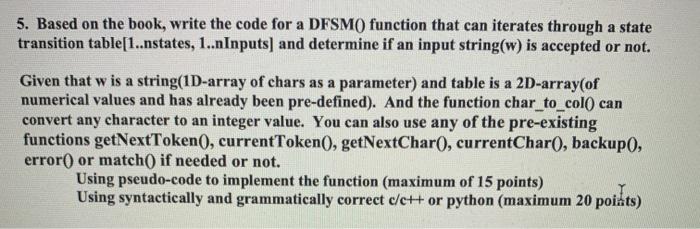
5. Based on the book, write the code for a DFSMO function that can iterates through a state transition table[1..nstates, 1...Inputs) and determine if an input string(w) is accepted or not. Given that w is a string(1D-array of chars as a parameter) and table is a 2D-array(of numerical values and has already been pre-defined). And the function char_to_col( can convert any character to an integer value. You can also use any of the pre-existing functions getNextToken(), currentToken(), getNextChar(), currentChar(), backupo, error() or match() if needed or not. Using pseudo-code to implement the function (maximum of 15 points) Using syntactically and grammatically correct c/c++ or python (maximum 20 points) poits) 5. Based on the book, write the code for a DFSMO function that can iterates through a state transition table[1..nstates, 1...Inputs) and determine if an input string(w) is accepted or not. Given that w is a string(1D-array of chars as a parameter) and table is a 2D-array(of numerical values and has already been pre-defined). And the function char_to_col( can convert any character to an integer value. You can also use any of the pre-existing functions getNextToken(), currentToken(), getNextChar(), currentChar(), backupo, error() or match() if needed or not. Using pseudo-code to implement the function (maximum of 15 points) Using syntactically and grammatically correct c/c++ or python (maximum 20 points) poits)
Step by Step Solution
There are 3 Steps involved in it

Get step-by-step solutions from verified subject matter experts
 Study Help