



Question: 5. For the graph below, find the following: a. (1 point) lim f (x) = b. (1 point) lim f(x) x - -1 3 c.
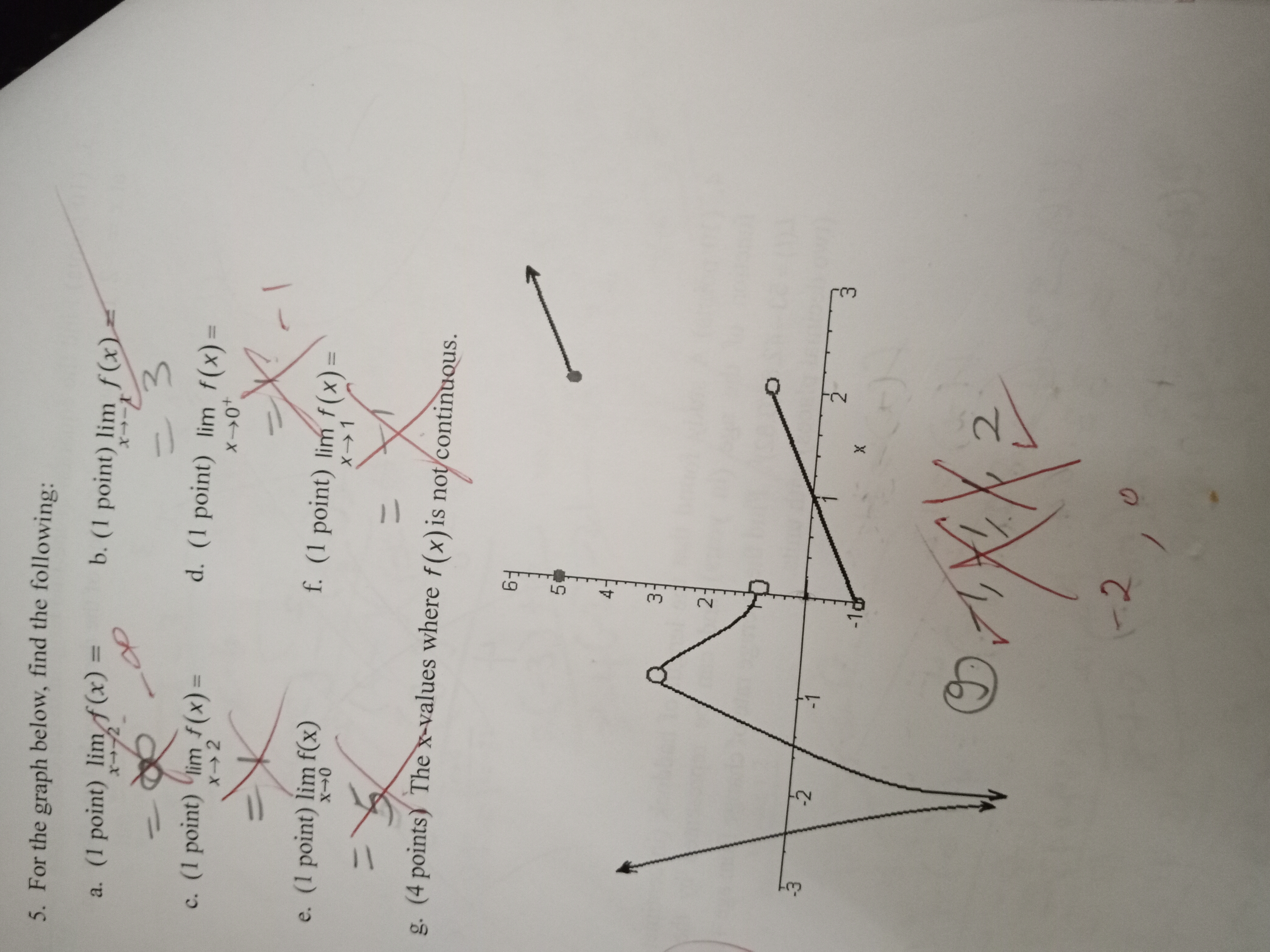
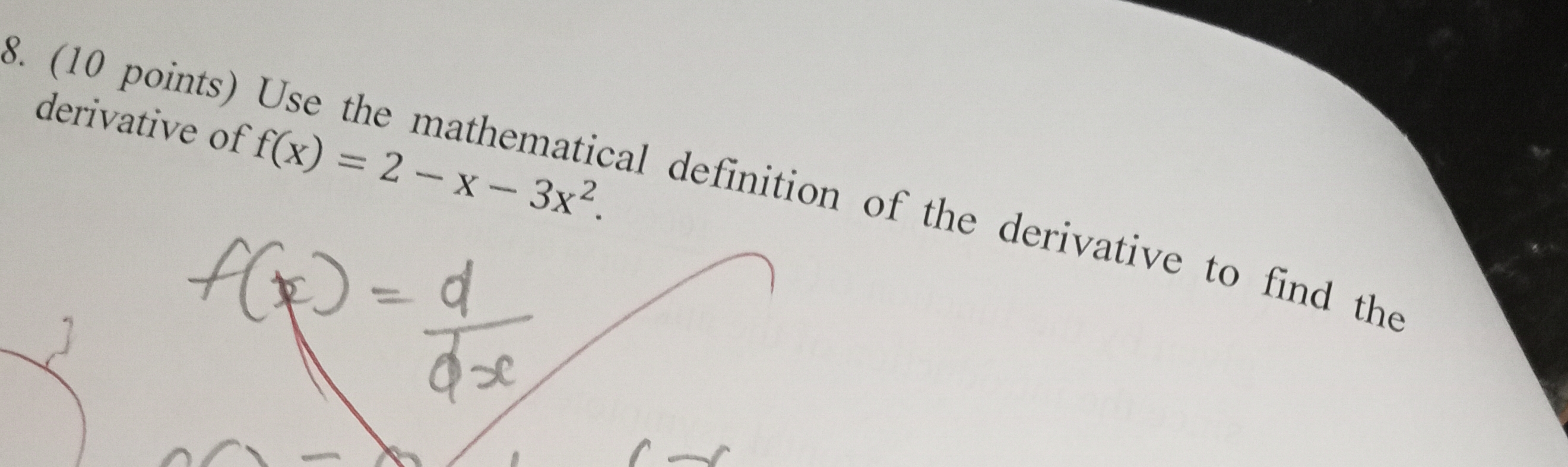
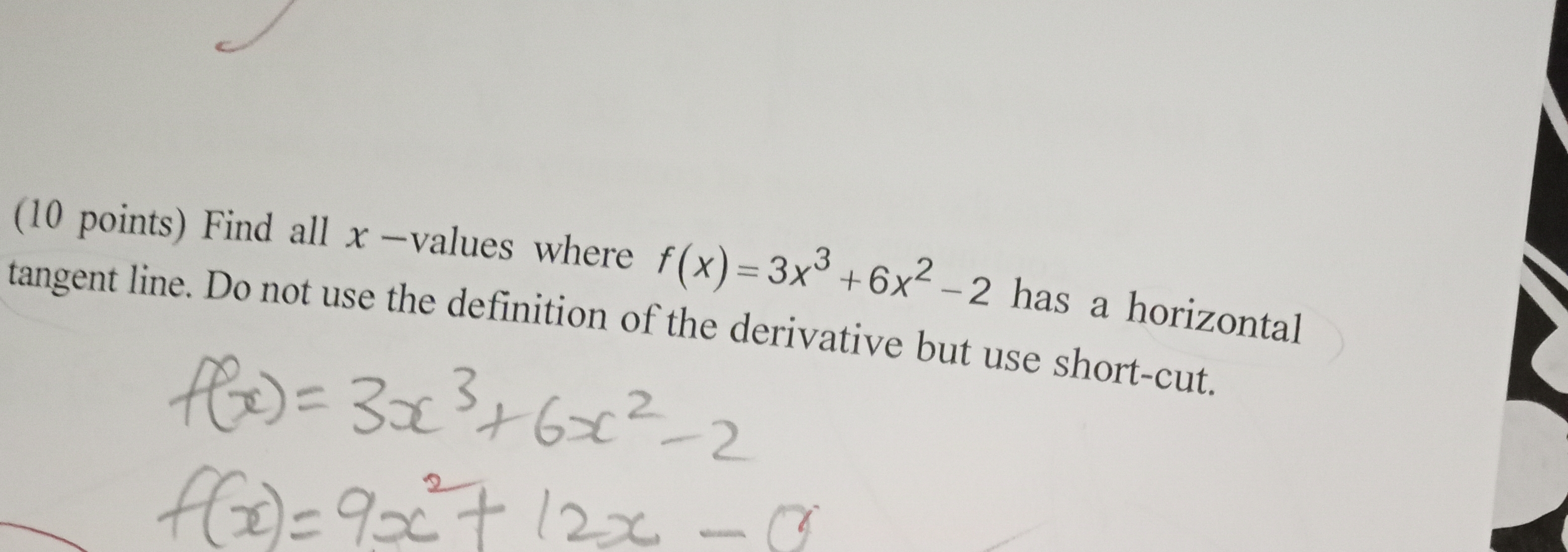
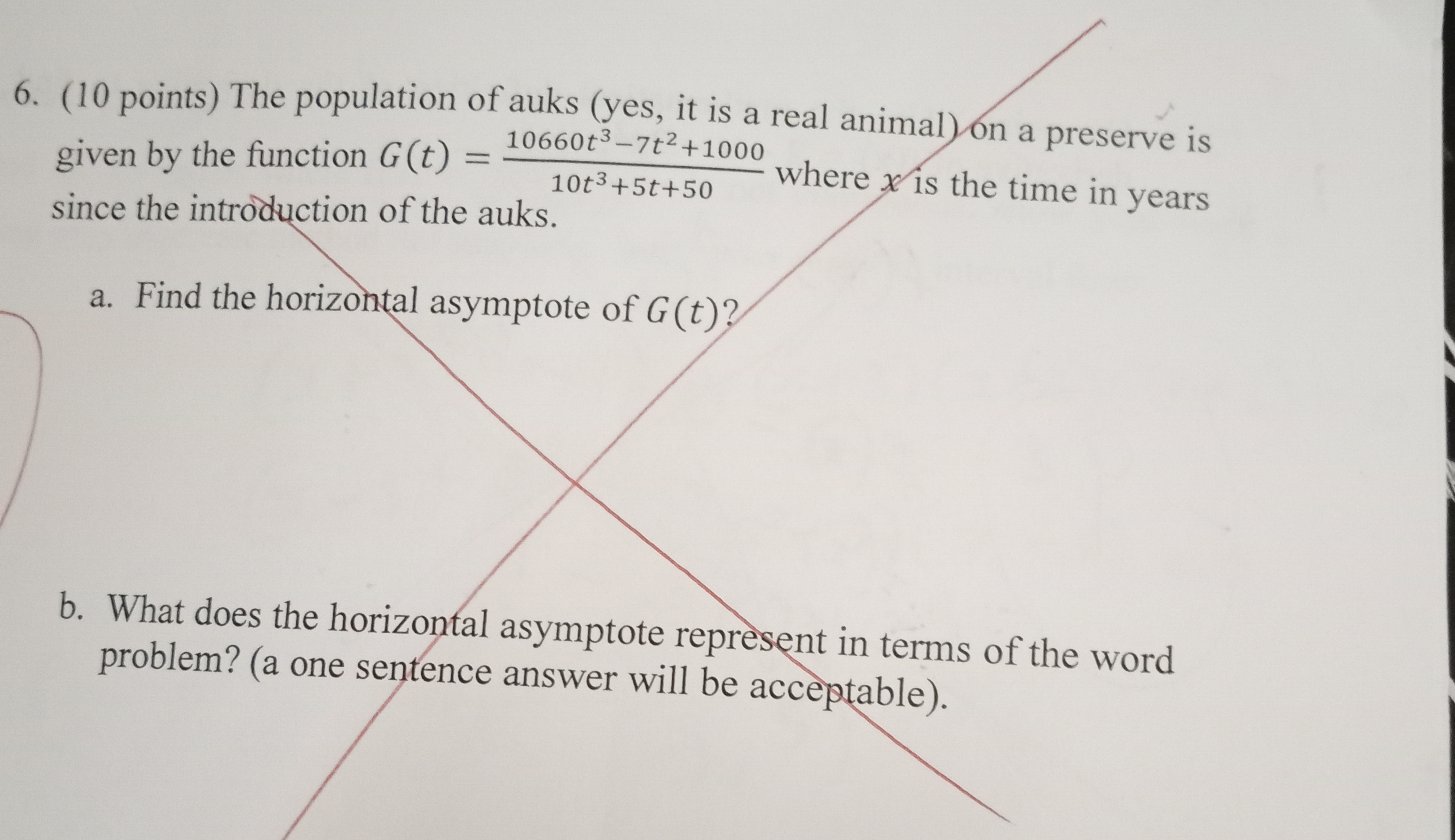
5. For the graph below, find the following: a. (1 point) lim f (x) = b. (1 point) lim f(x) x - -1 3 c. (1 point) lim f (x) = d. (1 point) lim f (x) = x - 2 x -> 0+ X - 1 e. (1 point) lim f(x) f. (1 point) lim f ( x ) = X-0 x - 1 g. (4 points) The x-values where f (x) is not continuous. 6- 5 4- N - 3 - 2 - 1 WJ -10 X -28. (10 points) Use the mathematical definition of the derivative to find the derivative of f(x) = 2 - x - 3x2. f(*) = d(10 points) Find all x -values where f(x) =3x3 +6x2-2 has a horizontal tangent line. Do not use the definition of the derivative but use short-cut. P(x ) = 30 0 3 + 620 2 - 2 f( ) = 920 7 12x6. (10 points) The population of auks (yes, it is a real animal) on a preserve is given by the function G(t) = 10660t3-7t2 +1000 10t3 +5t+50 where x is the time in years since the introduction of the auks. a. Find the horizontal asymptote of G (t)? b. What does the horizontal asymptote represent in terms of the word problem? (a one sentence answer will be acceptable)
Step by Step Solution
There are 3 Steps involved in it

Get step-by-step solutions from verified subject matter experts