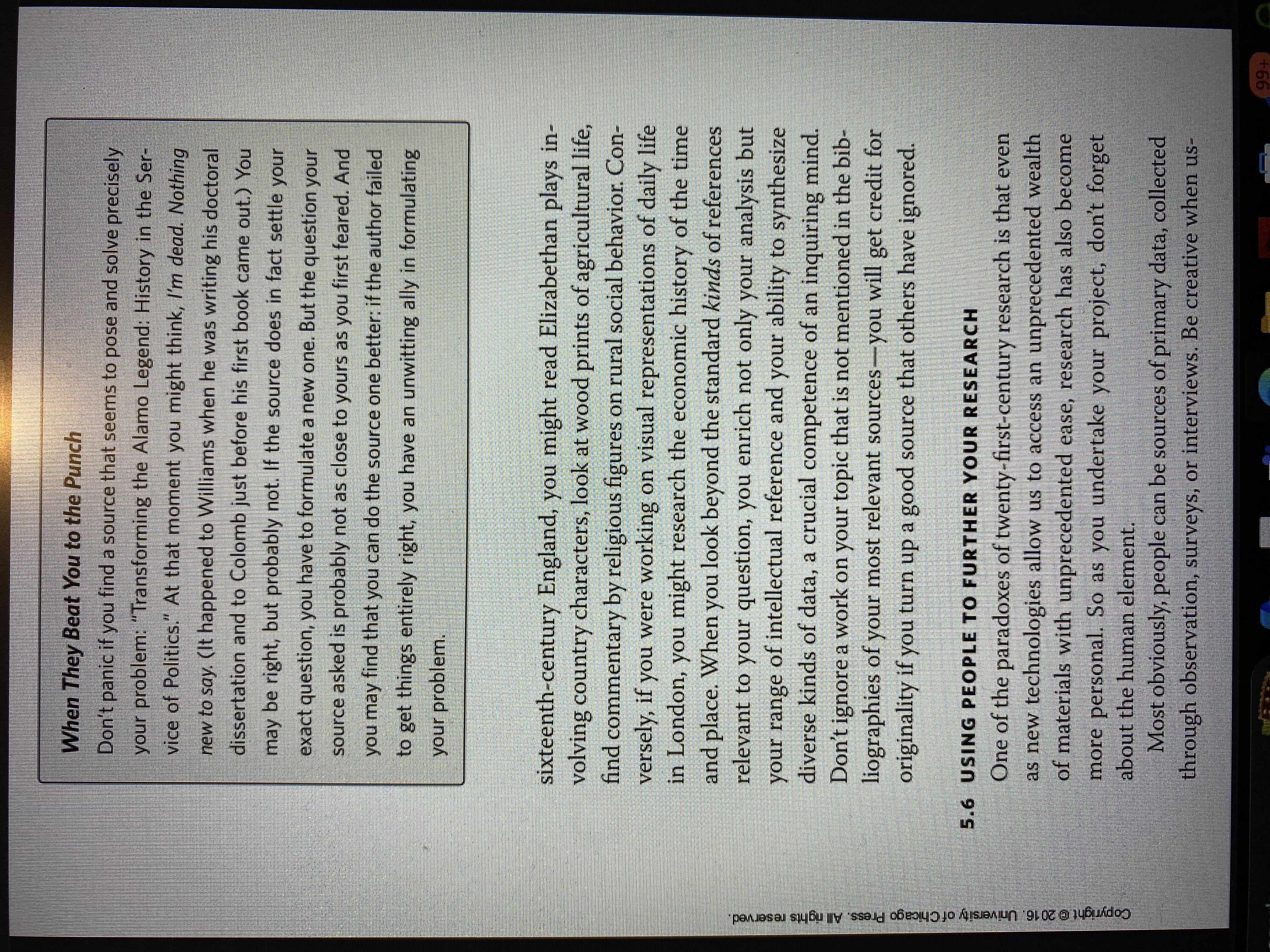
Question: 5 From Problems to Sources If you are a new researcher and expect to find most of your sources in your library or on the
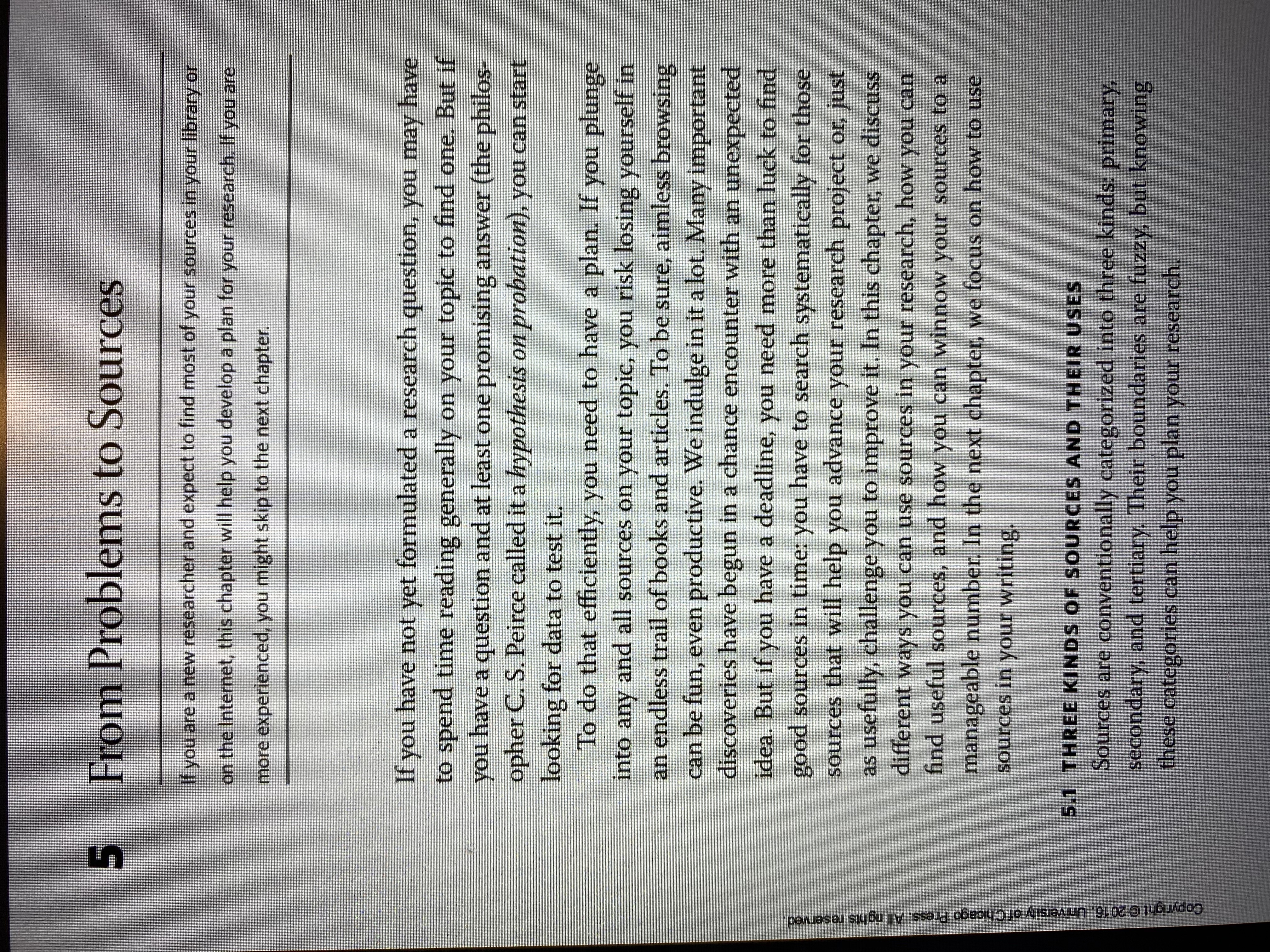
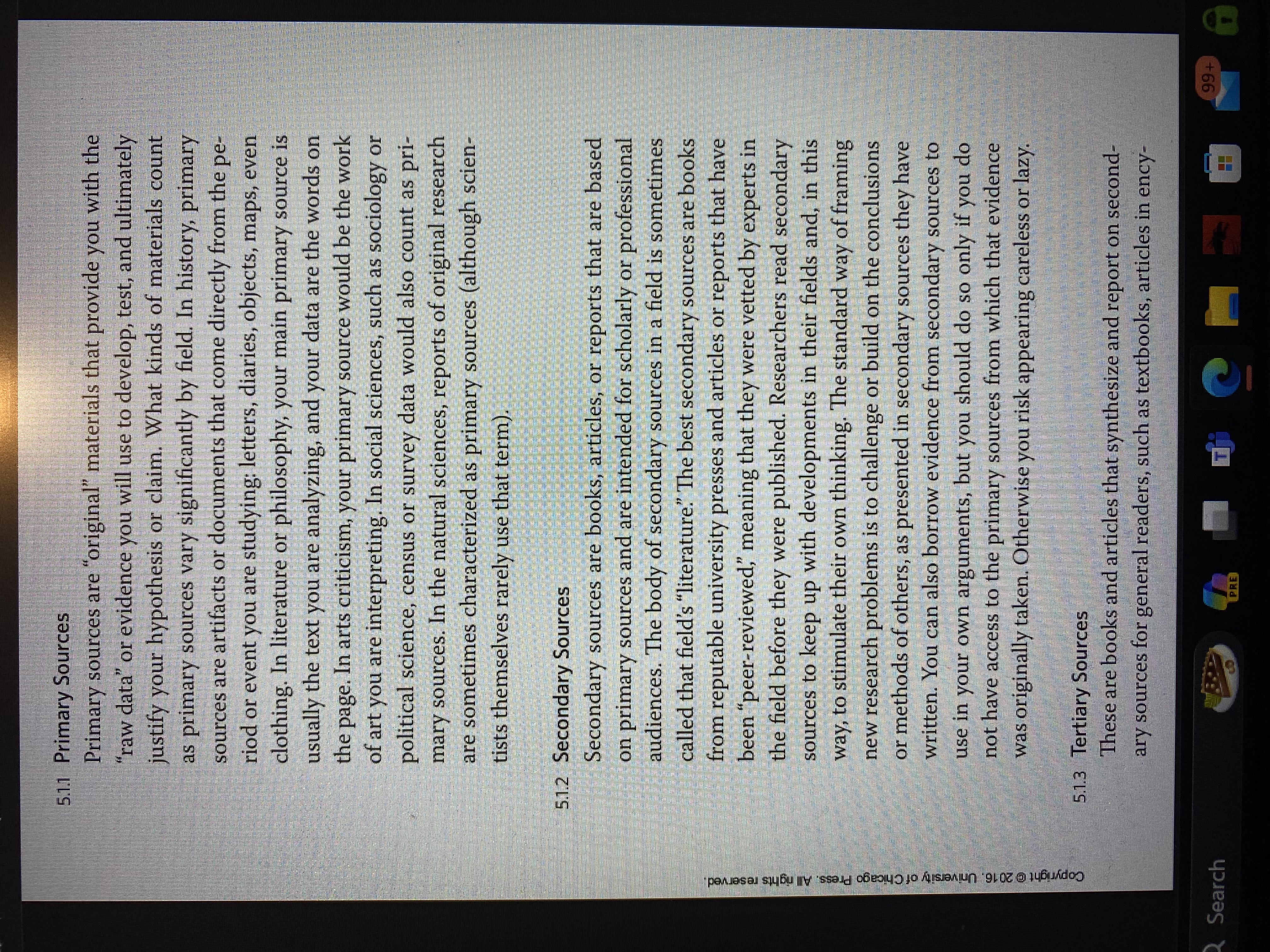
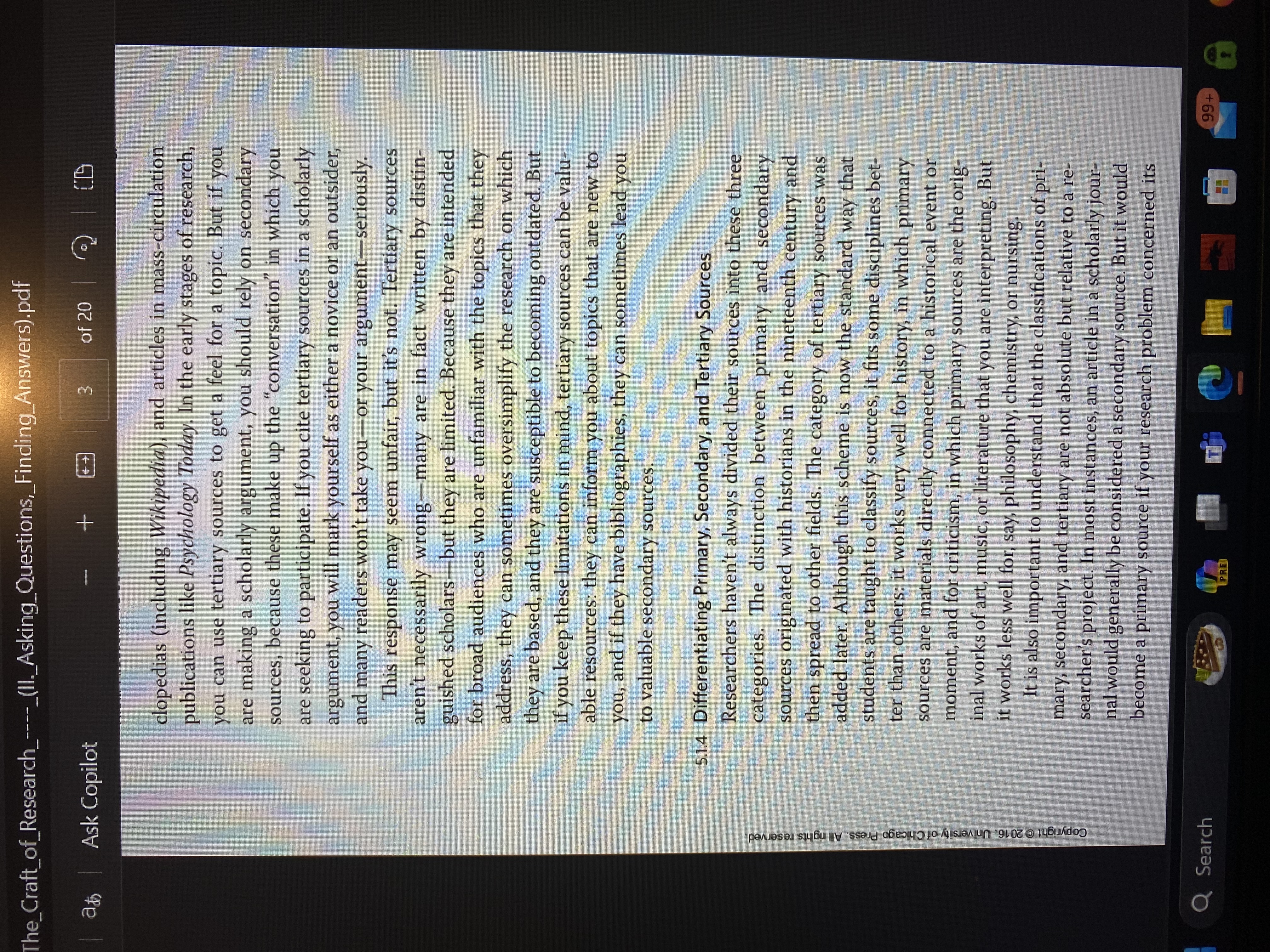
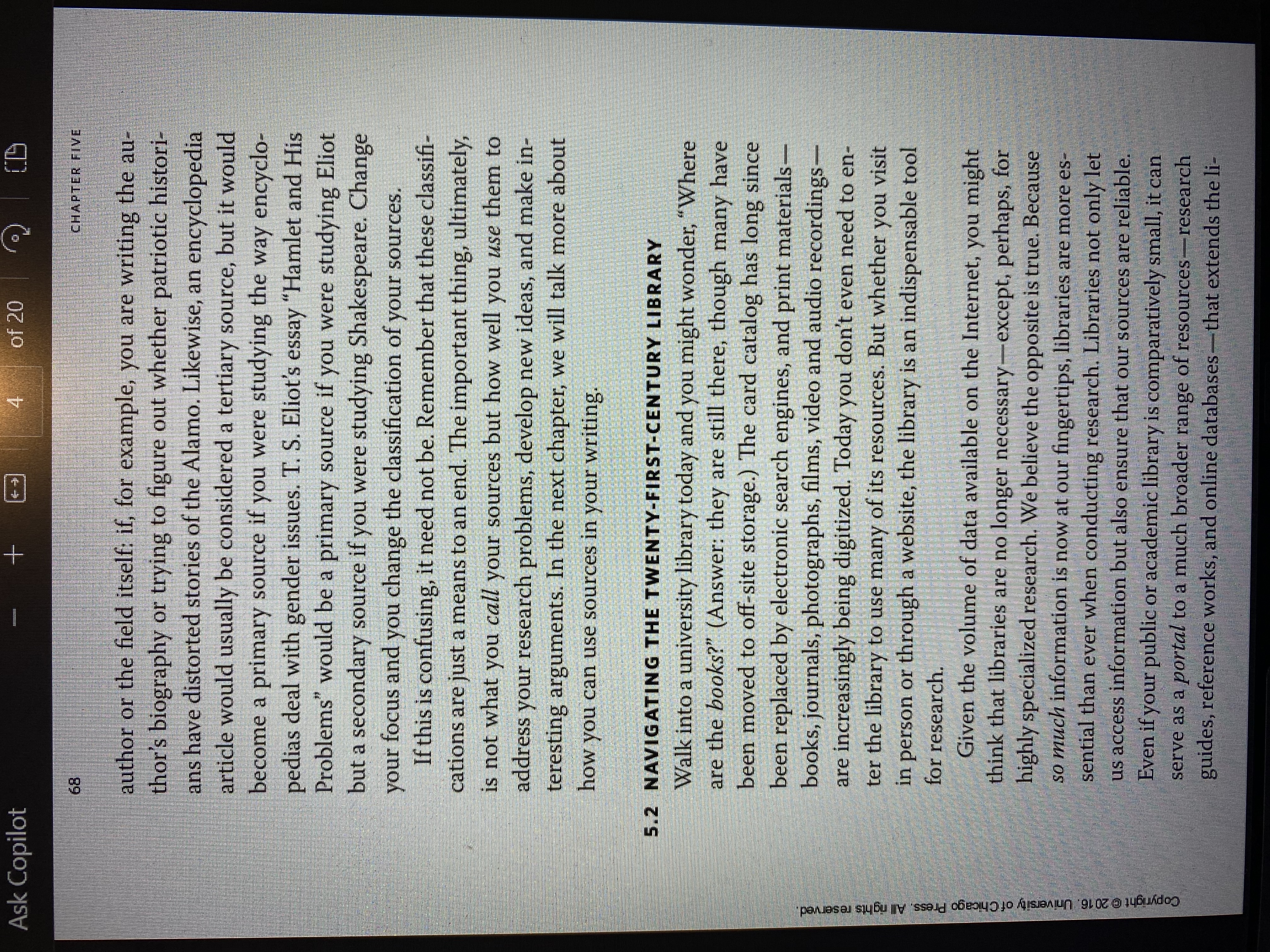
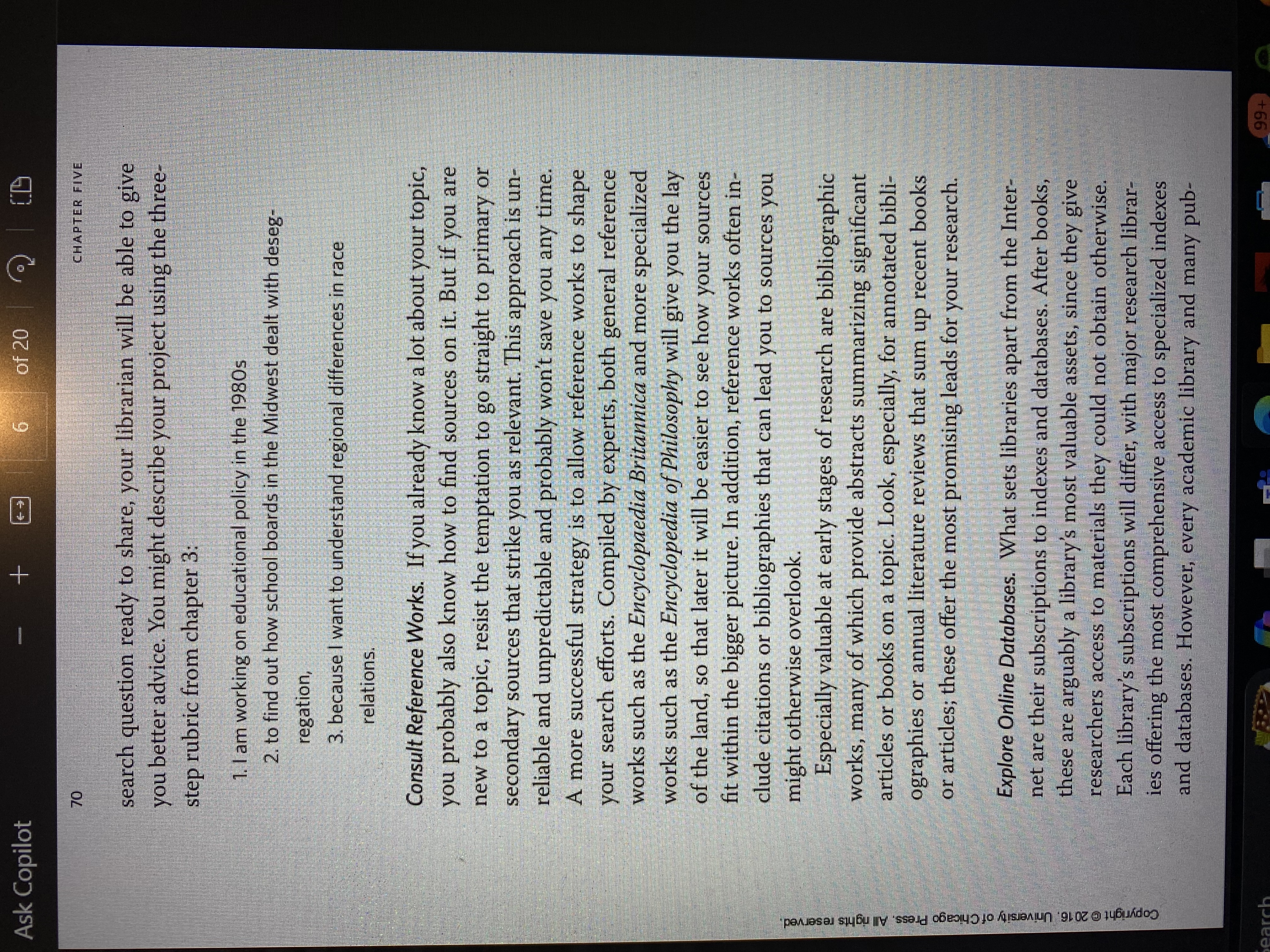
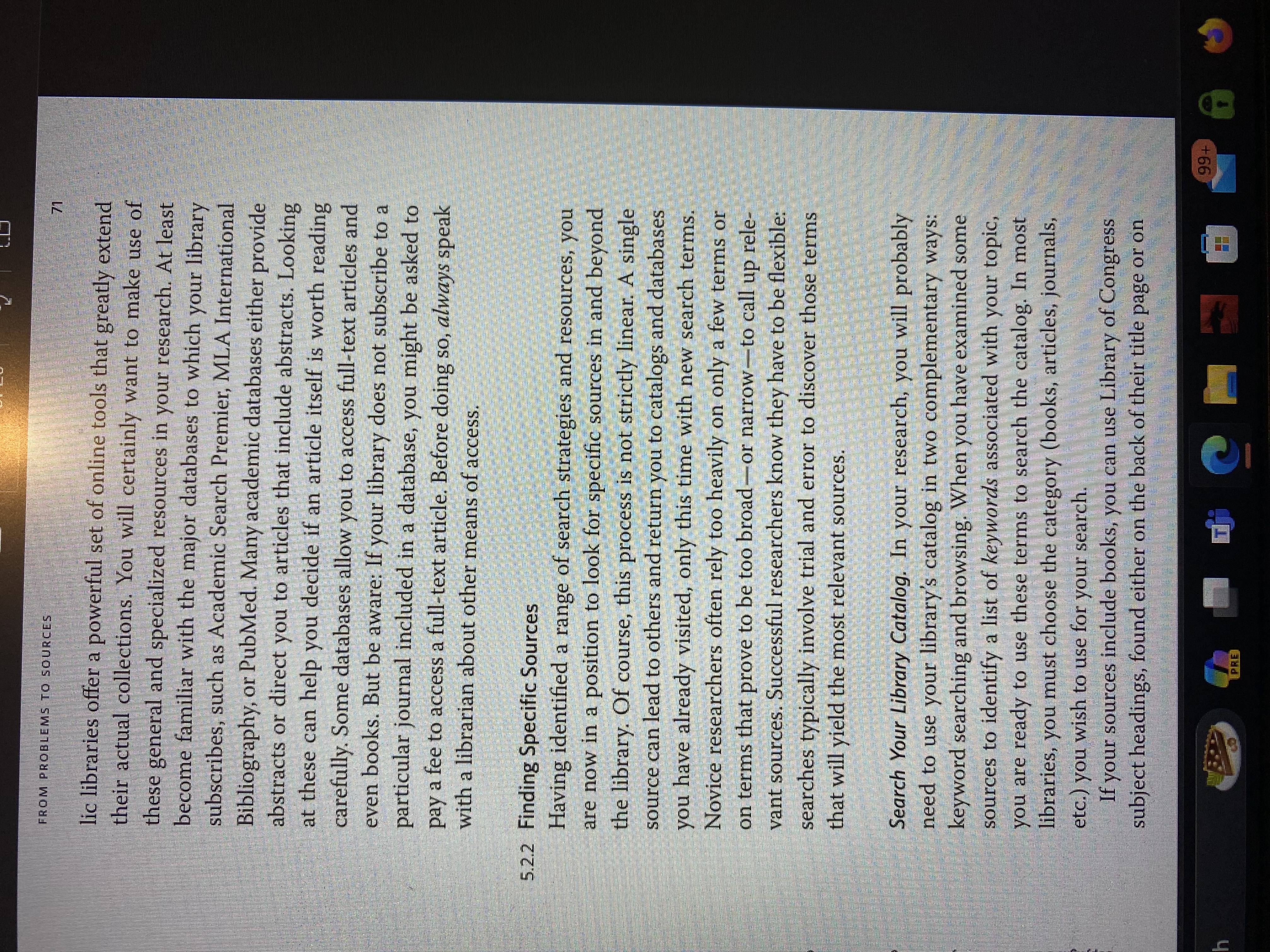
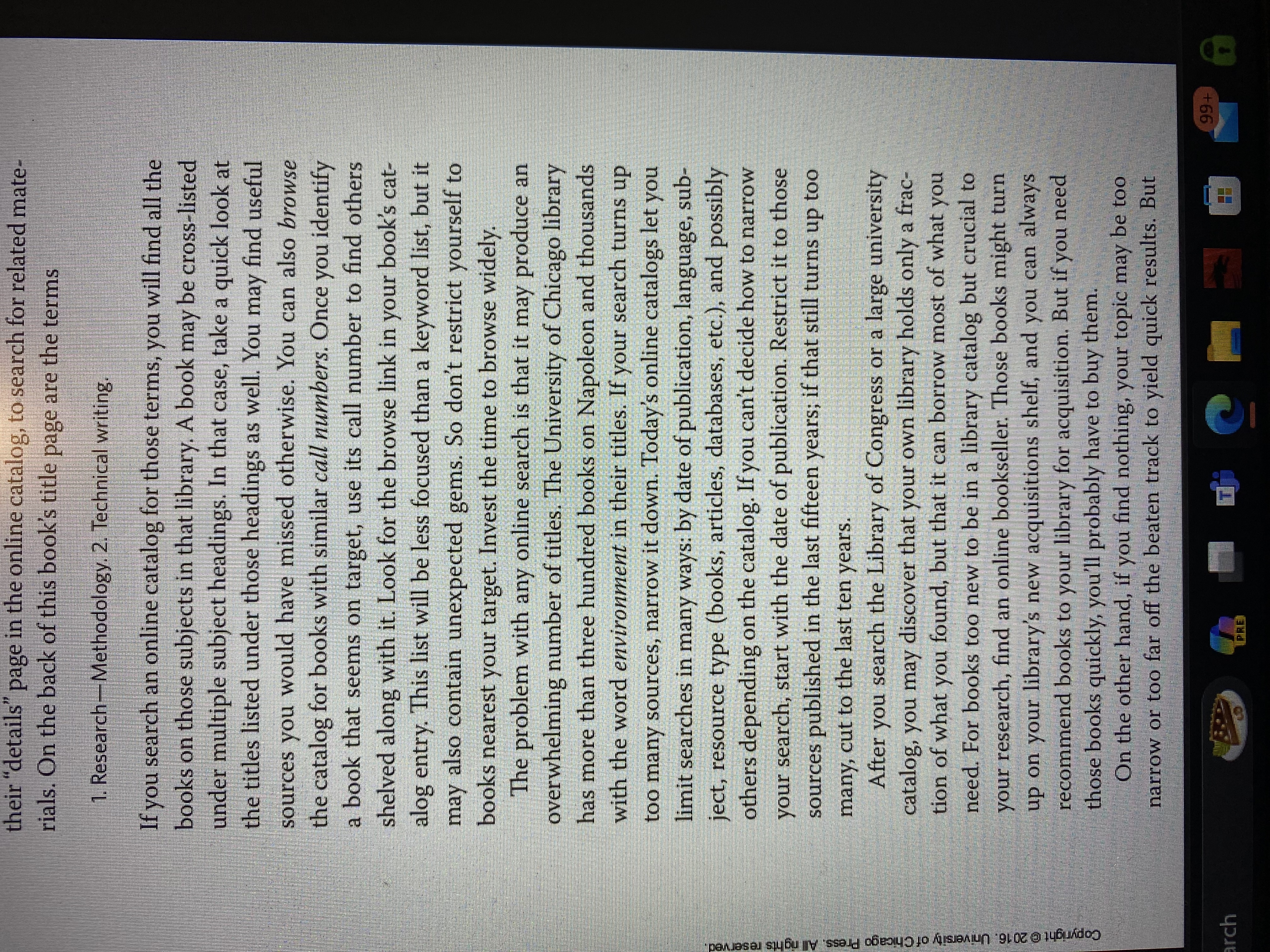
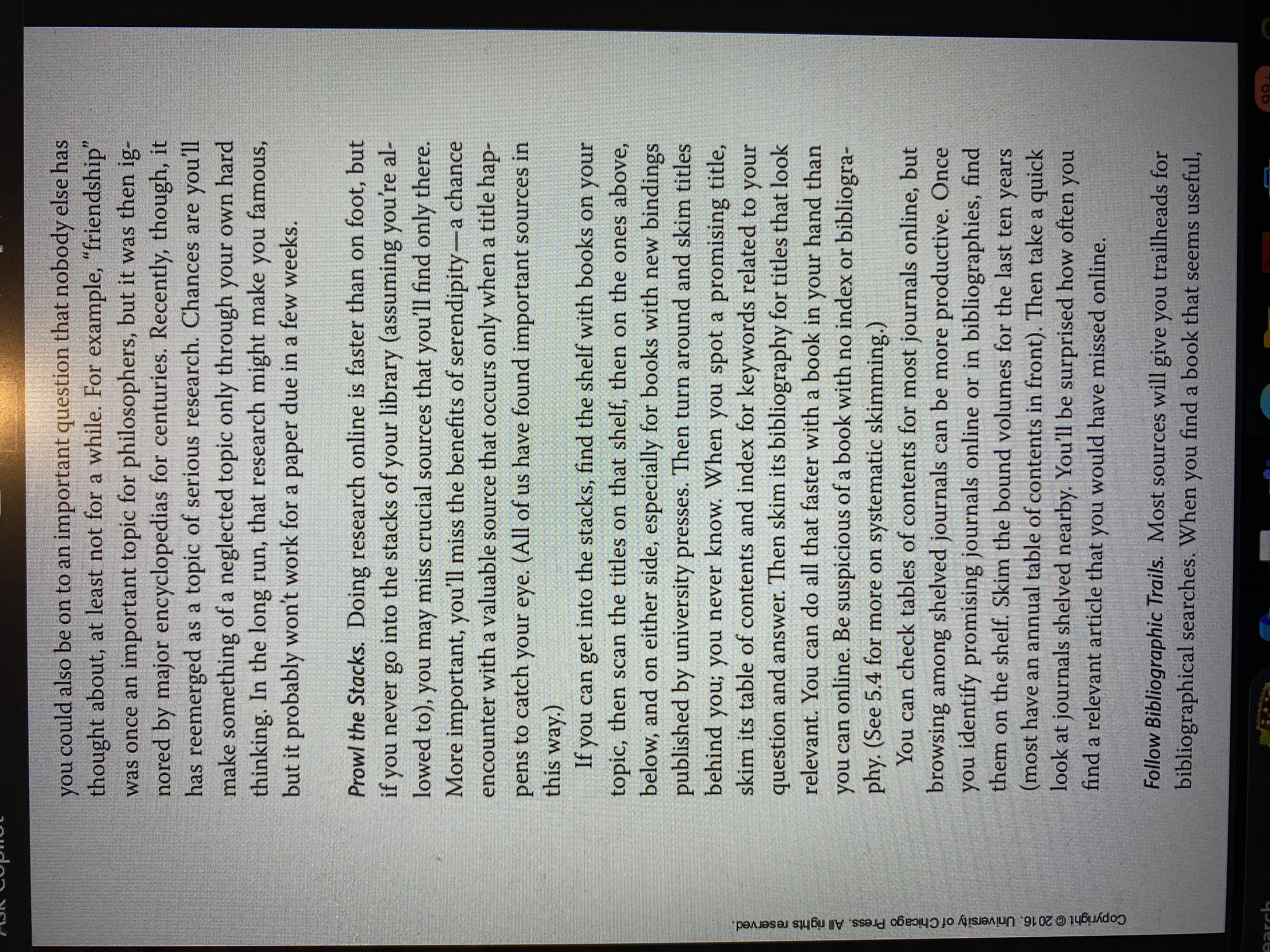
5 From Problems to Sources If you are a new researcher and expect to find most of your sources in your library or on the Internet, this chapter will help you develop a plan for your research. If you are more experienced, you might skip to the next chapter. If you have not yet formulated a research question, you may have to spend time reading generally on your topic to find one. But if you have a question and at least one promising answer (the philos- opher C. S. Peirce called it a hypothesis on probation), you can start looking for data to test it. To do that efficiently, you need to have a plan. If you plunge into any and all sources on your topic, you risk losing yourself in an endless trail of books and articles. To be sure, aimless browsing can be fun, even productive. We indulge in it a lot. Many important discoveries have begun in a chance encounter with an unexpected idea. But if you have a deadline, you need more than luck to find good sources in time: you have to search systematically for those sources that will help you advance your research project or, just as usefully, challenge you to improve it. In this chapter, we discuss different ways you can use sources in your research, how you can find useful sources, and how you can winnow your sources to a manageable number. In the next chapter, we focus on how to use sources in your writing. THREE KINDS OF SOURCES AND THEIR USES Sources are conventionally categorized into three kinds: primary, Copyright @ 20 16. Univer secondary, and tertiary. Their boundaries are fuzzy, but knowing these categories can help you plan your research.5.1.1 Primary Sources Primary sources are "original" materials that provide you with the "raw data" or evidence you will use to develop, test, and ultimately justify your hypothesis or claim. What kinds of materials count as primary sources vary significantly by field. In history, primary sources are artifacts or documents that come directly from the pe- riod or event you are studying: letters, diaries, objects, maps, even clothing. In literature or philosophy, your main primary source is usually the text you are analyzing, and your data are the words on the page. In arts criticism, your primary source would be the work of art you are interpreting. In social sciences, such as sociology or political science, census or survey data would also count as pri- mary sources. In the natural sciences, reports of original research are sometimes characterized as primary sources (although scien- tists themselves rarely use that term). 5.1.2 Secondary Sources Secondary sources are books, articles, or reports that are based on primary sources and are intended for scholarly or professional audiences. The body of secondary sources in a field is sometimes called that field's "literature." The best secondary sources are books from reputable university presses and articles or reports that have been "peer-reviewed," meaning that they were vetted by experts in the field before they were published. Researchers read secondary sources to keep up with developments in their fields and, in this way, to stimulate their own thinking. The standard way of framing new research problems is to challenge or build on the conclusions Copyright @ 2016. University of Chicago Press. All rights reserved or methods of others, as presented in secondary sources they have written. You can also borrow evidence from secondary sources to use in your own arguments, but you should do so only if you do not have access to the primary sources from which that evidence was originally taken. Otherwise you risk appearing careless or lazy. 5.1.3 Tertiary Sources These are books and articles that synthesize and report on second- ary sources for general readers, such as textbooks, articles in ency- Search T 99+The Craft_of Research_----_(Il._Asking_Questions,_Finding_Answers).pdf Ask Copilot 3 of 20 clopedias (including Wikipedia), and articles in mass-circulation publications like Psychology Today. In the early stages of research, you can use tertiary sources to get a feel for a topic. But if you are making a scholarly argument, you should rely on secondary sources, because these make up the "conversation" in which you are seeking to participate. If you cite tertiary sources in a scholarly argument, you will mark yourself as either a novice or an outsider, and many readers won't take you-or your argument-seriously. This response may seem unfair, but it's not. Tertiary sources aren't necessarily wrong-many are in fact written by distin- guished scholars-but they are limited. Because they are intended for broad audiences who are unfamiliar with the topics that they address, they can sometimes oversimplify the research on which they are based, and they are susceptible to becoming outdated. But if you keep these limitations in mind, tertiary sources can be valu- able resources: they can inform you about topics that are new to you, and if they have bibliographies, they can sometimes lead you to valuable secondary sources. 5.1.4 Differentiating Primary, Secondary, and Tertiary Sources Researchers haven't always divided their sources into these three categories. The distinction between primary and secondary sources originated with historians in the nineteenth century and then spread to other fields. The category of tertiary sources was added later. Although this scheme is now the standard way that students are taught to classify sources, it fits some disciplines bet- ter than others: it works very well for history, in which primary Copyright @ 2016. University of Chicago Press. All rights reserved sources are materials directly connected to a historical event or moment, and for criticism, in which primary sources are the orig- inal works of art, music, or literature that you are interpreting. But it works less well for, say, philosophy, chemistry, or nursing- It is also important to understand that the classifications of pri- mary, secondary, and tertiary are not absolute but relative to a re- searcher's project. In most instances, an article in a scholarly jour- nal would generally be considered a secondary source. But it would become a primary source if your research problem concerned its Q Search 99+Ask Copilot of 20 author or the field itself: if, for example, you are writing the au- thor's biography or trying to figure out whether patriotic histori ans have distorted stories of the Alamo. Likewise, an encyclopedia article would usually be considered a tertiary source, but it would become a primary source if you were studying the way encyclo- pedias deal with gender issues. T. S. Eliot's essay "Hamlet and His Problems" would be a primary source if you were studying Eliot but a secondary source if you were studying Shakespeare. Change your focus and you change the classification of your sources. If this is confusing, it need not be. Remember that these classifi cations are just a means to an end. The important thing, ultimately, is not what you call your sources but how well you use them to address your research problems, develop new ideas, and make in- teresting arguments. In the next chapter, we will talk more about how you can use sources in your writing. 5.2 NAVIGATING THE TWENTY-FIRST-CENTURY LIBRARY Walk into a university library today and you might wonder, "Where are the books?" (Answer: they are still there, though many have been moved to off-site storage.) The card catalog has long since been replaced by electronic search engines, and print materials- books, journals, photographs, films, video and audio recordings- are increasingly being digitized. Today you don't even need to en- ter the library to use many of its resources. But whether you visit in person or through a website, the library is an indispensable tool for research. Given the volume of data available on the Internet, you might Copyright @ 20 16. University of Chicago Press, All rights reserved think that libraries are no longer necessary-except, perhaps, for highly specialized research. We believe the opposite is true. Because so much information is now at our fingertips, libraries are more es- sential than ever when conducting research. Libraries not only let us access information but also ensure that our sources are reliable. Even if your public or academic library is comparatively small, it can serve as a portal to a much broader range of resources-research guides, reference works, and online databases-that extends the li-Ask Copilot 6 of 20 (0 ) 70 CHAPTER FIVE search question ready to share, your librarian will be able to give you better advice. You might describe your project using the three- step rubric from chapter 3: 1. I am working on educational policy in the 1980s 2. to find out how school boards in the Midwest dealt with deseg- regation, 3. because I want to understand regional differences in race relations. Consult Reference Works. If you already know a lot about your topic, you probably also know how to find sources on it. But if you are new to a topic, resist the temptation to go straight to primary or secondary sources that strike you as relevant. This approach is un- reliable and unpredictable and probably won't save you any time. A more successful strategy is to allow reference works to shape your search efforts. Compiled by experts, both general reference works such as the Encyclopaedia Britannica and more specialized works such as the Encyclopedia of Philosophy will give you the lay of the land, so that later it will be easier to see how your sources fit within the bigger picture. In addition, reference works often in- clude citations or bibliographies that can lead you to sources you might otherwise overlook. Especially valuable at early stages of research are bibliographic works, many of which provide abstracts summarizing significant articles or books on a topic. Look, especially, for annotated bibli- ographies or annual literature reviews that sum up recent books or articles; these offer the most promising leads for your research. Copyright @ 2016. University of Chicago Press. All rights reserved Explore Online Databases. What sets libraries apart from the Inter- net are their subscriptions to indexes and databases. After books, these are arguably a library's most valuable assets, since they give researchers access to materials they could not obtain otherwise. Each library's subscriptions will differ, with major research librar ies offering the most comprehensive access to specialized indexes and databases. However, every academic library and many pub-FROM PROBLER TO SOURCES lic libraries offer a powerful set of online tools that greatly extend their actual collections. You will certainly want to make use of these general and specialized resources in your research. At least become familiar with the major databases to which your library subscribes, such as Academic Search Premier, MLA International Bibliography, or PubMed. Many academic databases either provide abstracts or direct you to articles that include abstracts. Looking at these can help you decide if an article itself is worth reading carefully. Some databases allow you to access full-text articles and even books. But be aware: If your library does not subscribe to a particular journal included in a database, you might be asked to pay a fee to access a full-text article. Before doing so, always speak with a librarian about other means of access. 5.2.2 Finding Specific Sources Having identified a range of search strategies and resources, you are now in a position to look for specific sources in and beyond the library. Of course, this process is not strictly linear. A single source can lead to others and return you to catalogs and databases you have already visited, only this time with new search terms. Novice researchers often rely too heavily on only a few terms or on terms that prove to be too broad-or narrow-to call up rele- vant sources. Successful researchers know they have to be flexible: searches typically involve trial and error to discover those terms that will yield the most relevant sources. Search Your Library Catalog. In your research, you will probably need to use your library's catalog in two complementary ways: keyword searching and browsing. When you have examined some sources to identify a list of keywords associated with your topic, you are ready to use these terms to search the catalog. In most libraries, you must choose the category (books, articles, journals, etc.) you wish to use for your search. If your sources include books, you can use Library of Congress subject headings, found either on the back of their title page or on 199+ PREtheir "details" page in the online catalog, to search for related mate- rials. On the back of this book's title page are the terms . Research-Methodology. 2. Technical writing. If you search an online catalog for those terms, you will find all the books on those subjects in that library. A book may be cross-listed under multiple subject headings. In that case, take a quick look at the titles listed under those headings as well. You may find useful sources you would have missed otherwise. You can also browse the catalog for books with similar call numbers. Once you identify a book that seems on target, use its call number to find others shelved along with it. Look for the browse link in your book's cat- alog entry. This list will be less focused than a keyword list, but it may also contain unexpected gems. So don't restrict yourself to books nearest your target. Invest the time to browse widely. The problem with any online search is that it may produce an overwhelming number of titles. The University of Chicago library has more than three hundred books on Napoleon and thousands with the word environment in their titles. If your search turns up too many sources, narrow it down. Today's online catalogs let you limit searches in many ways: by date of publication, language, sub- ject, resource type (books, articles, databases, etc.), and possibly others depending on the catalog. If you can't decide how to narrow your search, start with the date of publication. Restrict it to those sources published in the last fifteen years; if that still turns up too many, cut to the last ten years. . coarch the Library of Congress or a large university After you search t catalog, you may discover that your own library holds only a frac- tion of what you found, but that it can borrow most of what you need. For books too new to be in a library catalog but crucial to your research, find an online bookseller. Those books might turn Copyright @ 2016. University up on your library's new acquisitions shelf, and you can always recommend books to your library for acquisition. But if you need those books quickly, you'll probably have to buy them. On the other hand, if you find nothing, your topic may be too narrow or too far off the beaten track to yield quick results. But [99+ arch PREyou could also be on to an important question that nobody else has thought about, at least not for a while. For example, "friendship" was once an important topic for philosophers, but it was then ig- nored by major encyclopedias for centuries. Recently, though, it has reemerged as a topic of serious research. Chances are you'll make something of a neglected topic only through your own hard thinking. In the long run, that research might make you famous, but it probably won't work for a paper due in a few weeks. Prowl the Stacks. Doing research online is faster than on foot, but if you never go into the stacks of your library (assuming you're al- lowed to), you may miss crucial sources that you'll find only there. More important, you'll miss the benefits of serendipity-a chance encounter with a valuable source that occurs only when a title hap- pens to catch your eye. (All of us have found important sources in this way.) If you can get into the stacks, find the shelf with books on your topic, then scan the titles on that shelf, then on the ones above, below, and on either side, especially for books with new bindings published by university presses. Then turn around and skim titles behind you; you never know. When you spot a promising title, skim its table of contents and index for keywords related to your question and answer. Then skim its bibliography for titles that look All rights reserved relevant. You can do all that faster with a book in your hand than you can online. Be suspicious of a book with no index or bibliogra- phy. (See 5.4 for more on systematic skimming.) You can check tables of contents for most journals online, but browsing among shelved journals can be more productive. Once you identify promising journals online or in bibliographies, find Copyright @ 2016. University of Chicago Pre them on the shelf. Skim the bound volumes for the last ten years (most have an annual table of contents in front). Then take a quick look at journals shelved nearby. You'll be surprised how often you find a relevant article that you would have missed online. Follow Bibliographic Trails. Most sources will give you trailheads for bibliographical searches. When you find a book that seems useful,When They Beat You to the Punch Don't panic if you find a source that seems to pose and solve precisely your problem: "Transforming the Alamo Legend: History in the Ser- vice of Politics." At that moment you might think, I'm dead. Nothing new to say. (It happened to Williams when he was writing his doctoral dissertation and to Colomb just before his first book came out.) You may be right, but probably not. If the source does in fact settle your exact question, you have to formulate a new one. But the question your source asked is probably not as close to yours as you first feared. And you may find that you can do the source one better: if the author failed to get things entirely right, you have an unwitting ally in formulating your problem. sixteenth-century England, you might read Elizabethan plays in volving country characters, look at wood prints of agricultural life, find commentary by religious figures on rural social behavior. Con- versely, if you were working on visual representations of daily life in London, you might research the economic history of the time and place. When you look beyond the standard kinds of references relevant to your question, you enrich not only your analysis but your range of intellectual reference and your ability to synthesize diverse kinds of data, a crucial competence of an inquiring mind. Don't ignore a work on your topic that is not mentioned in the bib- liographies of your most relevant sources-you will get credit for originality if you turn up a good source that others have ignored. 5.6 USING PEOPLE TO FURTHER YOUR RESEARCH One of the paradoxes of twenty-first-century research is that even as new technologies allow us to access an unprecedented wealth of materials with unprecedented ease, research has also become more personal. So as you undertake your project, don't forget about the human element. Most obviously, people can be sources of primary data, collected through observation, surveys, or interviews. Be creative when us
Step by Step Solution
There are 3 Steps involved in it
1 Expert Approved Answer
Step: 1 Unlock
Question Has Been Solved by an Expert!
Get step-by-step solutions from verified subject matter experts
Step: 2 Unlock
Step: 3 Unlock
Students Have Also Explored These Related Business Writing Questions!