







Question: 5) Hedging is useful when faced with A) idiosyncratic risk. B) systemic risk. C) systematic risk. D) Both A) & C) are correct. 6) Reducing
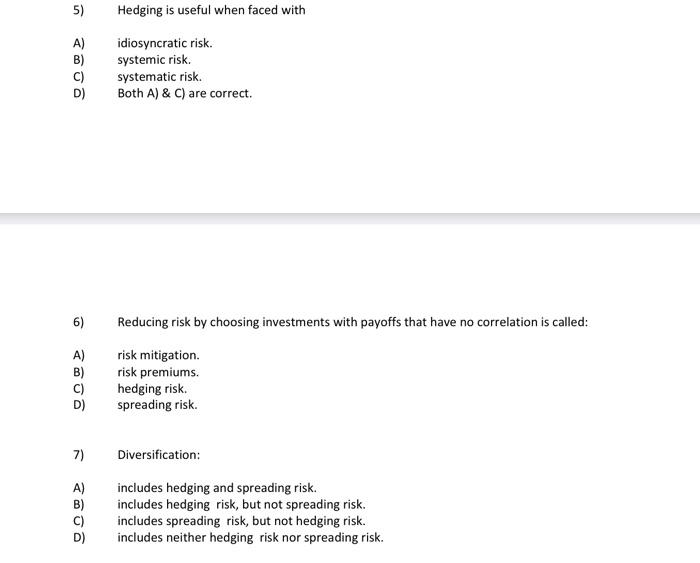
5) Hedging is useful when faced with A) idiosyncratic risk. B) systemic risk. C) systematic risk. D) Both A) \& C) are correct. 6) Reducing risk by choosing investments with payoffs that have no correlation is called: A) risk mitigation. B) risk premiums. C) hedging risk. D) spreading risk. 7) Diversification: A) includes hedging and spreading risk. B) includes hedging risk, but not spreading risk. C) includes spreading risk, but not hedging risk. D) includes neither hedging risk nor spreading risk
Step by Step Solution
There are 3 Steps involved in it
1 Expert Approved Answer
Step: 1 Unlock

Question Has Been Solved by an Expert!
Get step-by-step solutions from verified subject matter experts
Step: 2 Unlock
Step: 3 Unlock
 Study Help