



Question: 5 Points Signal transduction is the process by which cells convert Blank 1 into intracellular responses or actions. It involves a series of molecular events
Points
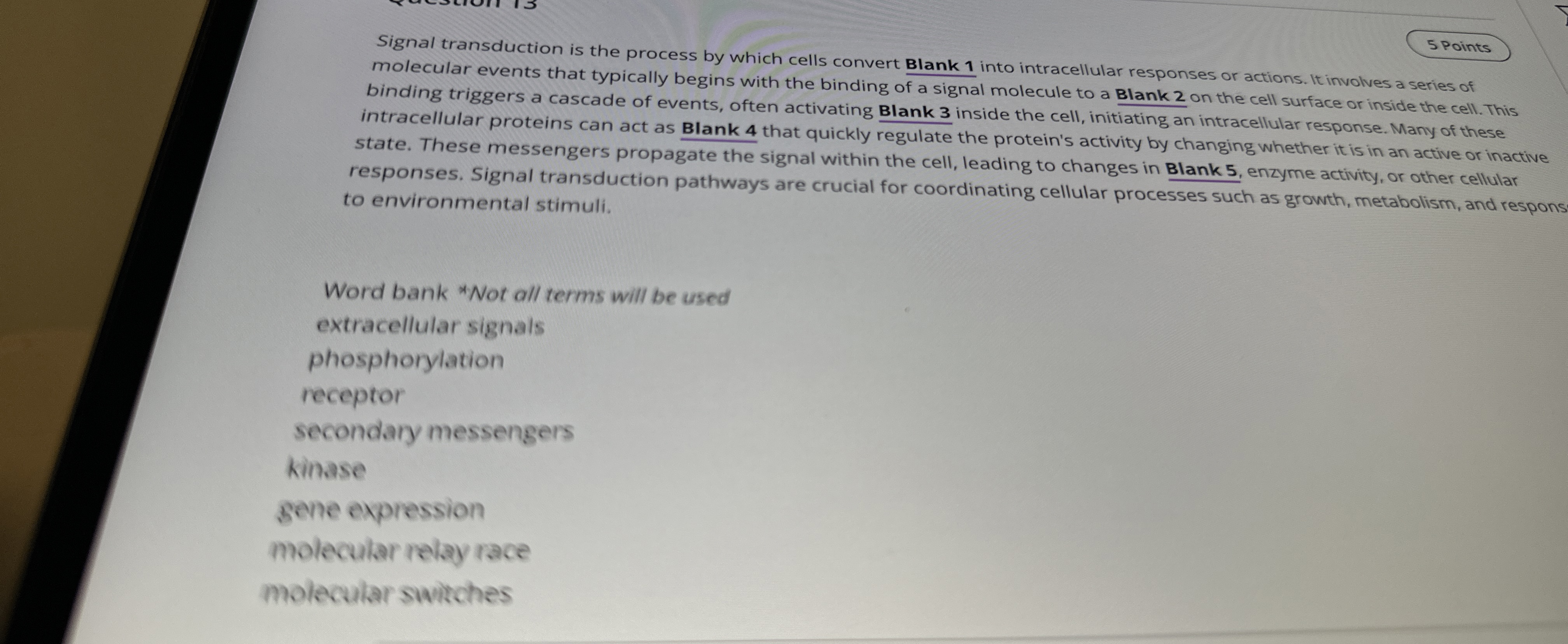
Signal transduction is the process by which cells convert Blank into intracellular responses or actions. It involves a series of molecular events that typically begins with the binding of a signal molecule to a Blank on the cell surface or inside the cell. This binding triggers a cascade of events, often activating Blank inside the cell, initiating an intracellular response. Many of these intracellular proteins can act as Blank that quickly regulate the protein's activity by changing whether it is in an active or inactive state. These messengers propagate the signal within the cell, leading to changes in Blank enzyme activity, or other cellular responses. Signal transduction pathways are crucial for coordinating cellular processes such as growth, metabolism, and respons to environmental stimuli.
Word bank Not all terms will be used
extracellular signals
phosphorylation
receptor
secondary messengers
kinase
gene expression
molecular relay race
molecular switches
Step by Step Solution
There are 3 Steps involved in it
1 Expert Approved Answer
Step: 1 Unlock

Question Has Been Solved by an Expert!
Get step-by-step solutions from verified subject matter experts
Step: 2 Unlock
Step: 3 Unlock