







Question: 5 V3.91. Section 4: Experimental Design For each objective below, read the information provided and answer the questions that follow on a separate sheet of
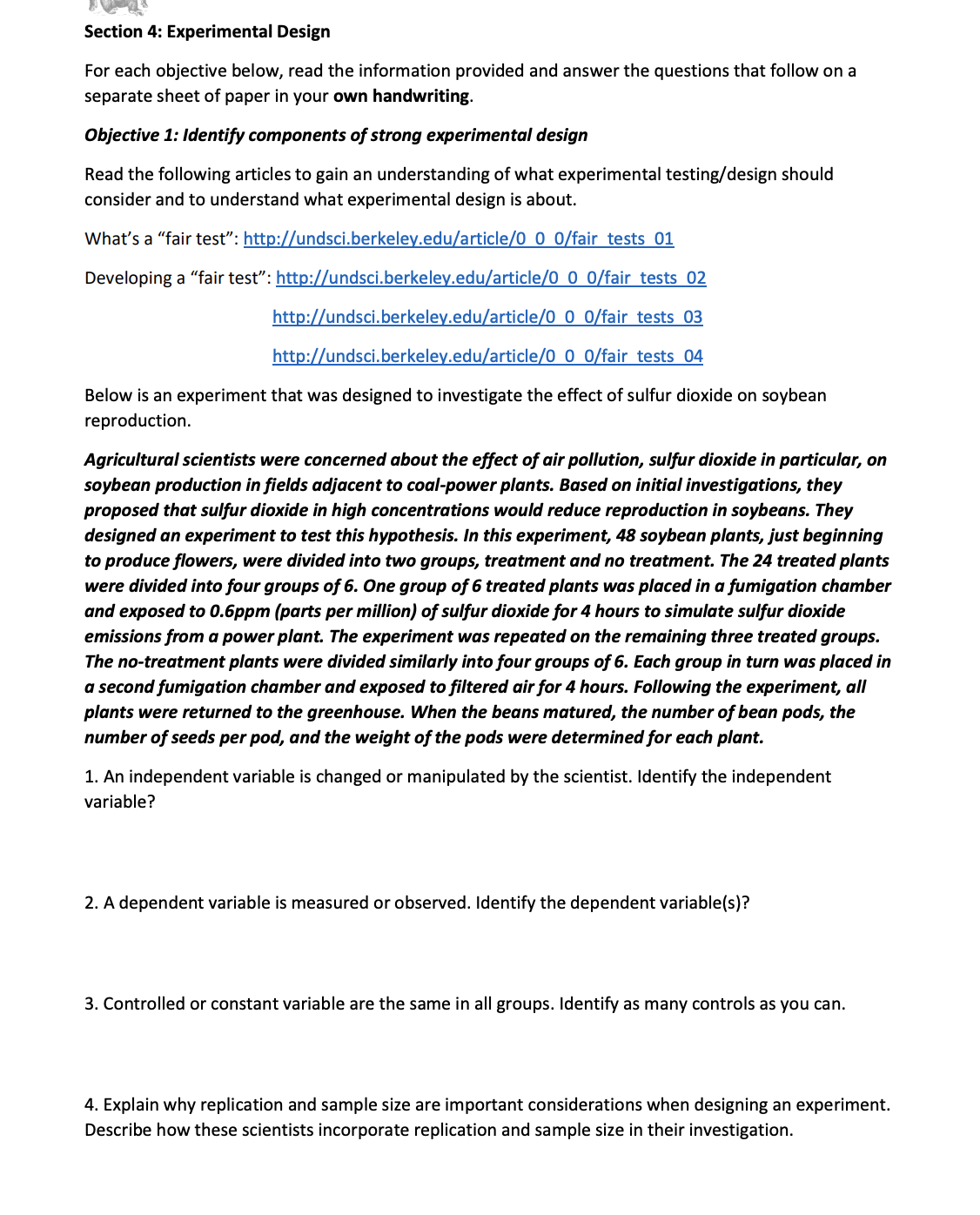
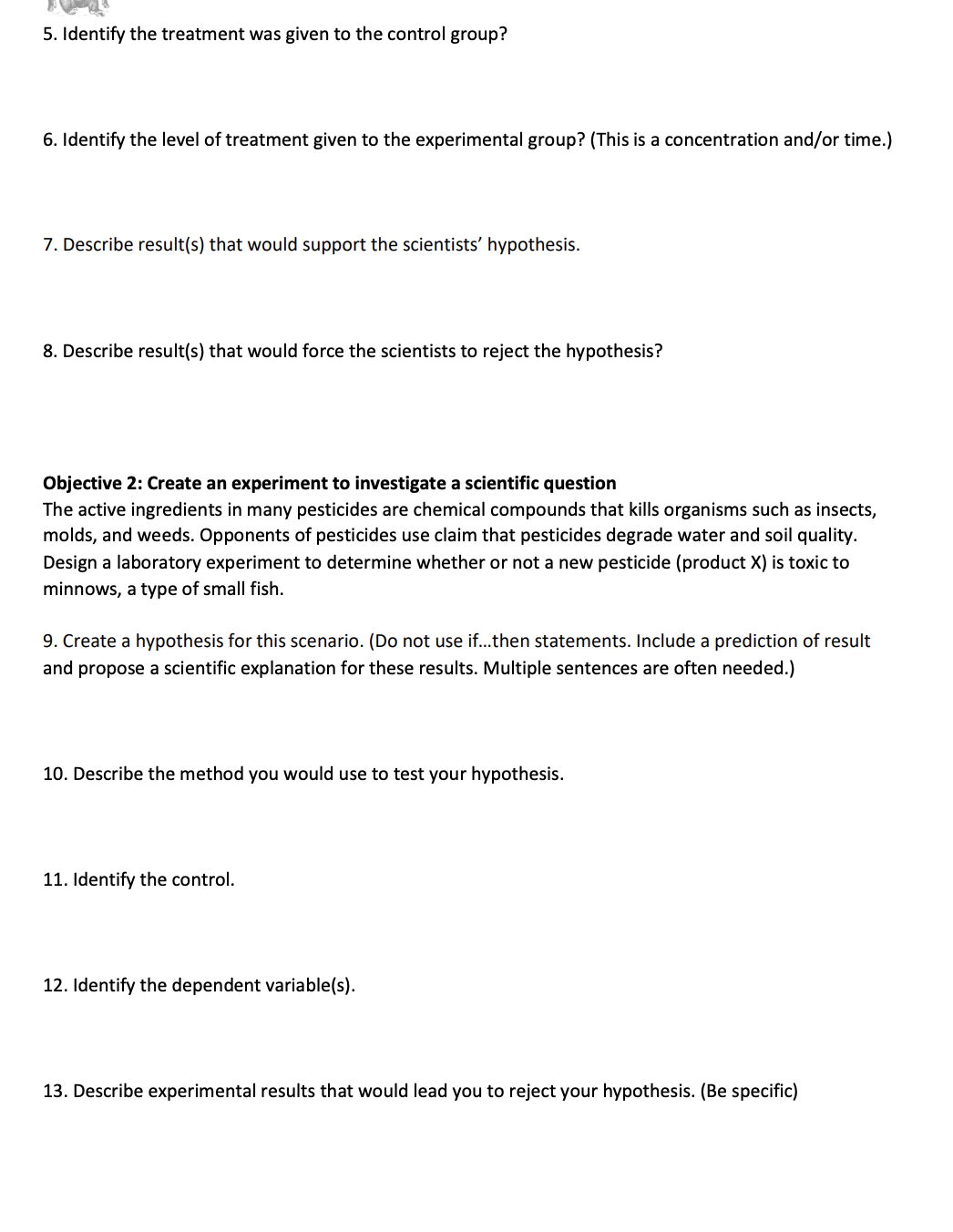
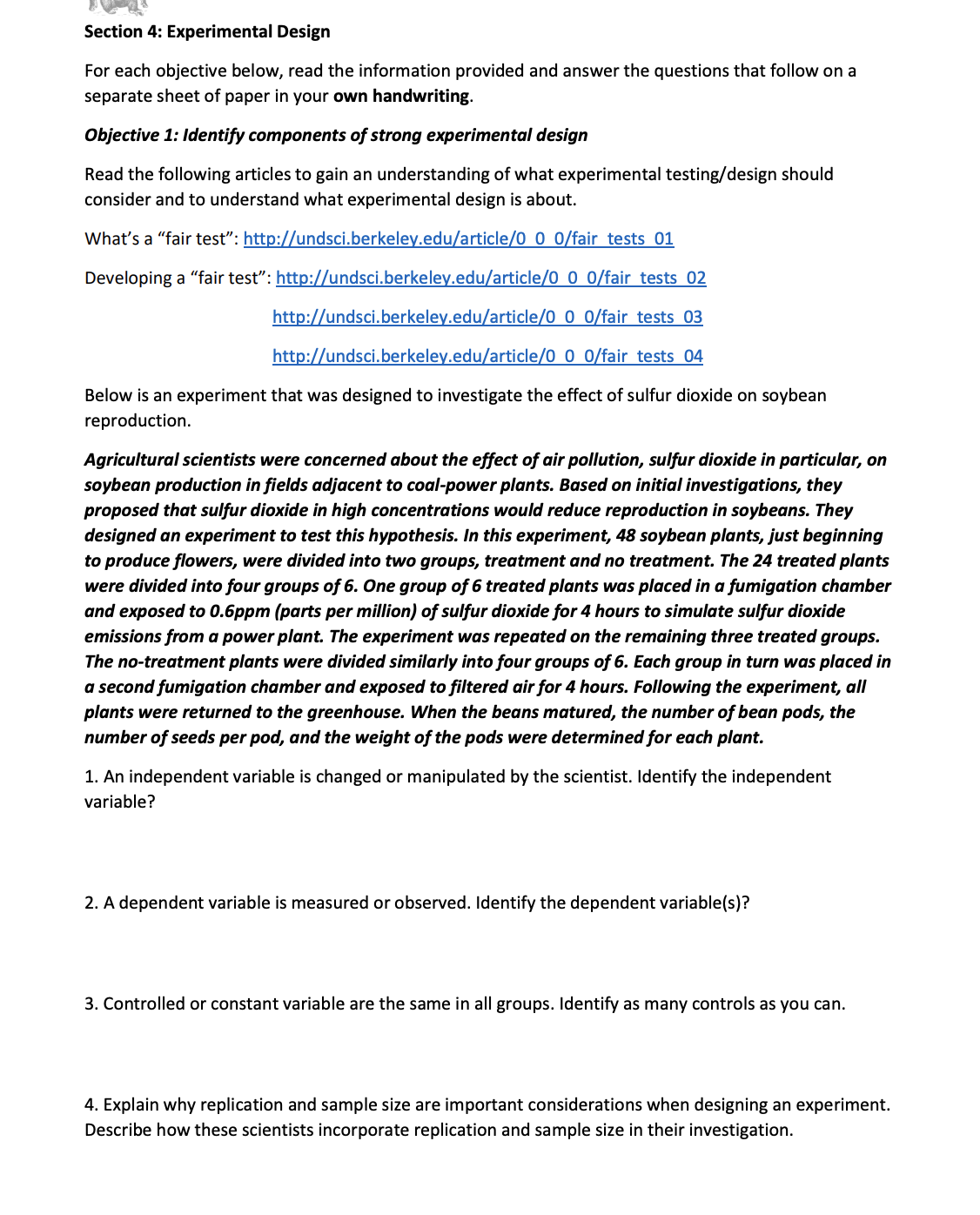
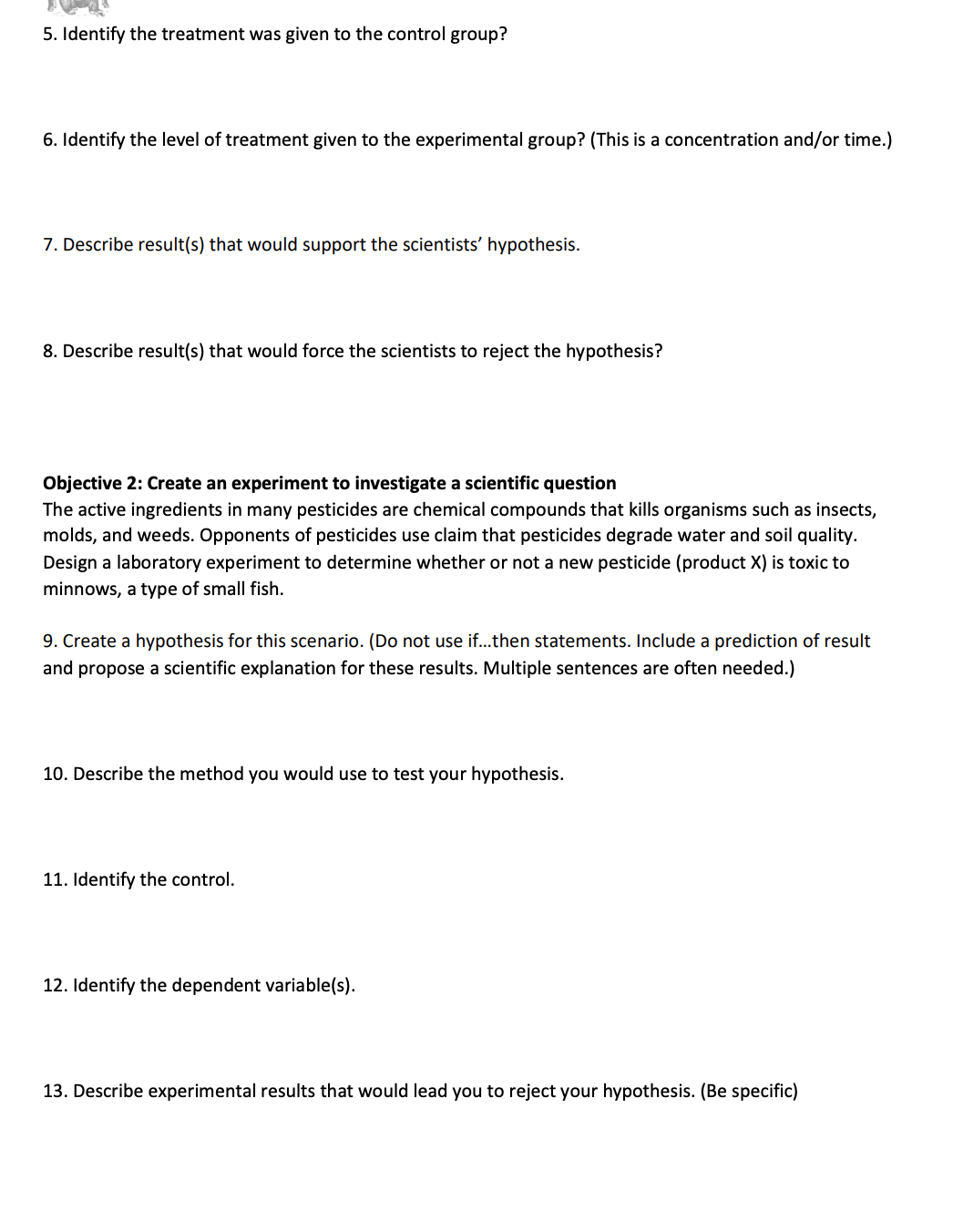
5\" V3.91.\" Section 4: Experimental Design For each objective below, read the information provided and answer the questions that follow on a separate sheet of paper in your own handwriting. Objective 1: ldentify components of strong experimean design Read the following articles to gain an understanding of what experimental testing/design should consider and to understand what experimental design is about. What'sa "fairtest": htt : undsci.berkele .edu article 0 0 0 fair tests 01 Developinga \"fairtest\":http:(undsciberkelegedu(articleo 0 Olfair tests 02 htt : undsci.berke|e .edu article 0 0 0 fair tests 03 htt : undsci.berkele .edu article 0 0 0 fair tests 04 Below is an experiment that was designed to investigate the effect of sulfur dioxide on soybean reproduction. Agricultural scientists were concerned about the effect of air pollution, sulfur dioxide in particular; on soybean production in fields adjacent to coal-power plants. Based on initial investigations, they proposed that sulfur dioxide in high concentrations would reduce reproduction in soybeans. They designed an experiment to test this hypothesis. in this experiment, 48 soybean plants, just beginning to produce owers, were divided into two groups, treatment and no treatment. The 24 treated plants were divided into four groups of 6. One group of 6 treated plants was placed in a fumigation chamber and exposed to 0.6ppm (parts per million) of sulfur dioxide for 4 hours to simulate sulfur dioxide emissions from a power plant. The experiment was repeated on the remaining three treated groups. The no-treatment plants were divided similarly into four groups of 6. Each group in turn was placed in a second fumigation chamber and exposed to filtered air for 4 hours. Following the experiment, all plants were returned to the greenhouse. When the beans matured, the number of bean pods, the number of seeds per pod, and the weight of the pads were determined for each plant. 1. An independent variable is changed or manipulated by the scientist. Identify the independent variable? 2. A dependent variable is measured or observed. Identify the dependent variablels)? 3. Controlled or constant variable are the same in all groups. Identify as many controls as you can. 4. Explain why replication and sample size are important considerations when designing an experiment. Describe how these scientists incorporate replication and sample size in their investigation. 5H" 5. Identify the treatment was given to the control group? 6. Identify the level of treatment given to the experimental group? (This is a concentration and/or time.) 7. Describe result(s) that would support the scientists' hypothesis. 8. Describe result(s) that would force the scientists to reject the hypothesis? Objective 2: Create an experiment to investigate a scientic question The active ingredients in many pesticides are chemical compounds that kills organisms such as insects, molds, and weeds. Opponents of pesticides use claim that pesticides degrade water and soil quality. Design a laboratory experiment to determine whether or not a new pesticide (product X) is toxic to minnows, a type of small fish. 9. Create a hypothesis for this scenario. (Do not use if...then statements. Include a prediction of result and propose a scientific explanation for these results. Multiple sentences are often needed.) 10. Describe the method you would use to test your hypothesis. 11. Identify the control. 12. Identify the dependent variable(s). 13. Describe experimental results that would lead you to reject your hypothesis. (Be specific)
Step by Step Solution
There are 3 Steps involved in it

Get step-by-step solutions from verified subject matter experts
 Study Help