







Question: 50. When a debtor defaults on a loan, it means that: a. the debtor has collateralized the loan. b. the debtor has failed to pay
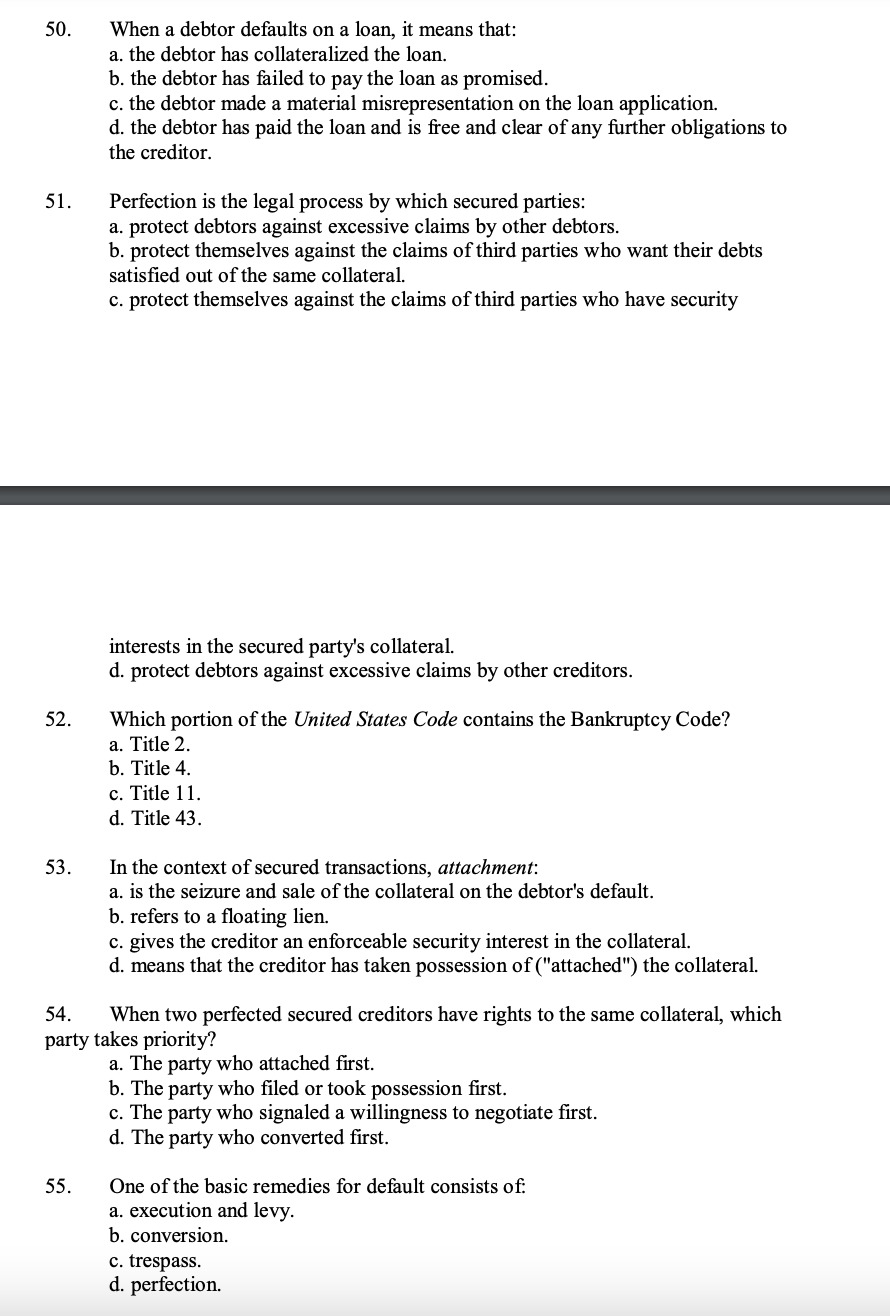
50. When a debtor defaults on a loan, it means that: a. the debtor has collateralized the loan. b. the debtor has failed to pay the loan as promised. c. the debtor made a material misrepresentation on the loan application. d. the debtor has paid the loan and is free and clear of any further obligations to the creditor. 51. Perfection is the legal process by which secured parties: a. protect debtors against excessive claims by other debtors. b. protect themselves against the claims of third parties who want their debts satisfied out of the same collateral. c. protect themselves against the claims of third parties who have security interests in the secured party's collateral. d. protect debtors against excessive claims by other creditors. 52. Which portion of the United States Code contains the Bankruptcy Code? a. Title 2 . b. Title 4 . c. Title 11. d. Title 43 . 53. In the context of secured transactions, attachment: a. is the seizure and sale of the collateral on the debtor's default. b. refers to a floating lien. c. gives the creditor an enforceable security interest in the collateral. d. means that the creditor has taken possession of ("attached") the collateral. 54. When two perfected secured creditors have rights to the same collateral, which party takes priority? a. The party who attached first. b. The party who filed or took possession first. c. The party who signaled a willingness to negotiate first. d. The party who converted first. 55. One of the basic remedies for default consists of: a. execution and levy. b. conversion. c. trespass. d. perfection
Step by Step Solution
There are 3 Steps involved in it

Get step-by-step solutions from verified subject matter experts
 Study Help