







Question: 5-115. Let us consider the difference between t_(n)=2*3^(n) and f(x)=2*3^(x) . b) Is it possible for t_(n) to equal 1400? If so, determine the value
5-115. Let us consider the difference between
t_(n)=2*3^(n)and
f(x)=2*3^(x).\ b) Is it possible for
t_(n)to equal 1400? If so, determine the value of
nthat makes
t_(n)=1400.\ If not, justify why not.\
t_(n)=2*3^(n)\ No descrete graph\ c) Is it possible for
f(x)to equal 1400 ? Be prepared to share your reasoning with the class.\
f(x)=2*3^(x)\ yes because continous\ graph5-115. Let us consider the difference between
t_(n)=2*3^(n)and
f(x)=2*3^(x).\ b) Is it possible for
t_(n)to equal 1400? If so, determine the value of
nthat makes
t_(n)=1400.\ If not, justify why not.\
t_(n)=2*3^(n)\ No descrete graph\ c) Is it possible for
f(x)to equal 1400 ? Be prepared to share your reasoning with the class.\
f(x)=2*3^(x)\ yes because continous\ graph
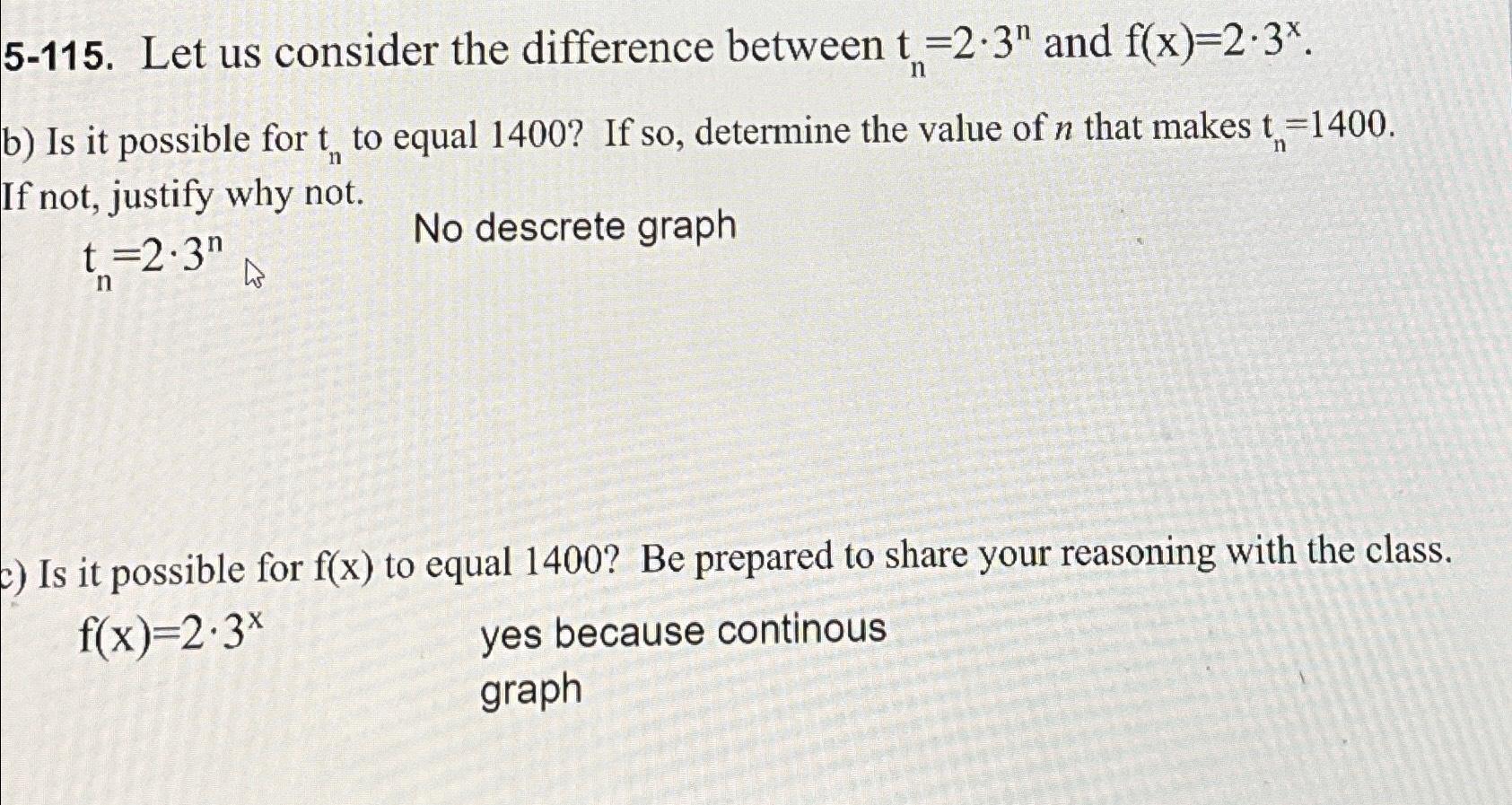
5-115. Let us consider the difference between tn=23n and f(x)=23x. b) Is it possible for tn to equal 1400? If so, determine the value of n that makes tn=1400. If not, justify why not. tn=23n No descrete graph c) Is it possible for f(x) to equal 1400 ? Be prepared to share your reasoning with the class. f(x)=23x yes because continous graph
Step by Step Solution
There are 3 Steps involved in it

Get step-by-step solutions from verified subject matter experts
 Study Help