



Question: 5.1.2 dict_destroy This is now the function that frees (destroys) a dictionary: void dict_destroy (dict_t* dict); This operates just as dict_clear , but in addition
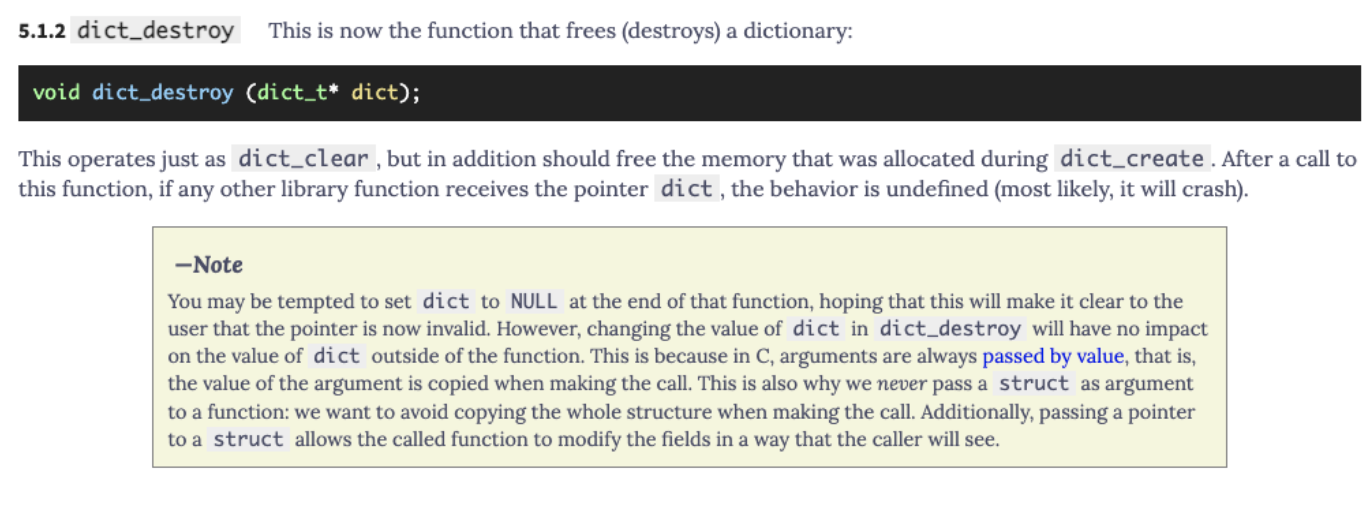
5.1.2 dict_destroy This is now the function that frees (destroys) a dictionary: void dict_destroy (dict_t* dict); This operates just as dict_clear , but in addition should free the memory that was allocated during dict_create . After a call to this function, if any other library function receives the pointer dict , the behavior is undefined (most likely, it will crash). -Note You may be tempted to set dict to NULL at the end of that function, hoping that this will make it clear to the user that the pointer is now invalid. However, changing the value of dict in dict_destroy will have no impact on the value of dict outside of the function. This is because in C, arguments are always passed by value, that is, the value of the argument is copied when making the call. This is also why we never pass a struct as argument to a function: we want to avoid copying the whole structure when making the call. Additionally, passing a pointer to a struct allows the called function to modify the fields in a way that the caller will see
Step by Step Solution
There are 3 Steps involved in it

Get step-by-step solutions from verified subject matter experts