



Question: 6 1 x (t) 4- 2 -2 N 10 t -2 2. Let f(x) = sin(3x) + ecosx and g(x) be a differentiable function with
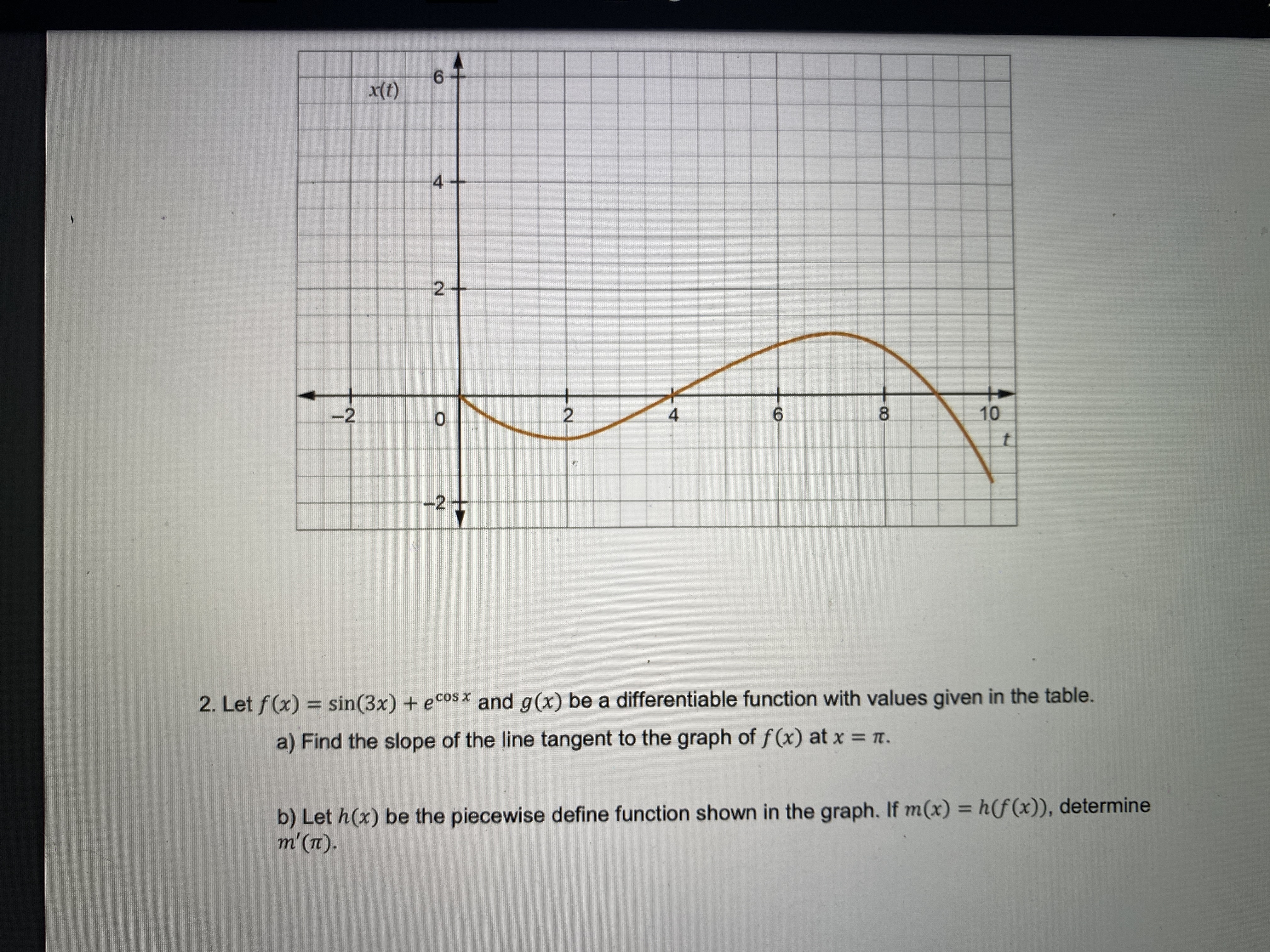
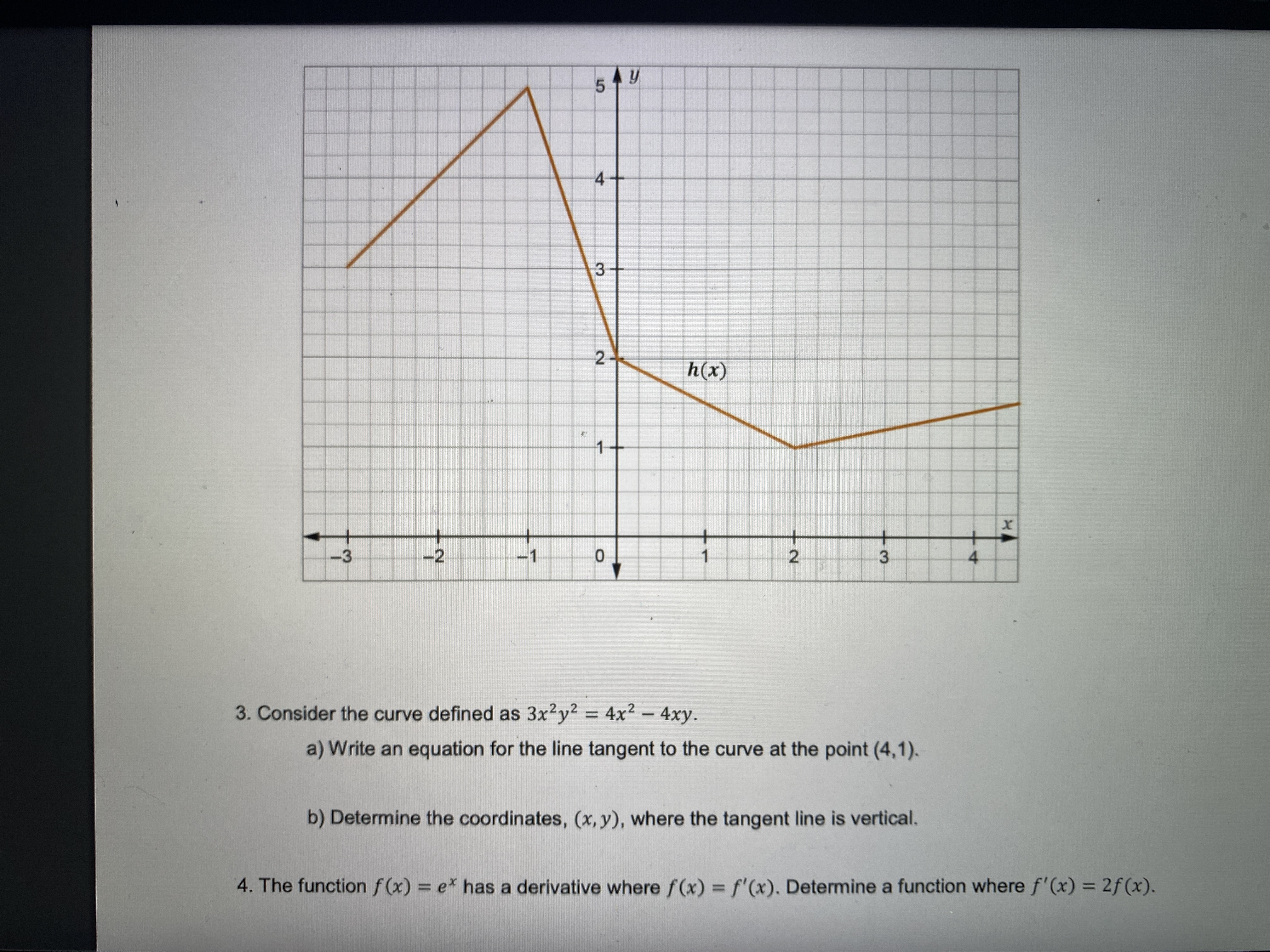
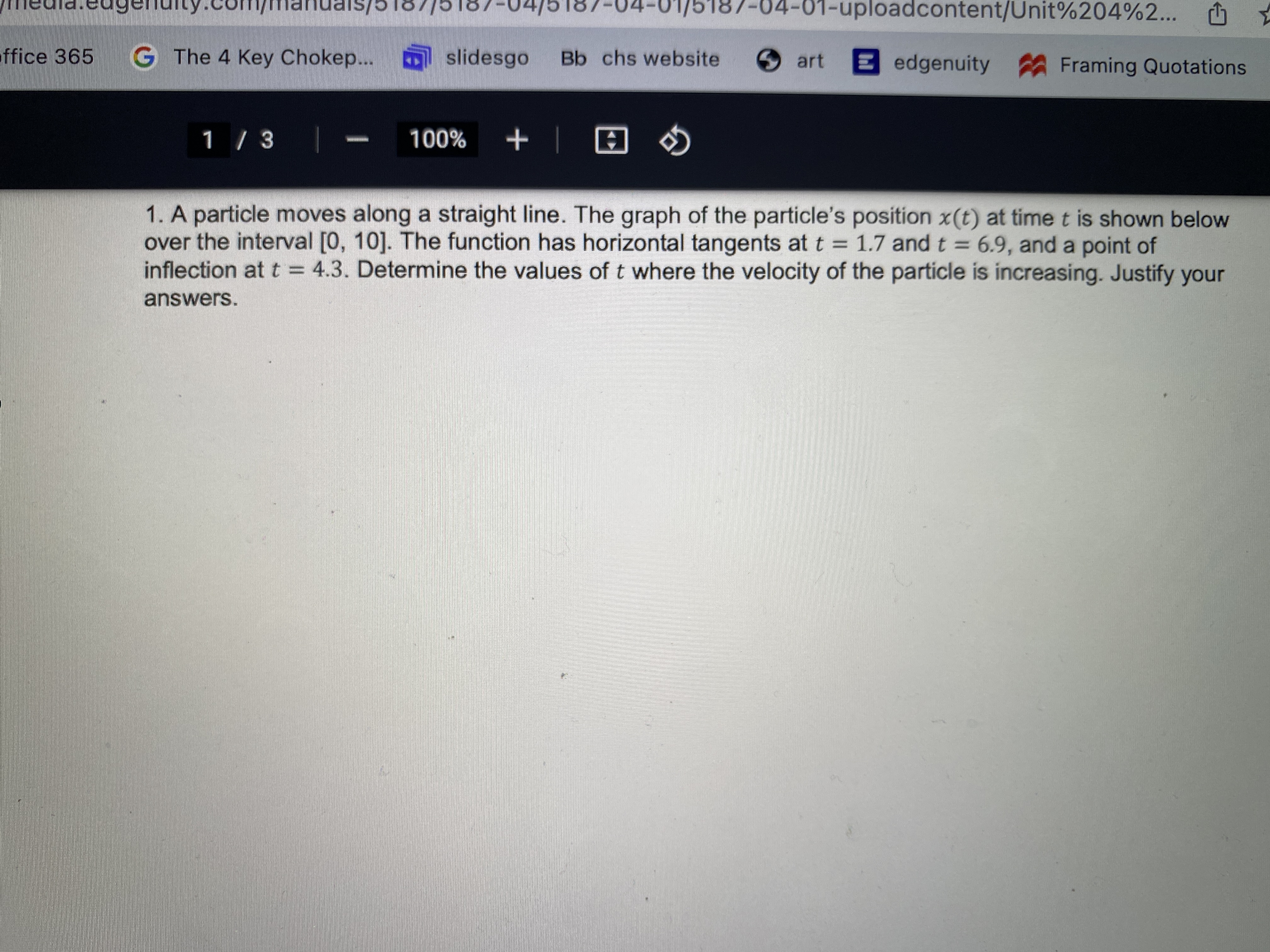
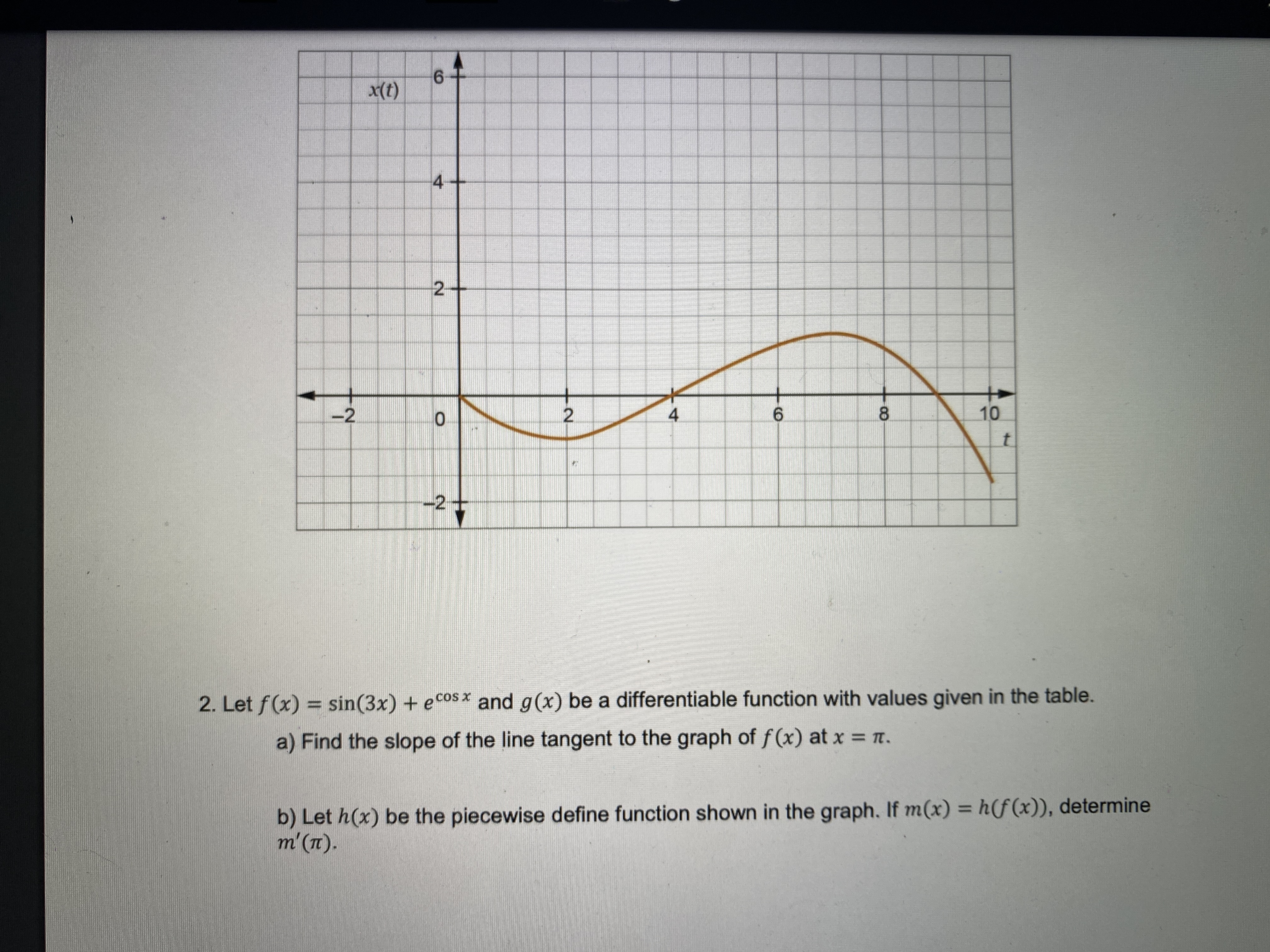
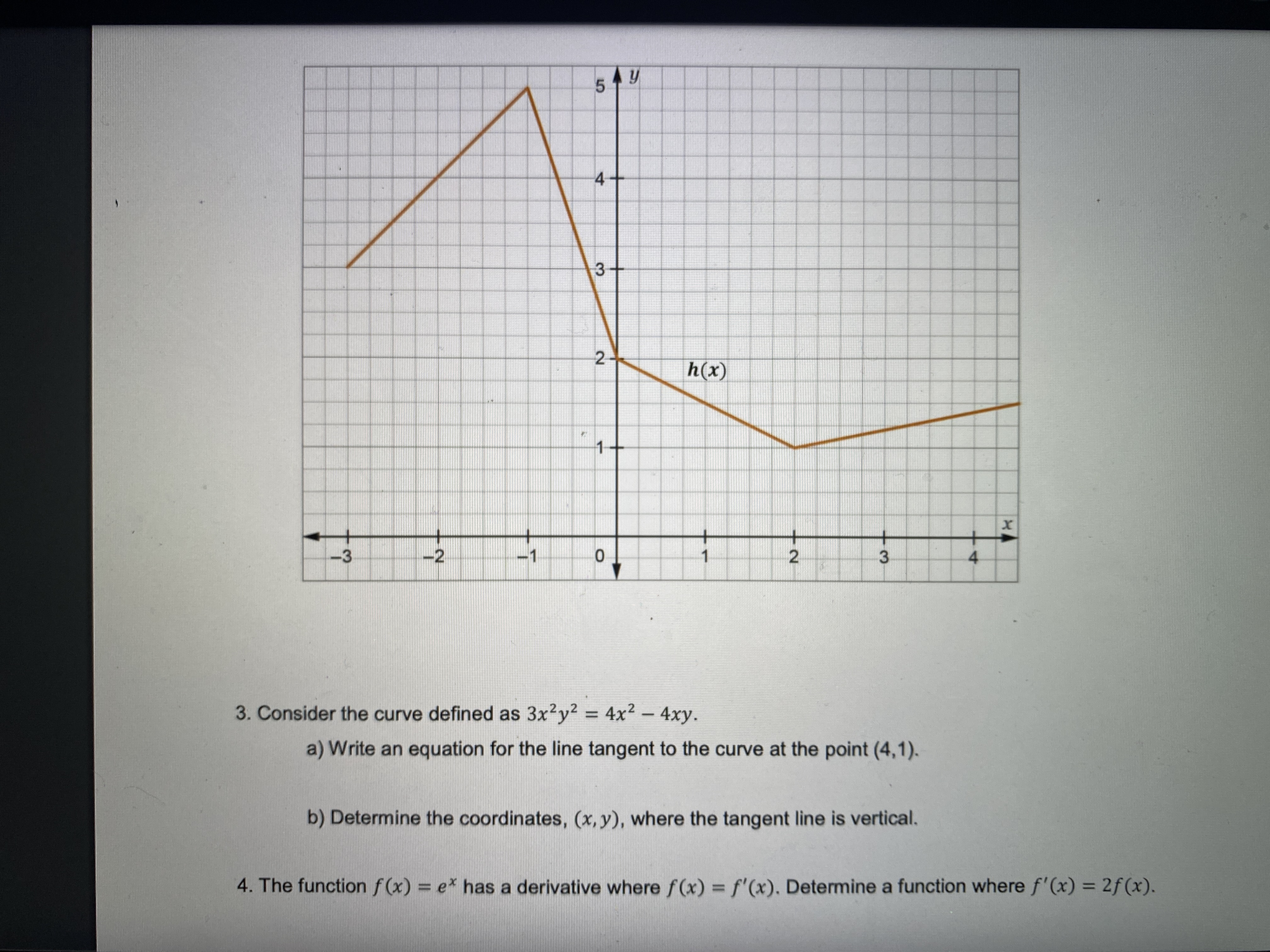
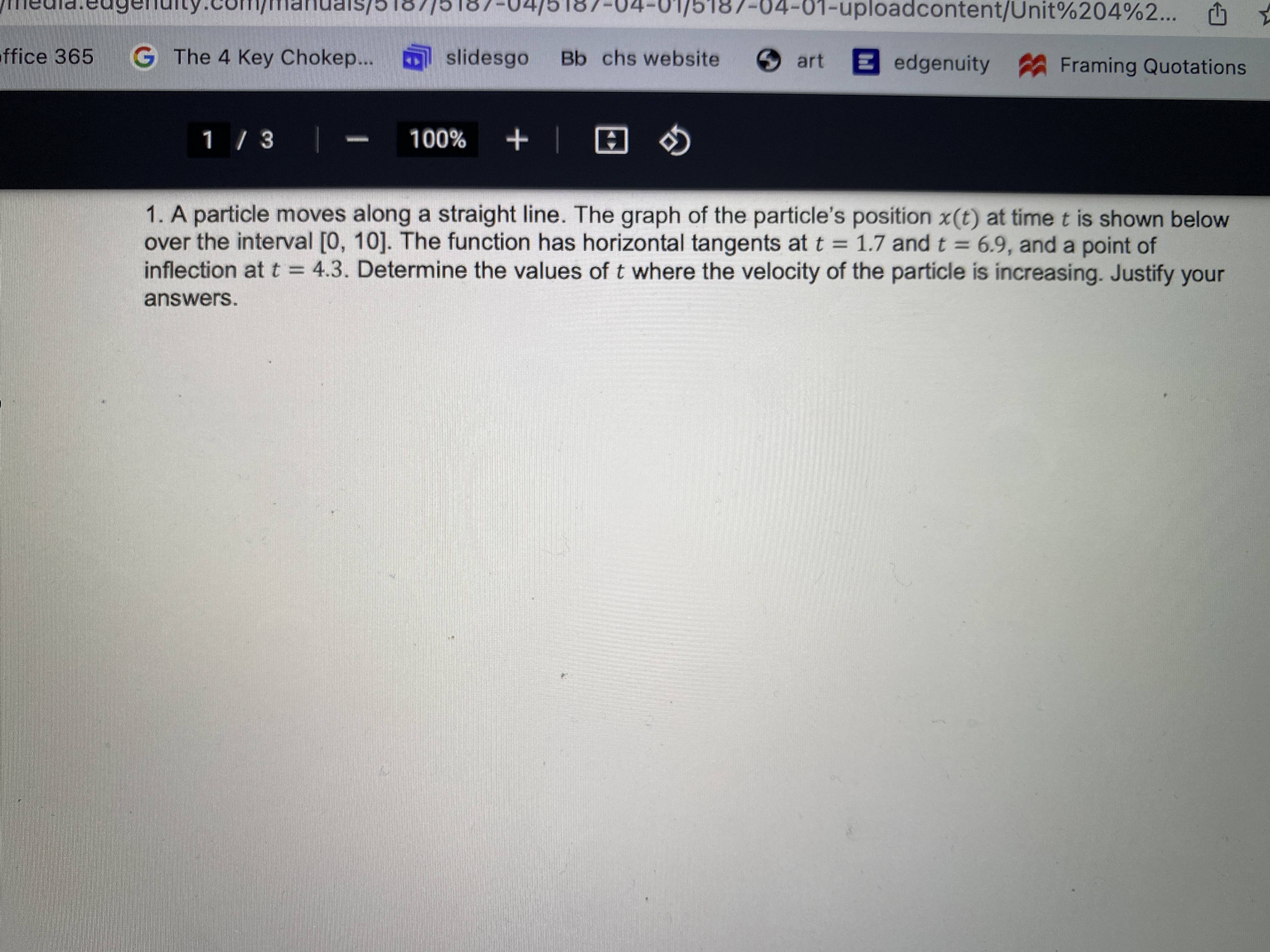
6 1 x (t) 4- 2 -2 N 10 t -2 2. Let f(x) = sin(3x) + ecosx and g(x) be a differentiable function with values given in the table. a) Find the slope of the line tangent to the graph of f (x) at x = It. b) Let h(x) be the piecewise define function shown in the graph. If m(x) = h(f(x)), determine m' (It)4 3 2- h(x) 1 - X - 3 -2 w - N- 3. Consider the curve defined as 3x2y2 = 4x2 - 4xy. a) Write an equation for the line tangent to the curve at the point (4, 1). b) Determine the coordinates, (x, y), where the tangent line is vertical. 4. The function f (x) = ex has a derivative where f (x) = f'(x). Determine a function where f'(x) = 2f(x).Jals/ 16//516/- 04/518/ 01/5187-04-01-uploadcontent/Unit%204%2... ffice 365 G The 4 Key Chokep.. slidesgo Bb chs website art E edgenuity Framing Quotations 1 /3 100% + H 1. A particle moves along a straight line. The graph of the particle's position x(t) at time t is shown below over the interval [0, 10]. The function has horizontal tangents at t = 1.7 and t = 6.9, and a point of inflection at t = 4.3. Determine the values of t where the velocity of the particle is increasing. Justify your answers
Step by Step Solution
There are 3 Steps involved in it

Get step-by-step solutions from verified subject matter experts