



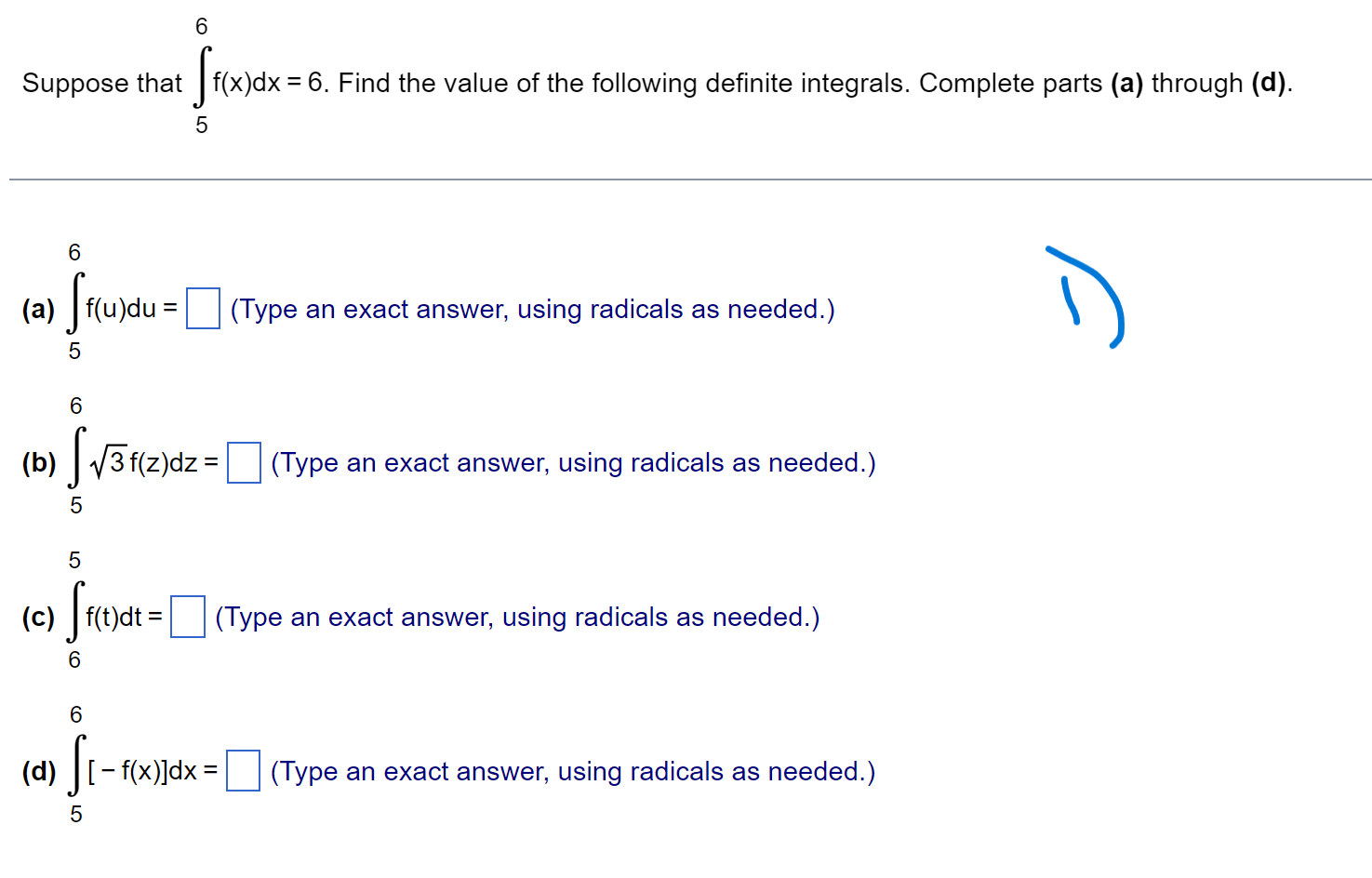
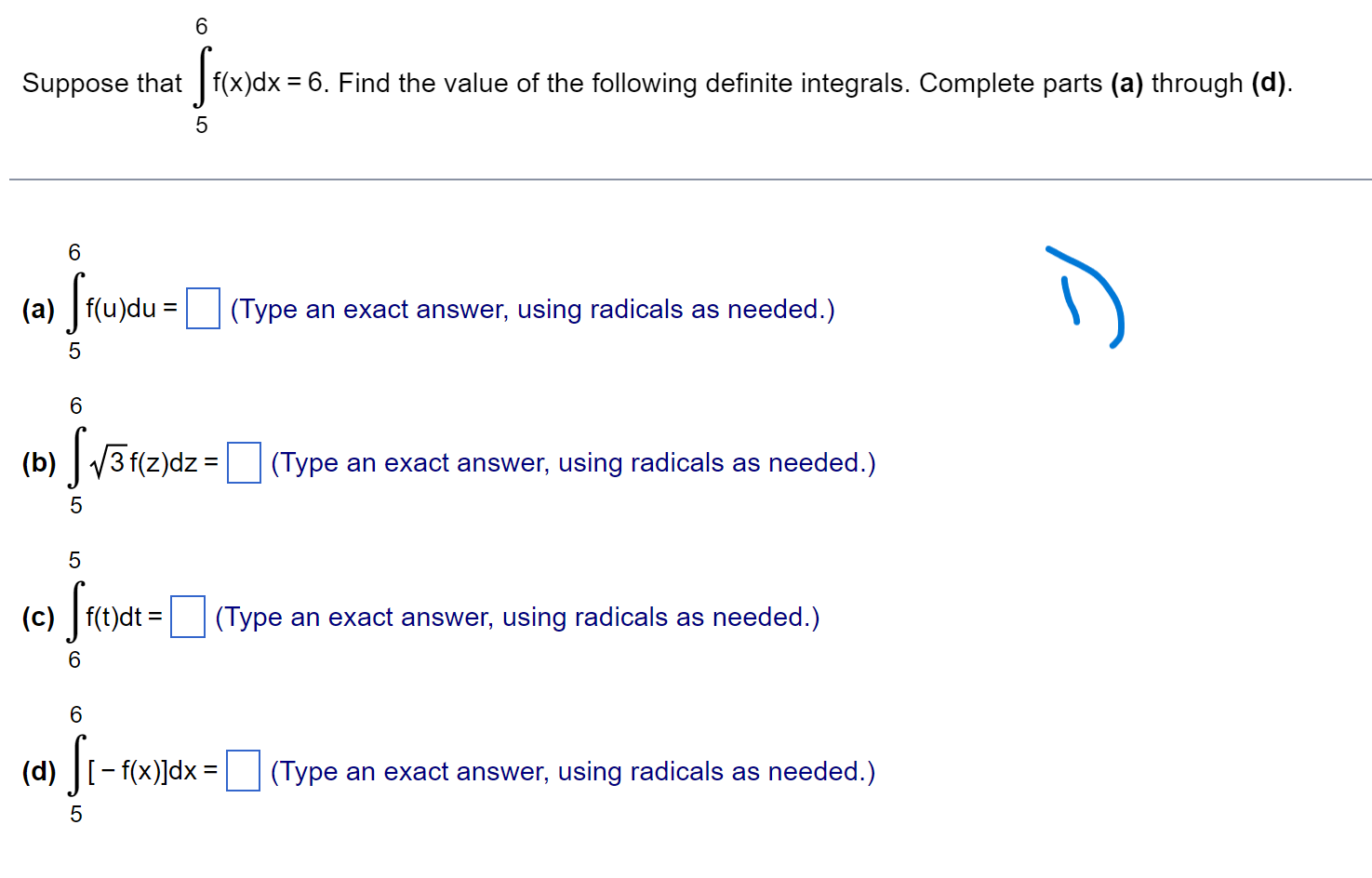
Question: 6 5 Suppose that f(x)dx = 6. Find the value of the following definite integrals. Complete parts (a) through (d). 6 5 (a) f(u)du =
![6 5 (d) [- f(x)]dx = (Type an exact answer, using radicals](https://s3.amazonaws.com/si.experts.images/answers/2024/06/66663b0cab373_82066663b0c922e7.jpg)
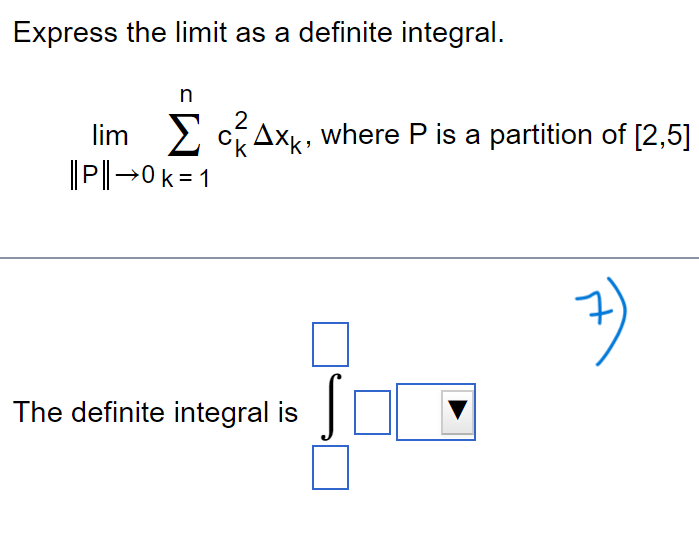
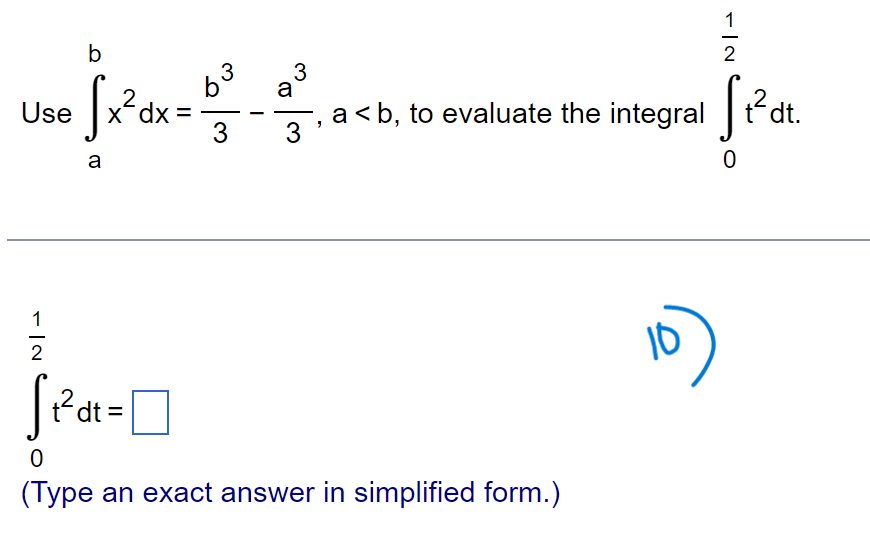
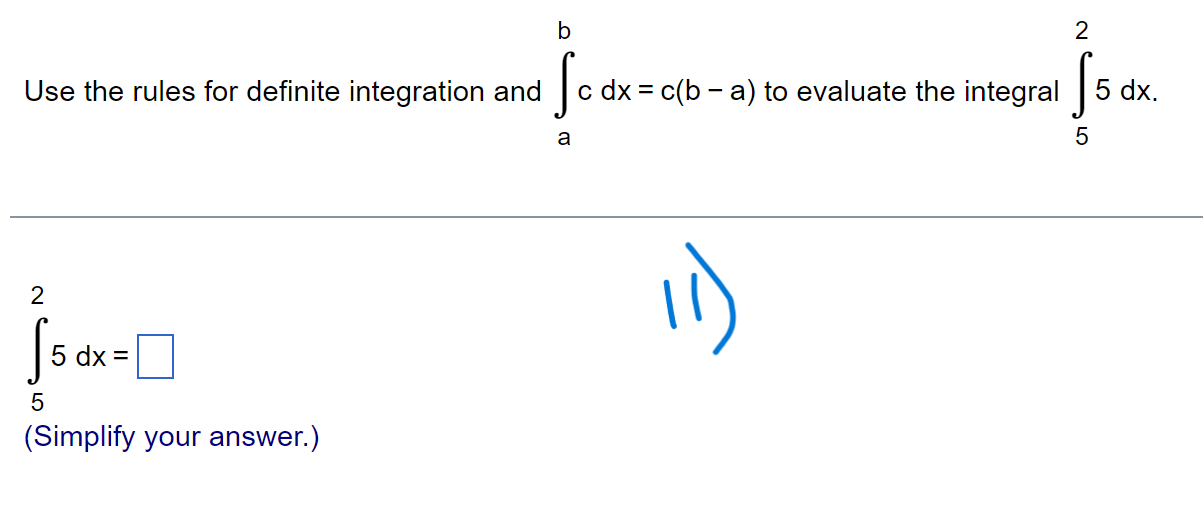

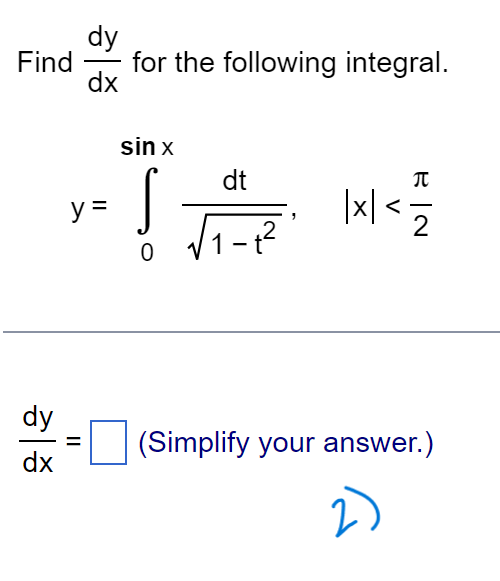
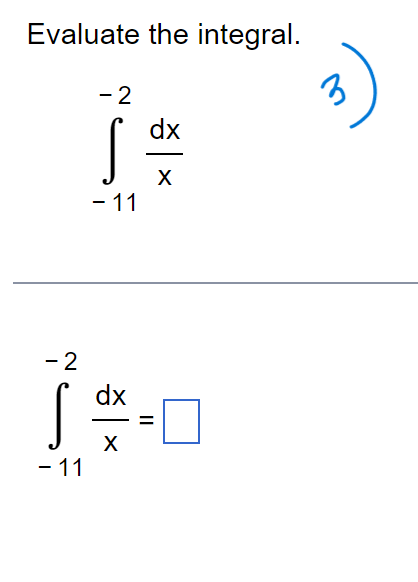
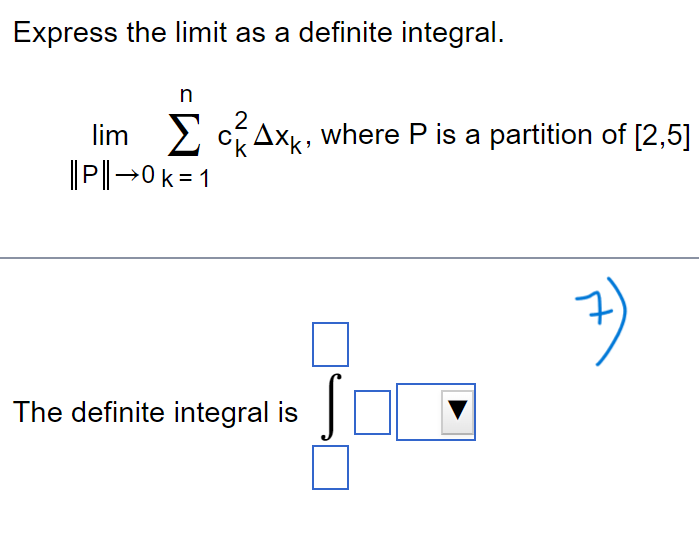
![2 Ax , where P is a partition of [2,5] |P| -OK](https://s3.amazonaws.com/si.experts.images/answers/2024/06/66663b116839b_82566663b114cca7.jpg)
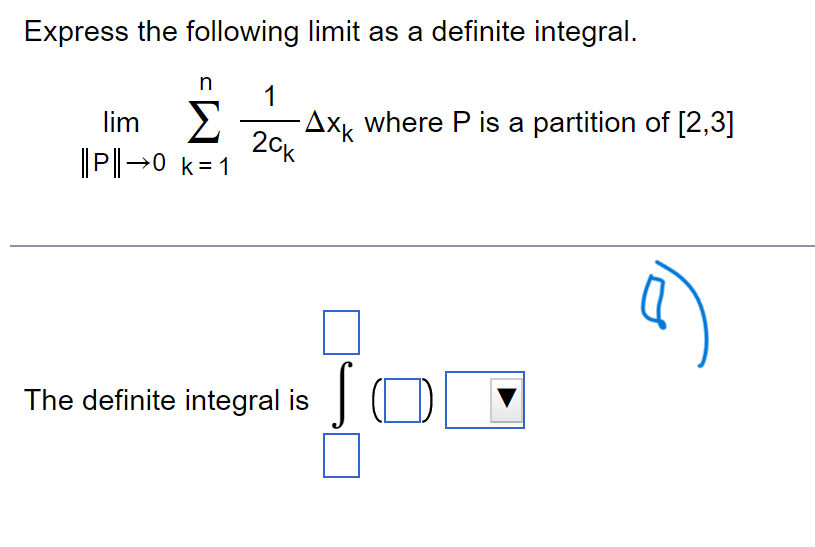
![integral. n lim Axx where P is a partition of [2,3] |](https://s3.amazonaws.com/si.experts.images/answers/2024/06/66663b1219e8e_82666663b1206b40.jpg)
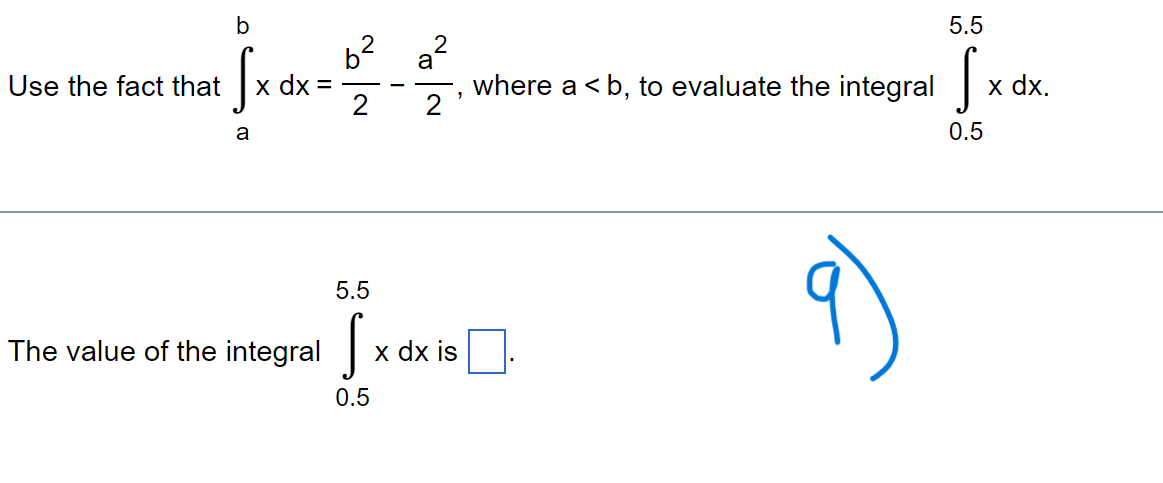
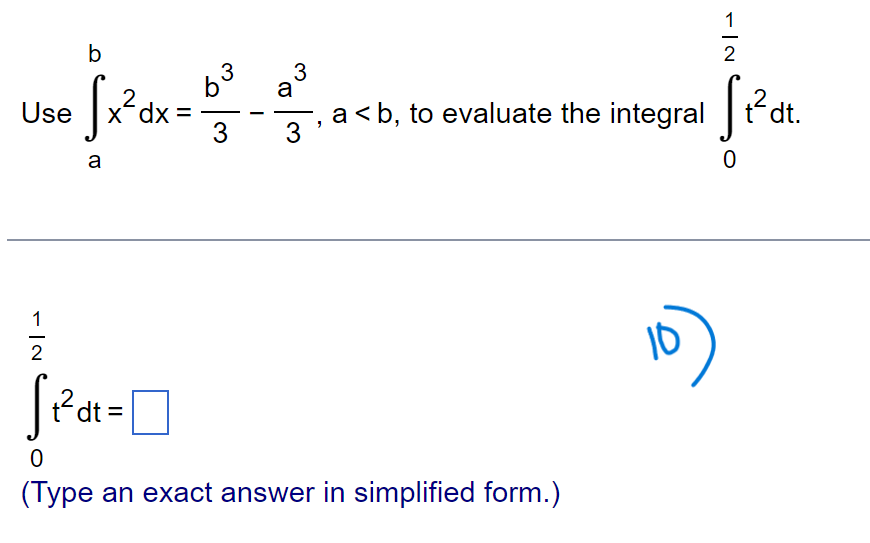
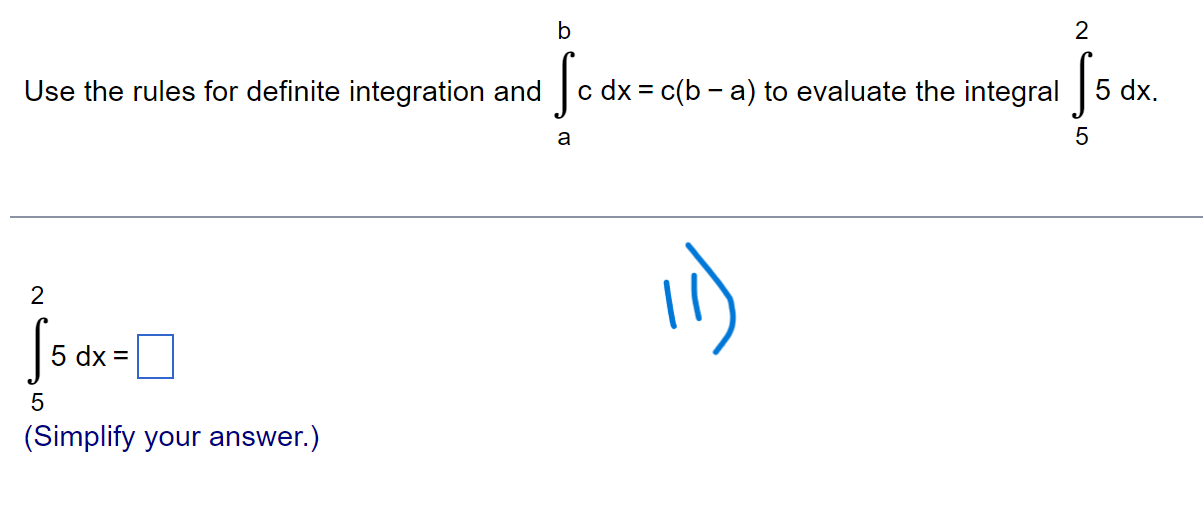
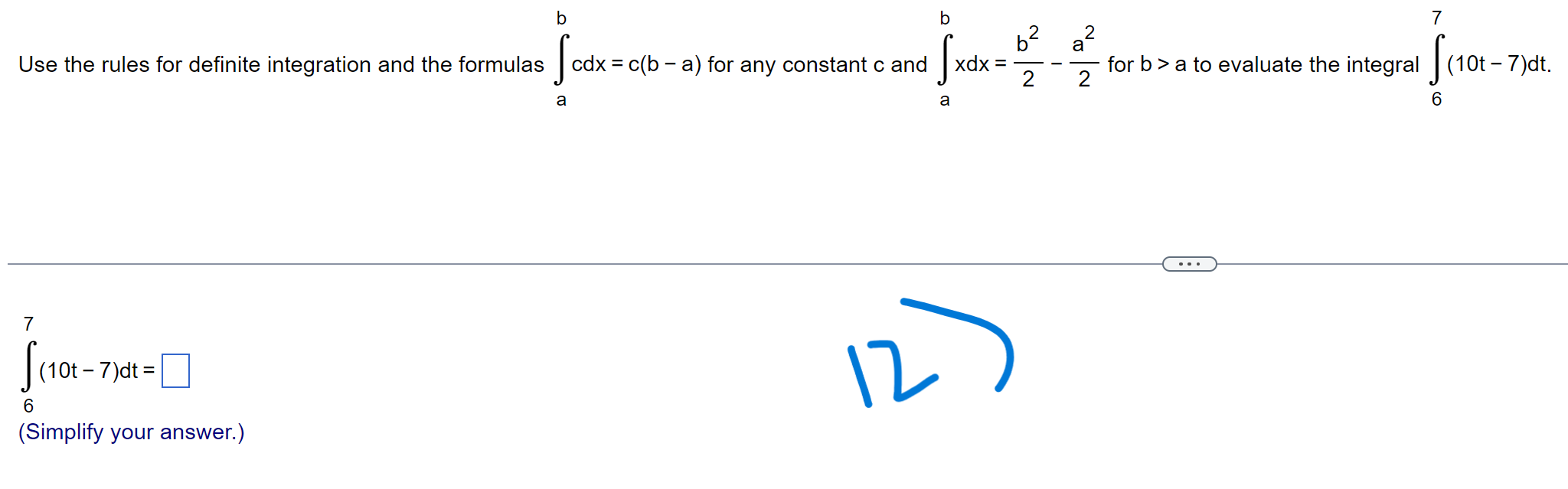

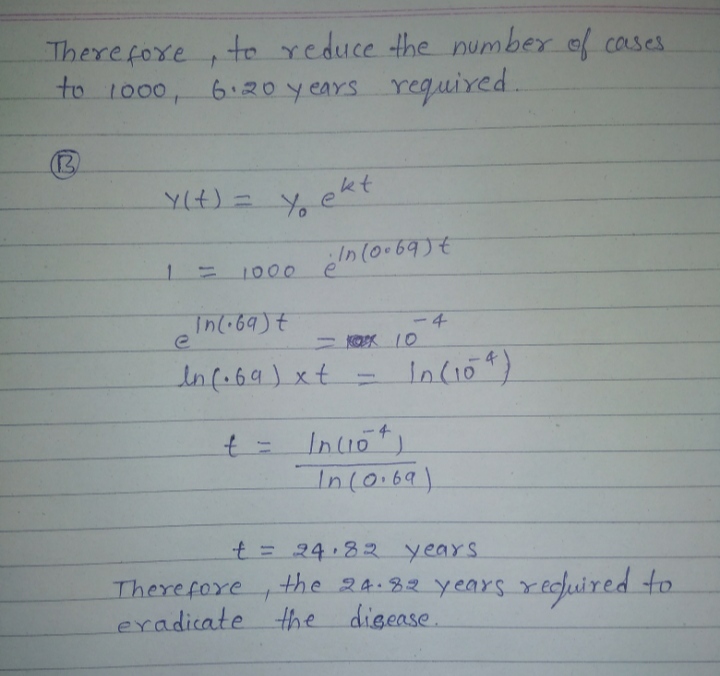
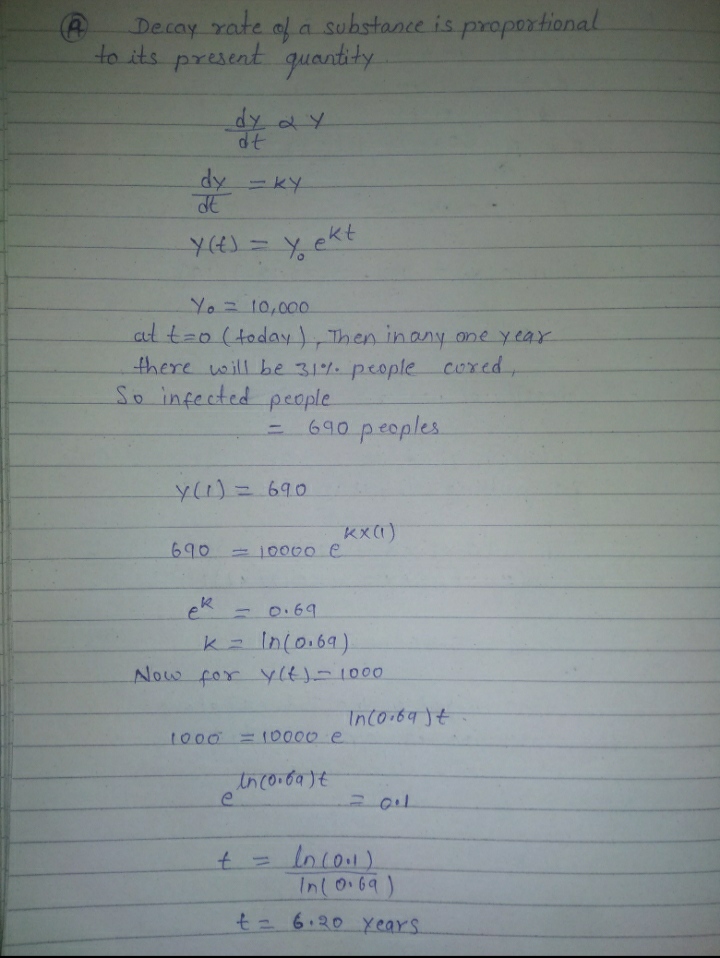
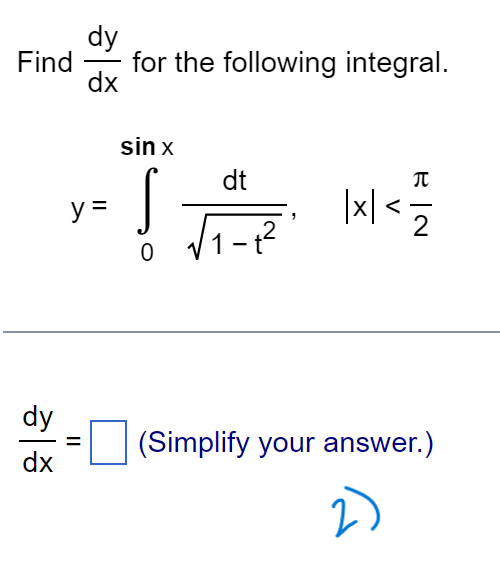
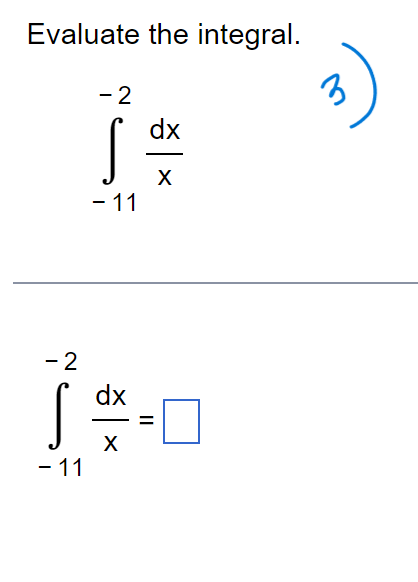
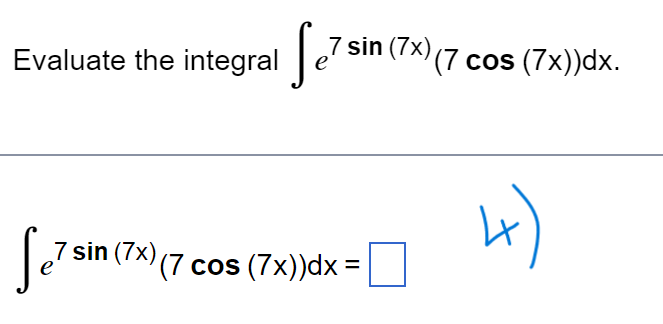
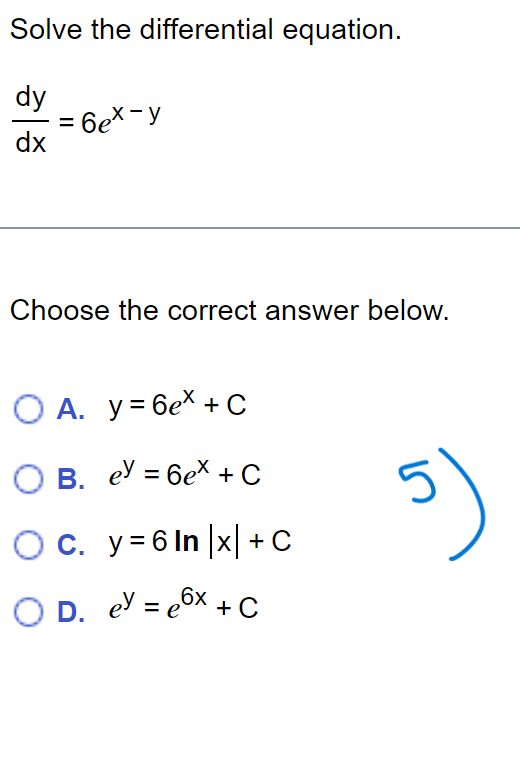
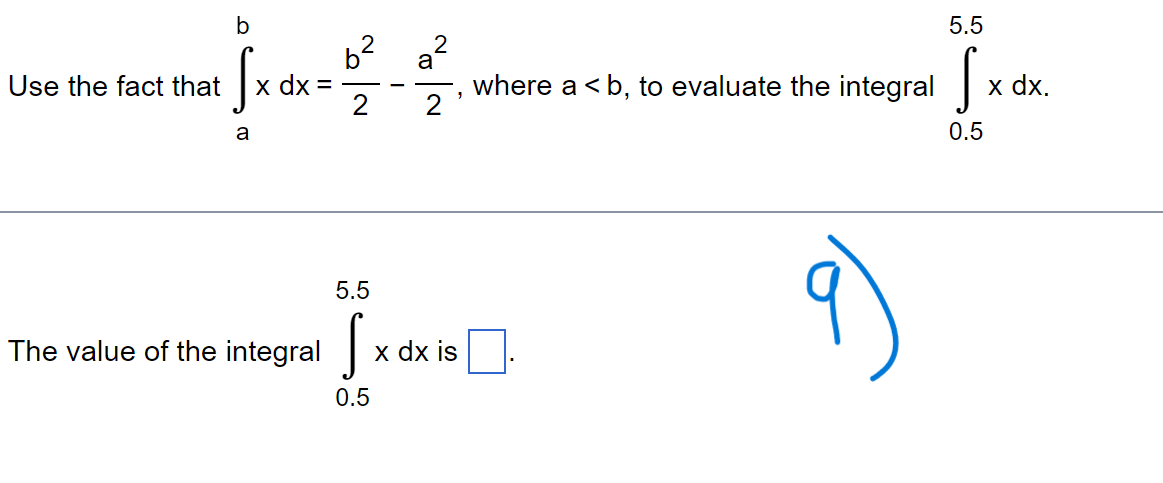
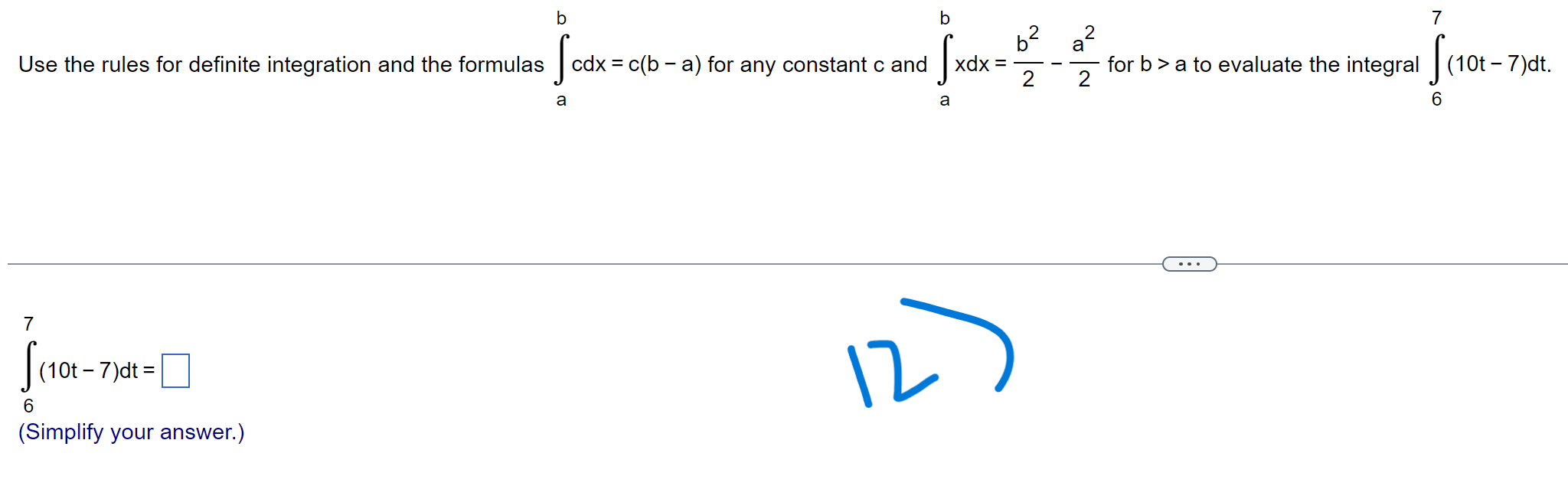
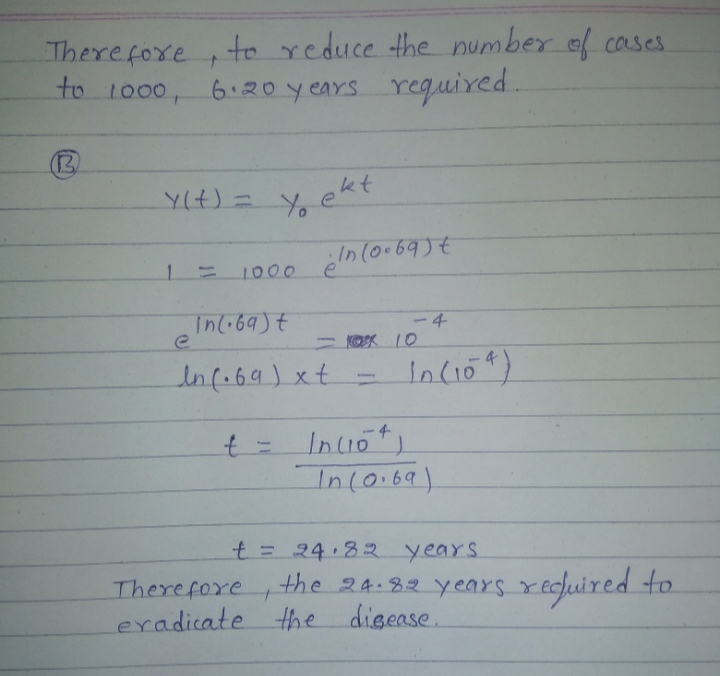
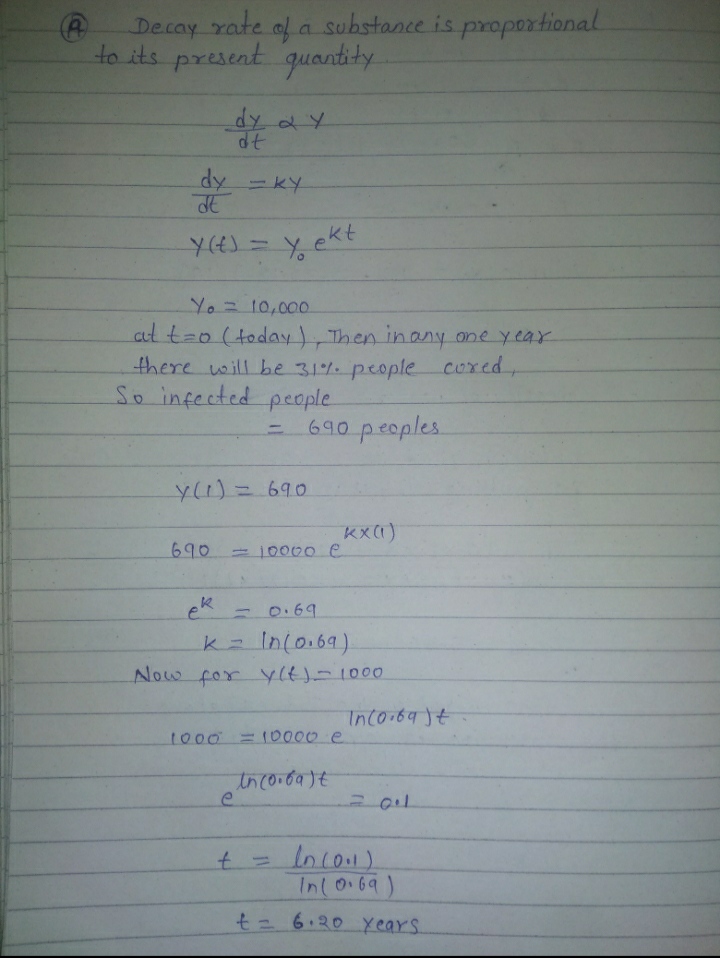
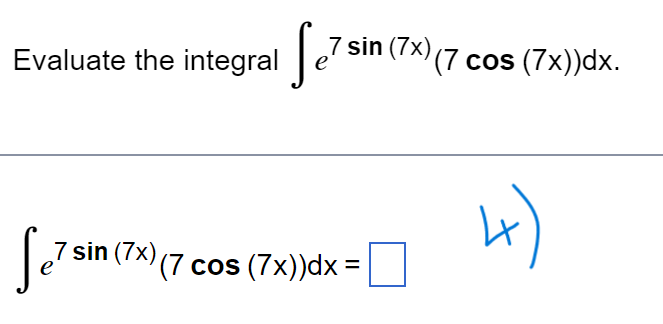
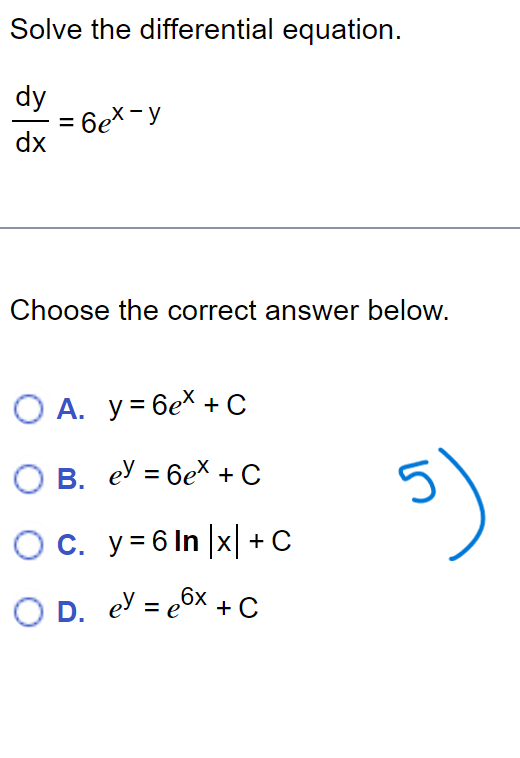
6 5 Suppose that f(x)dx = 6. Find the value of the following definite integrals. Complete parts (a) through (d). 6 5 (a) f(u)du = (Type an exact answer, using radicals as needed.) 5 (b) 13f(z)dz = (Type an exact answer, using radicals as needed.) 5 6 (c) | f(t)dt = (Type an exact answer, using radicals as needed.) 6 5 (d) [- f(x)]dx = (Type an exact answer, using radicals as needed.)\fSolve the differential equation. Choose the correct answer below. If} B. 63' =56?X +0 6 1;") C. y=6|n|x|+C I: I D_ By 3 + C d One model for the way diseases die out when properly treated assumes that the rate dZ at which the number of infected people changes is proportional to the number y, The number of people cured is proportional to the number that have the disease. Suppose that in any given year, the number of cases of a disease is reduced by 31%. There are 10,000 cases today. a. How long will it take to reduce the number of cases to 1000? b. How long will it take to eradicate the disease, that is, reduce the number of cases to less than 1? It will take years to reduce the number of cases to 1000. (Round to the nearest hundredth.) It will take years to eradicate the disease. (Round to the nearest hundredth.) Express the limit as a definite integral. n lim C 2 Ax , where P is a partition of [2,5] |P| -OK = 1 The definite integral isExpress the following limit as a definite integral. n lim Axx where P is a partition of [2,3] | P| -0 k=1 2CK P The definite integral isb 5.5 2 a Use the fact that x dx = - x dx. 2 2 , where a a to evaluate the integral a 2 ( 10t - 7 ) dt . a 6 (. . . ( 10t - 7 ) at = 6 12 (Simplify your answer.)d One model for the way diseases die out when properly treated assumes that the rate dZ at which the number of infected people changes is proportional to the number y, The number of people cured is proportional to the number that have the disease. Suppose that in any given year, the number of cases of a disease is reduced by 31%. There are 10,000 cases today. a. How long will it take to reduce the number of cases to 1000? b. How long will it take to eradicate the disease, that is, reduce the number of cases to less than 1? It will take years to reduce the number of cases to 1000. (Round to the nearest hundredth.) It will take years to eradicate the disease. (Round to the nearest hundredth.) Therefore, to reduce the number of cases to 1000, 6.20 years required yet ) = yockt 1= 1000 In (0 . 69 ) t In ( . 69 ) t - 4 - KEx 10 In ( . 6 9 ) x t - in ( 10 4) + = In( 10 7) In ( 0. 6 9 ) t = 24 82 years Therefore , the 24. 82 years required to eradicate the disease.A Decay rate of a substance is proportional to its present quantity dy dy dy - ky de y ( + ) = y ekt Yo = 10, 000 at tzo ( today ) , Then in any one year there will be 31% people coxed So infected people = 690 peoples y ( 1 ) = 690 KX ( 1 ) 690 = 10000 e OR - 0.69 K = In (0 . 69 ) Now for y (( ) - 1000 Inco. 69 ) t 1000 = 10000 e e t = loco .1) In ( 0. 69 ) t = 6.20 years
Step by Step Solution
There are 3 Steps involved in it

Get step-by-step solutions from verified subject matter experts