







Question: 6. borrowing might lever up the return on common equity when: A) the cash from issuing debt is invested earm at a rate equal the
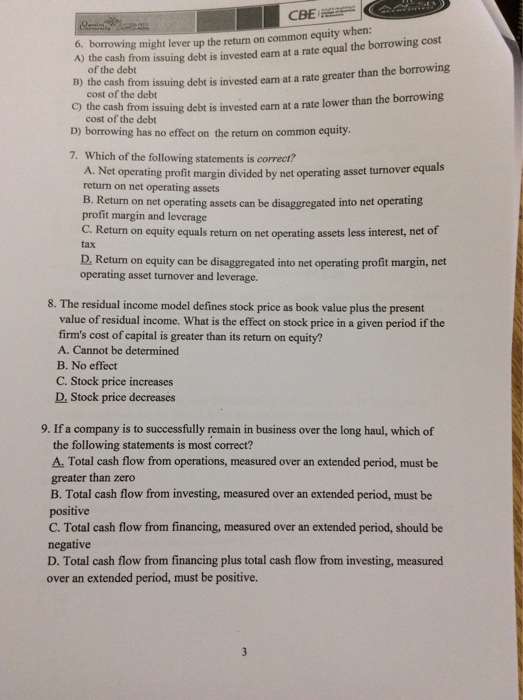
6. borrowing might lever up the return on common equity when: A) the cash from issuing debt is invested earm at a rate equal the borrowing cost B) the cash from issuing debt is invested earn at a rate greater than the borrowing c) the of the debt cash from issuing debt is invested earn at a rate lower than the borrowing cost of the debt cost of the debt D) borrowing has no effect on the return on common equity. Which of the following statements is correct? A. Net operating profit margin divided by net operating asset turnover equals 7. return on net operating assets B. Return on net operating assets can be disaggregated into net operating profit margin and leverage C. Return on equity equals return on net operating assets less interest, net of tax D, Return on equity can be disaggregated into net operating profit margin, net operating asset turnover and leverage. 8. The residual income model defines stock price as book value plus the present value of residual income. What is the effect on stock price in a given period if the firm's cost of capital is greater than its return on equity? A. Cannot be determined B. No effect C. Stock price increases D, Stock price decreases 9. If a company is to successfully remain in business over the long haul, which of the following statements is most correct? Total cash flow from operations, measured over an extended period, must be greater than zero B. Total cash flow from investing, measured over an extended period, must be positive C. Total cash flow from financing, measured over an extended period, should be negative D. Total cash flow from financing plus total cash flow from investing, measured over an extended period, must be positive
Step by Step Solution
There are 3 Steps involved in it

Get step-by-step solutions from verified subject matter experts
 Study Help