







Question: 6. Market value ratios Ratios are mostly calculated using data drawn from the financial statements of a firm. However, another group of ratios, called market-based
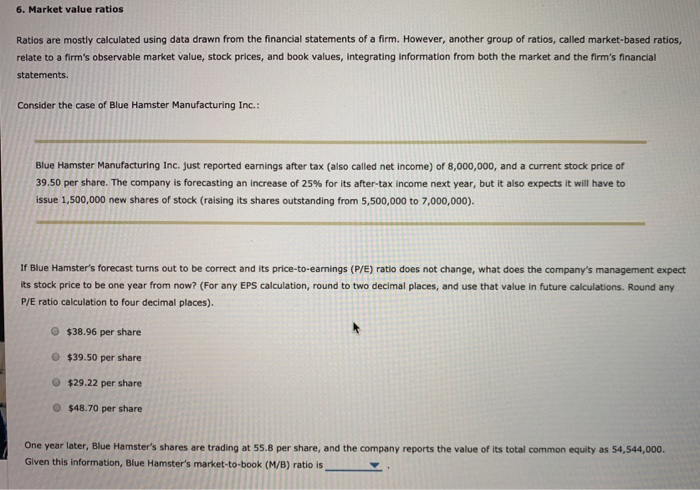
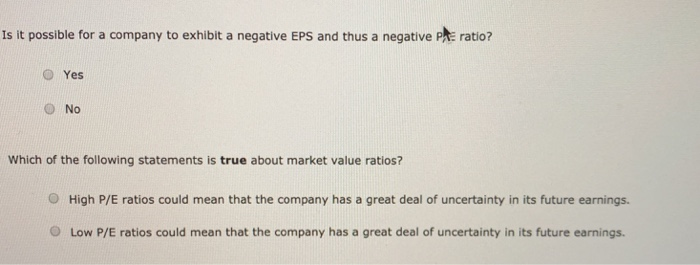
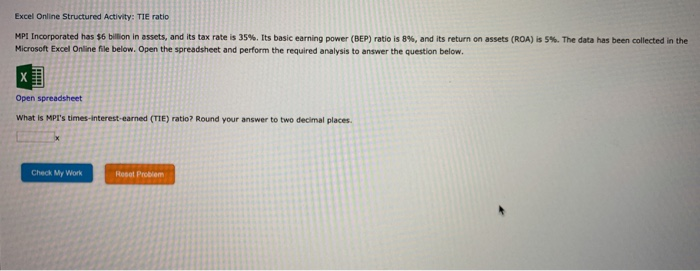
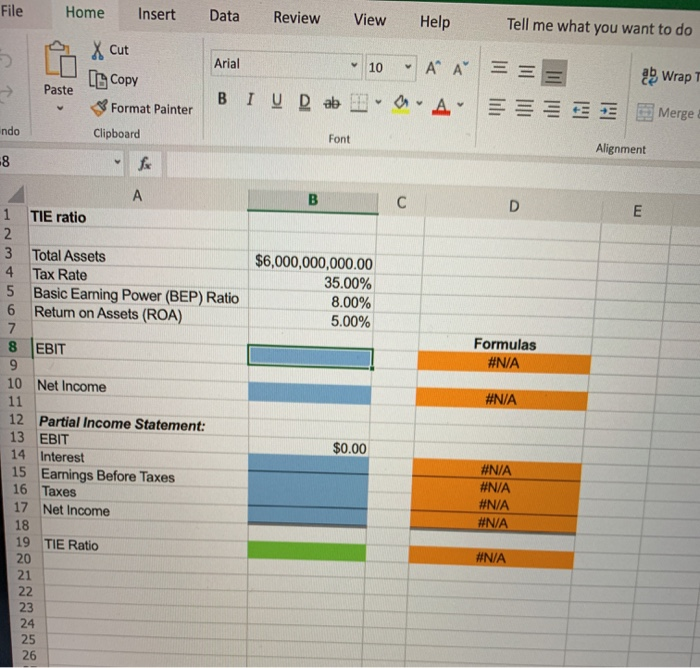
6. Market value ratios Ratios are mostly calculated using data drawn from the financial statements of a firm. However, another group of ratios, called market-based ratios, relate to a firm's observable market value, stock prices, and book values, integrating information from both the market and the firm's financial statements. Consider the case of Blue Hamster Manufacturing Inc.: Blue Hamster Manufacturing Inc. Just reported earnings after tax (also called net income) of 8,000,000, and a current stock price of 39,50 per share. The company is forecasting an increase of 25% for its after-tax income next year, but it also expects it will have to issue 1,500,000 new shares of stock (raising its shares outstanding from 5,500,000 to 7,000,000). If Blue Hamster's forecast turns out to be correct and its price-to-earnings (P/E) ratio does not change, what does the company's management expect its stock price to be one year from now? (For any EPS calculation, round to two decimal places, and use that value in future calculations. Round any P/E ratio calculation to four decimal places). $38.96 per share $39.50 per share $29.22 per share $48.70 per share One year later, Blue Hamster's shares are trading at 55.8 per share, and the company reports the value of its total common equity as 54,544,000 Given this information, Blue Hamster's market-to-book (M/B) ratio is Is it possible for a company to exhibit a negative EPS and thus a negative p ratio? Yes Which of the following statements is true about market value ratios? High P/E ratios could mean that the company has a great deal of uncertainty in its future earnings. Low P/E ratios could mean that the company has a great deal of uncertainty in its future earnings. Excel Online Structured Activity: TIE ratio MPI Incorporated has $6 billion in assets, and its tax rate is 35%. Its basic earning power (BEP) ratio is 8%, and its return on assets (ROA) is 5%. The data has been collected in the Microsoft Excel Online file below. Open the spreadsheet and perform the required analysis to answer the question below. Open spreadsheet What is MPI's times-interest-earned (TIE) ratio? Round your answer to two decimal place Check My Work File Home Insert Data Review View Help Tell me what you want to do S 5 X Cut LO Arial gcopy 10 - A A = = = Paste BI U D ab 10 A as WrapT Mergea Format Painter Clipboard 3 ndo Font Alignment D 1 TIE ratio 3 5 6 Total Assets Tax Rate Basic Earning Power (BEP) Ratio Retum on Assets (ROA) $6,000,000,000.00 35.00% 8.00% 5.00% 8 EBIT Formulas #N/A #N/A 10 Net Income 11 12 Partial Income Statement: 13 EBIT 14 Interest 15 Earnings Before Taxes 16 Taxes 17 Net Income $0.00 #N/A #N/A #N/A #N/A 19 TIE Ratio #N/A
Step by Step Solution
There are 3 Steps involved in it

Get step-by-step solutions from verified subject matter experts
 Study Help