







Question: 6 . Question 6 0/1 pt ' 100 2 29 @ Details Use the graphs below to answer the questions. h( x ) 16 +
6
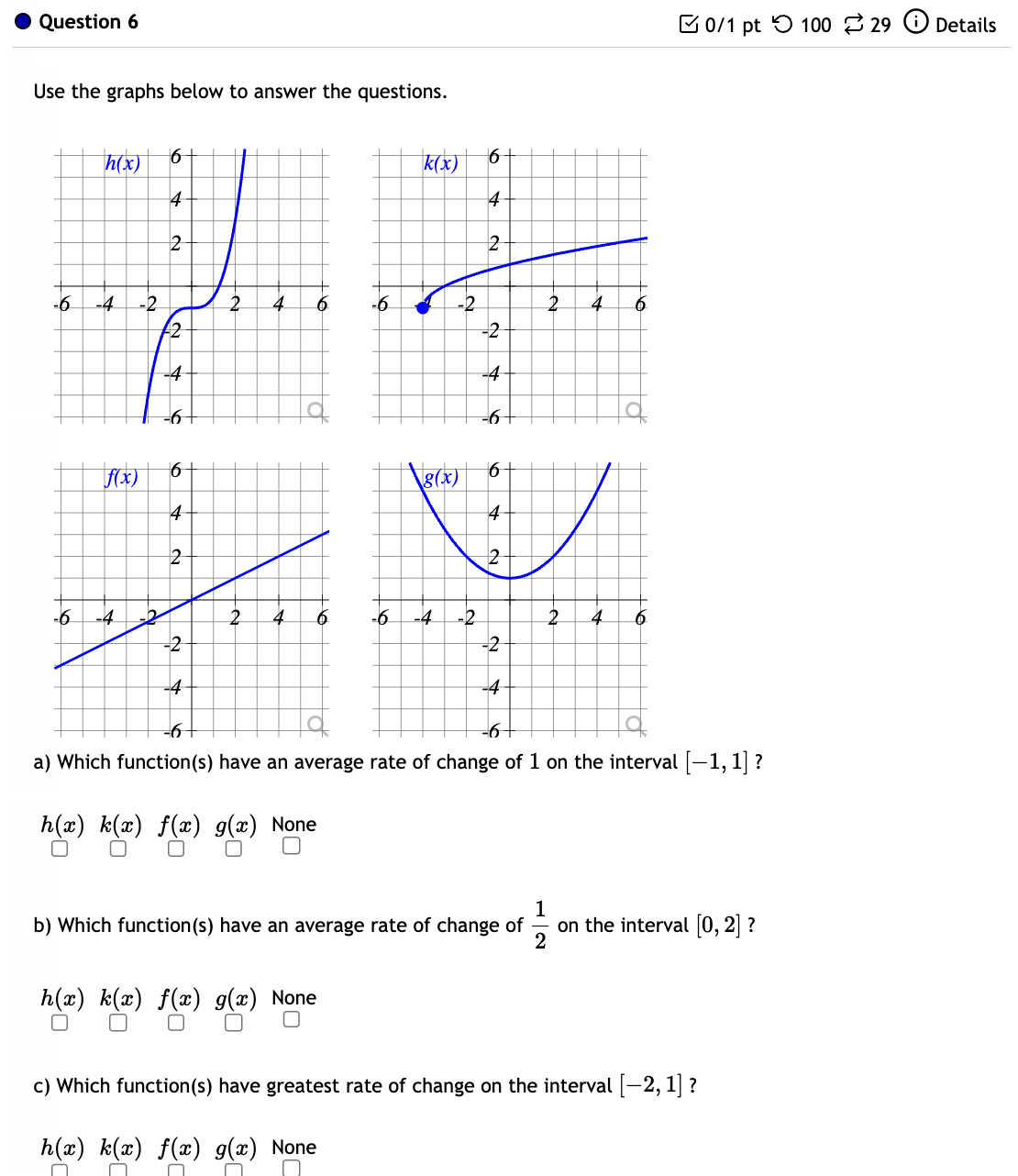
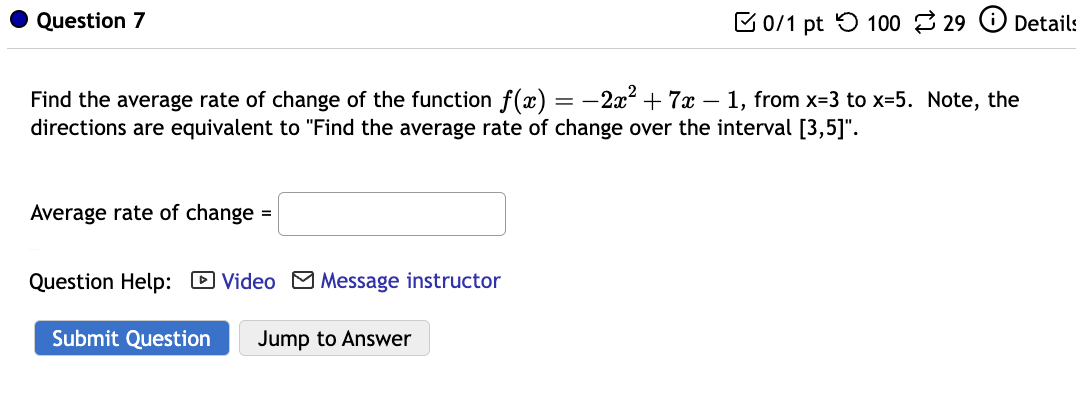
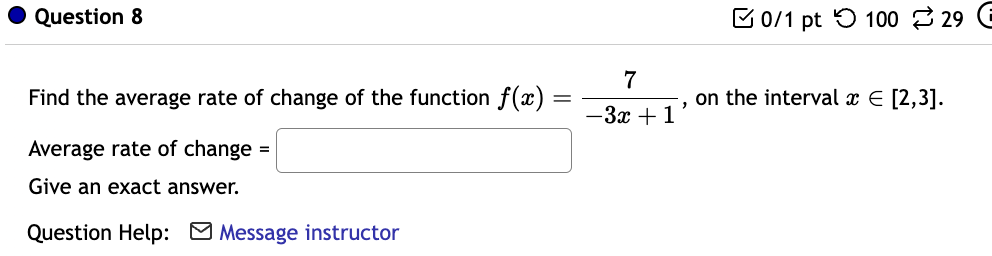
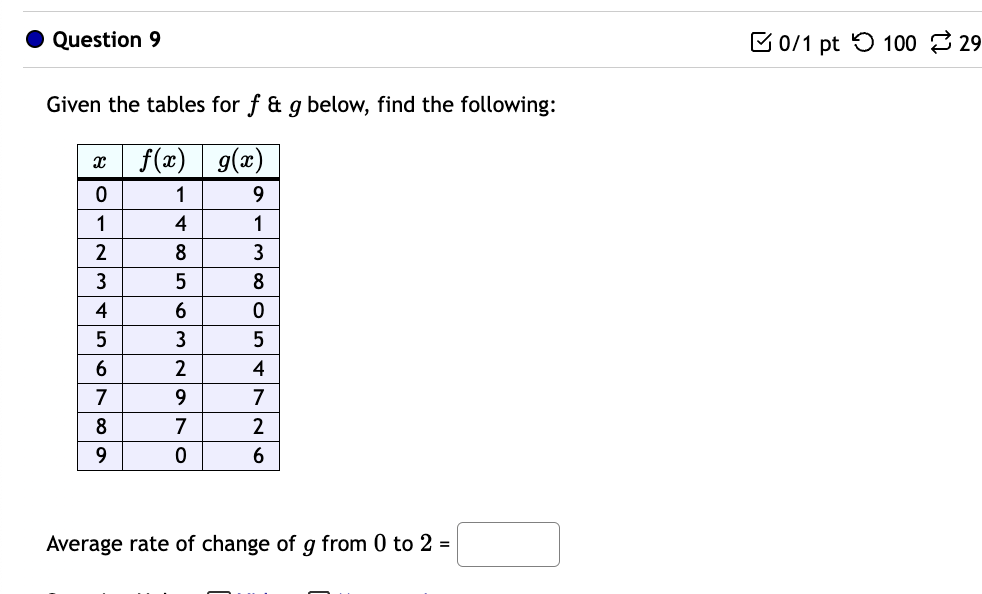
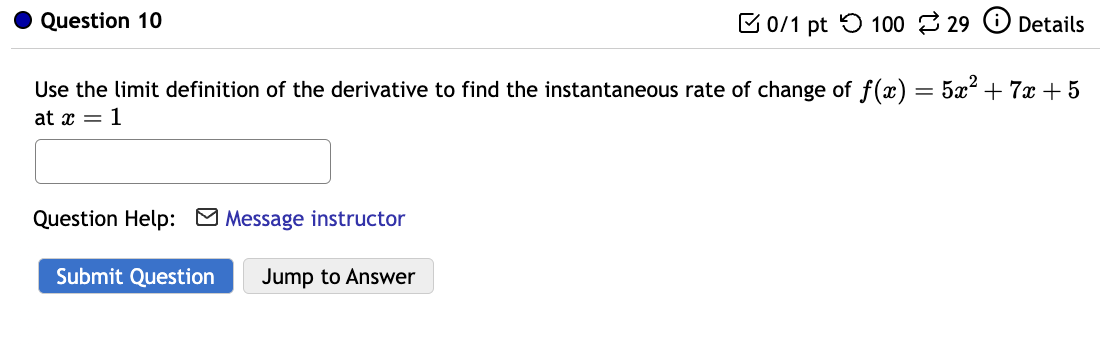
. Question 6 0/1 pt ' 100 2 29 @ Details Use the graphs below to answer the questions. h( x ) 16 + k ( x x ) -6+ 2 -4 2 6 -6 -2 2 4 at 12 -2 f (x ) 6- 8 ( X ) 61 4- 2- -2 -6 -4 6 -6 -4 -2 2 4 6 -2 -2 -4 -4 a) Which function(s) have an average rate of change of 1 on the interval [-1, 1] ? h(x) k(x) f(x) g(x) None O b) Which function(s) have an average rate of change of _ on the interval [0, 2] ? h(x) k(x) f(x) g(x) None O c) Which function(s) have greatest rate of change on the interval [-2, 1] ? h(x) k(a) f(x) g(x) None@ Question 7 & 0/1pt O 100 229 @ Details Find the average rate of change of the function f(:c) = 22>+ Tz 1, from x=3 to x=5. Note, the directions are equivalent to "Find the average rate of change over the interval [3,5]". Average rate of change =' ' Question Help: (2] Video &9 Message instructor Submit Question Jump to Answer @ Question 8 01 pt 100 =29 G 7 Find the average rate of change of the function f(a:) = 341' on the interval x [2,3]. 3z Average rate of change = ' Give an exact answer. Question Help: [ Message instructor . Question 9 0/1 pt 9 100 29 Given the tables for f & g below, find the following: f(2) g(x) 0 9 4 2 W W 5 CO 4 6 O 5 W O N 4 9 2 9 0 6 Average rate of change of g from 0 to 2 =Question 10 0/1 pt O 100 29 @ Details Use the limit definition of the derivative to find the instantaneous rate of change of f(a ) = 5x- + 7ac + 5 at x = 1 Question Help: Message instructor Submit Question Jump to
Step by Step Solution
There are 3 Steps involved in it

Get step-by-step solutions from verified subject matter experts
 Study Help