



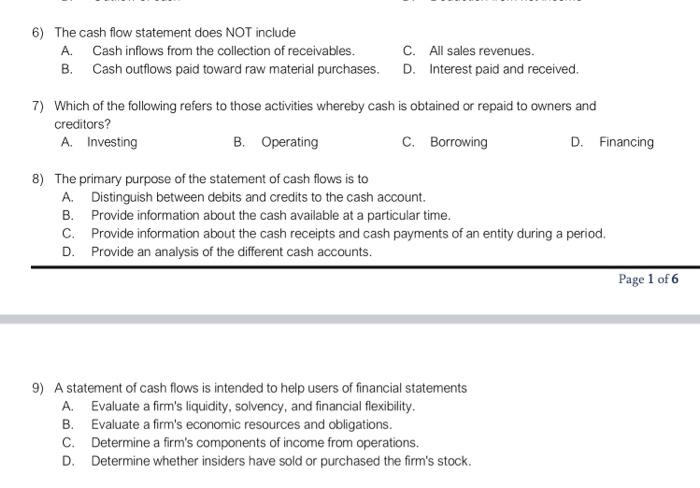
Question: 6) The cash flow statement does NOT include A. Cash inflows from the collection of receivables. C. All sales revenues. B. Cash outflows paid toward
6) The cash flow statement does NOT include
A. Cash inflows from the collection of receivables. C. All sales revenues.
B. Cash outflows paid toward raw material purchases. D. Interest paid and received.
7) Which of the following refers to those activities whereby cash is obtained or repaid to owners and
creditors?
A. Investing B. Operating C. Borrowing D. Financing
8) The primary purpose of the statement of cash flows is to
A. Distinguish between debits and credits to the cash account.
B. Provide information about the cash available at a particular time.
C. Provide information about the cash receipts and cash payments of an entity during a period.
D. Provide an analysis of the different cash accounts.
9) A statement of cash flows is intended to help users of financial statements
A. Evaluate a firm's liquidity, solvency, and financial flexibility.
B. Evaluate a firm's economic resources and obligations.
C. Determine a firm's components of income from operations.
D. Determine whether insiders have sold or purchased the firm's stock.
6) The cash flow statement does NOT include A. Cash inflows from the collection of receivables. C. All sales revenues. B. Cash outflows paid toward raw material purchases. D. Interest paid and received. 7) Which of the following refers to those activities whereby cash is obtained or repaid to owners and creditors? A. Investing B. Operating C. Borrowing D. Financing 8) The primary purpose of the statement of cash flows is to A. Distinguish between debits and credits to the cash account. B. Provide information about the cash available at a particular time. C. Provide information about the cash receipts and cash payments of an entity during a period. D. Provide an analysis of the different cash accounts. Page 1 of 6 9) A statement of cash flows is intended to help users of financial statements A. Evaluate a firm's liquidity, solvency, and financial flexibility. B. Evaluate a firm's economic resources and obligations. C. Determine a firm's components of income from operations. D. Determine whether insiders have sold or purchased the firm's stock
Step by Step Solution
There are 3 Steps involved in it

Get step-by-step solutions from verified subject matter experts