







Question: 64. A two-stage system first allocates costs to: A. A product line and then allocates costs to the department. B. The cost driver and then
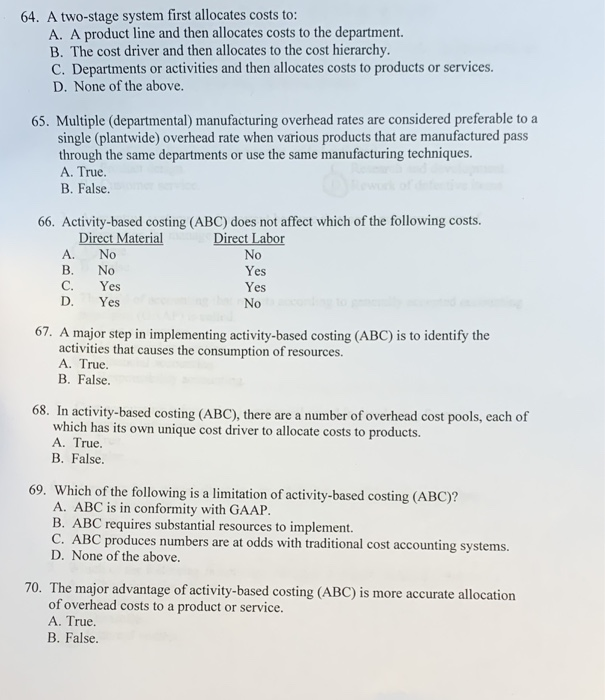
64. A two-stage system first allocates costs to: A. A product line and then allocates costs to the department. B. The cost driver and then allocates to the cost hierarchy. C. Departments or activities and then allocates costs to products or services. D. None of the above. 65. Multiple (departmental) manufacturing overhead rates are considered preferable to a single (plantwide) overhead rate when various products that are manufactured pass through the same departments or use the same manufacturing techniques. A. True. B. False. 66. Activity-based costing (ABC) does not affect which of the following costs Direct Labor Direct Material A. No B. No C. Yes D. Yes No Yes Yes No 67. A major step in implementing activity-based costing (ABC) is to identify the activities that causes the consumption of resources. A. True. B. False. 68. In activity-based c which has its own unique cost driver to allocate costs to products. A. True. B. False. 69. Which of the following is a limitation of activity-based costing (ABC)? A. ABC is in conformity with GAAP B. ABC requires substantial resources to implement. C. ABC produces numbers are at odds with traditional cost accounting D. None of the above. systems. of overhead costs to a product or service. A. True. B. False
Step by Step Solution
There are 3 Steps involved in it

Get step-by-step solutions from verified subject matter experts
 Study Help