







Question: 6:53 O 0.3 KB/s ~ all .ill 49% Case Study Case Study: Effective Leadership and Management at Apple Introduction: Apple Inc. is widely recognized as
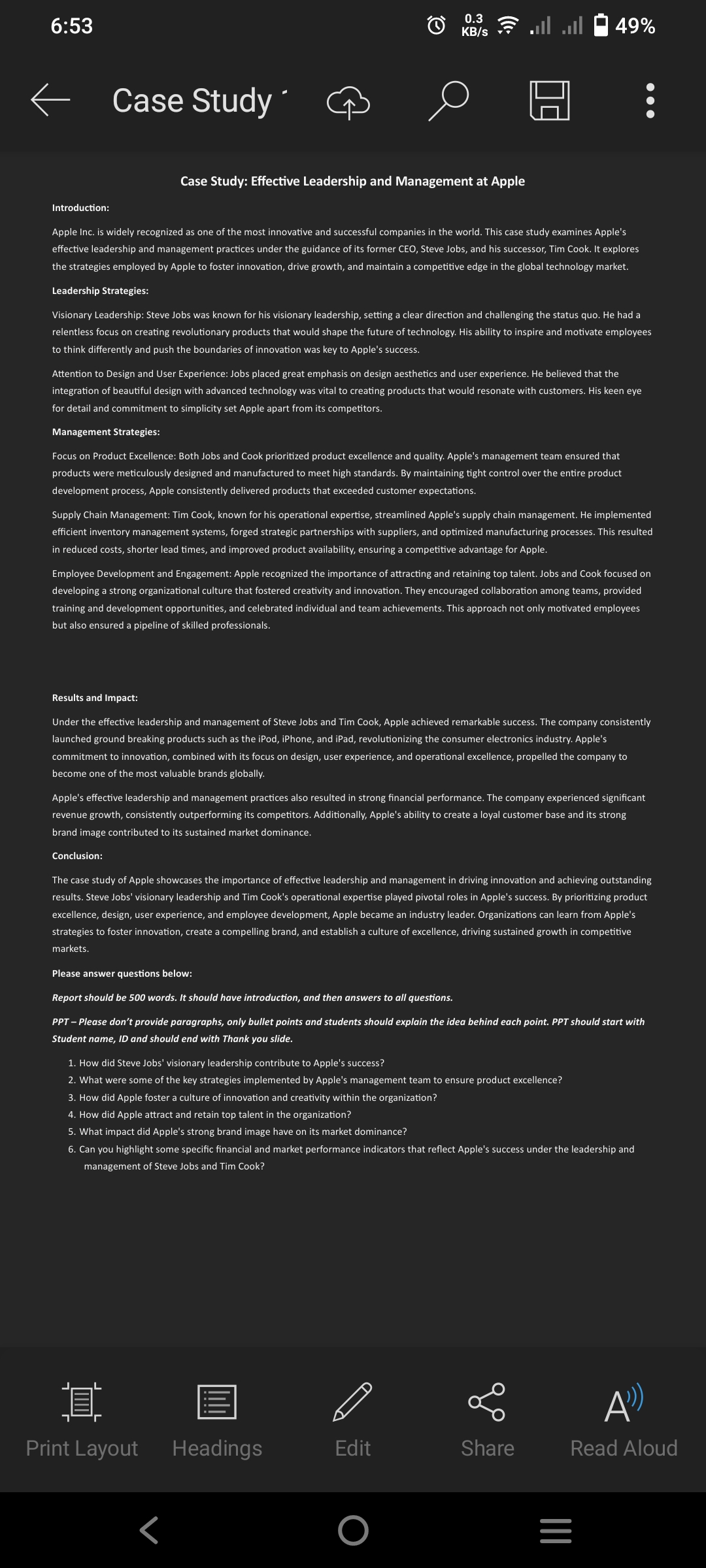
6:53 O 0.3 KB/s ~ all .ill 49% Case Study Case Study: Effective Leadership and Management at Apple Introduction: Apple Inc. is widely recognized as one of the most innovative and successful companies in the world. This case study examines Apple's effective leadership and management practices under the guidance of its former CEO, Steve Jobs, and his successor, Tim Cook. It explores the strategies employed by Apple to foster innovation, drive growth, and maintain a competitive edge in the global technology market. Leadership Strategies: Visionary Leadership: Steve Jobs was known for his visionary leadership, setting a clear direction and challenging the status quo. He had a relentless focus on creating revolutionary products that would shape the future of technology. His ability to inspire and motivate employees to think differently and push the boundaries of innovation was key to Apple's success. Attention to Design and User Experience: Jobs placed great emphasis on design aesthetics and user experience. He believed that the integration of beautiful design with advanced technology was vital to creating products that would resonate with customers. His keen eye for detail and commitment to simplicity set Apple apart from its competitors. Management Strategies: Focus on Product Excellence: Both Jobs and Cook prioritized product excellence and quality. Apple's management team ensured that products were meticulously designed and manufactured to meet high standards. By maintaining tight control over the entire product development process, Apple consistently delivered products that exceeded customer expectations. Supply Chain Management: Tim Cook, known for his operational expertise, streamlined Apple's supply chain management. He implemented efficient inventory management systems, forged strategic partnerships with suppliers, and optimized manufacturing processes. This resulted in reduced costs, shorter lead times, and improved product availability, ensuring a competitive advantage for Apple. Employee Development and Engagement: Apple recognized the importance of attracting and retaining top talent. Jobs and Cook focused on developing a strong organizational culture that fostered creativity and innovation. They encouraged collaboration among teams, provided training and development opportunities, and celebrated individual and team achievements. This approach not only motivated employees but also ensured a pipeline of skilled professionals. Results and Impact: Under the effective leadership and management of Steve Jobs and Tim Cook, Apple achieved remarkable success. The company consistently aunched ground breaking products such as the iPod, iPhone, and iPad, revolutionizing the consumer electronics industry. Apple's commitment to innovation, combined with its focus on design, user experience, and operational excellence, propelled the company to become one of the most valuable brands globally. Apple's effective leadership and management practices also resulted in strong financial performance. The company experienced significant revenue growth, consistently outperforming its competitors. Additionally, Apple's ability to create a loyal customer base and its strong brand image contributed to its sustained market dominance. Conclusion: The case study of Apple showcases the importance of effective leadership and management in driving innovation and achieving outstanding results. Steve Jobs' visionary leadership and Tim Cook's operational expertise played pivotal roles in Apple's success. By prioritizing product excellence, design, user experience, and employee development, Apple became an industry leader. Organizations can learn from Apple's strategies to foster innovation, create a compelling brand, and establish a culture of excellence, driving sustained growth in competitive markets. Please answer questions below: Report should be 500 words. It should have introduction, and then answers to all questions. PPT - Please don't provide paragraphs, only bullet points and students should explain the idea behind each point. PPT should start with Student name, ID and should end with Thank you slide. 1. How did Steve Jobs' visionary leadership contribute to Apple's success? 2. What were some of the key strategies implemented by Apple's management team to ensure product excellence? 3. How did Apple foster a culture of innovation and creativity within the organization? 1. How did Apple attract and retain top talent in the organization? 5. What impact did Apple's strong brand image have on its market dominance? 6. Can you highlight some specific financial and market performance indicators that reflect Apple's success under the leadership and management of Steve Jobs and Tim Cook? E Print Layout Headings Edit Share Read Aloud K O E
Step by Step Solution
There are 3 Steps involved in it

Get step-by-step solutions from verified subject matter experts
 Study Help