







Question: 7. Case Scenario: One client, a large US corporation, called us, to help resolve an impasse within a joint venture with a large Japanese corporation.
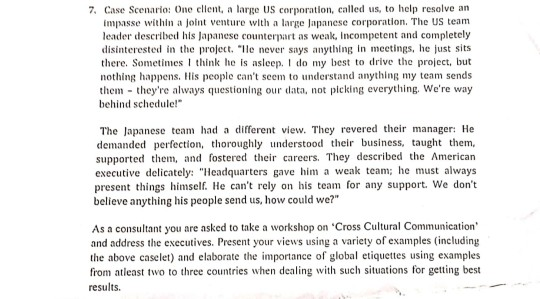
7. Case Scenario: One client, a large US corporation, called us, to help resolve an impasse within a joint venture with a large Japanese corporation. The US team leader described his Japanese counterpart as weak, Incompetent and completely disinterested in the project. "lle never says anything in meetings, he just sits there. Sometimes I think he is asleep, I do my best to drive the project, but nothing happens. His people can't seem to understand anything my team sends them - they're always questioning our data, not pleking everything. We're way behind schedule!" The Japanese team had a different view. They revered their manager: He demanded perfection, thoroughly understood their business, taught them, supported them, and fostered their careers. They described the American executive delicately: "Headquarters gave him a weak team; he must always present things himself. He can't rely on his team for any support. We don't believe anything his people send us, how could we?" As a consultant you are asked to take a workshop on 'Cross Cultural Communication and address the executives. Present your views using a variety of examples (including the above caselet) and elaborate the importance of global etiquettes using examples from atleast two to three countries when dealing with such situations for getting best results
Step by Step Solution
There are 3 Steps involved in it
1 Expert Approved Answer
Step: 1 Unlock

Question Has Been Solved by an Expert!
Get step-by-step solutions from verified subject matter experts
Step: 2 Unlock
Step: 3 Unlock
 Study Help