







Question: 7. (Section 10.5) Setup: JP took two random samples from different populations. = 18 is taken from an approximate normal 15.11817, and a mean
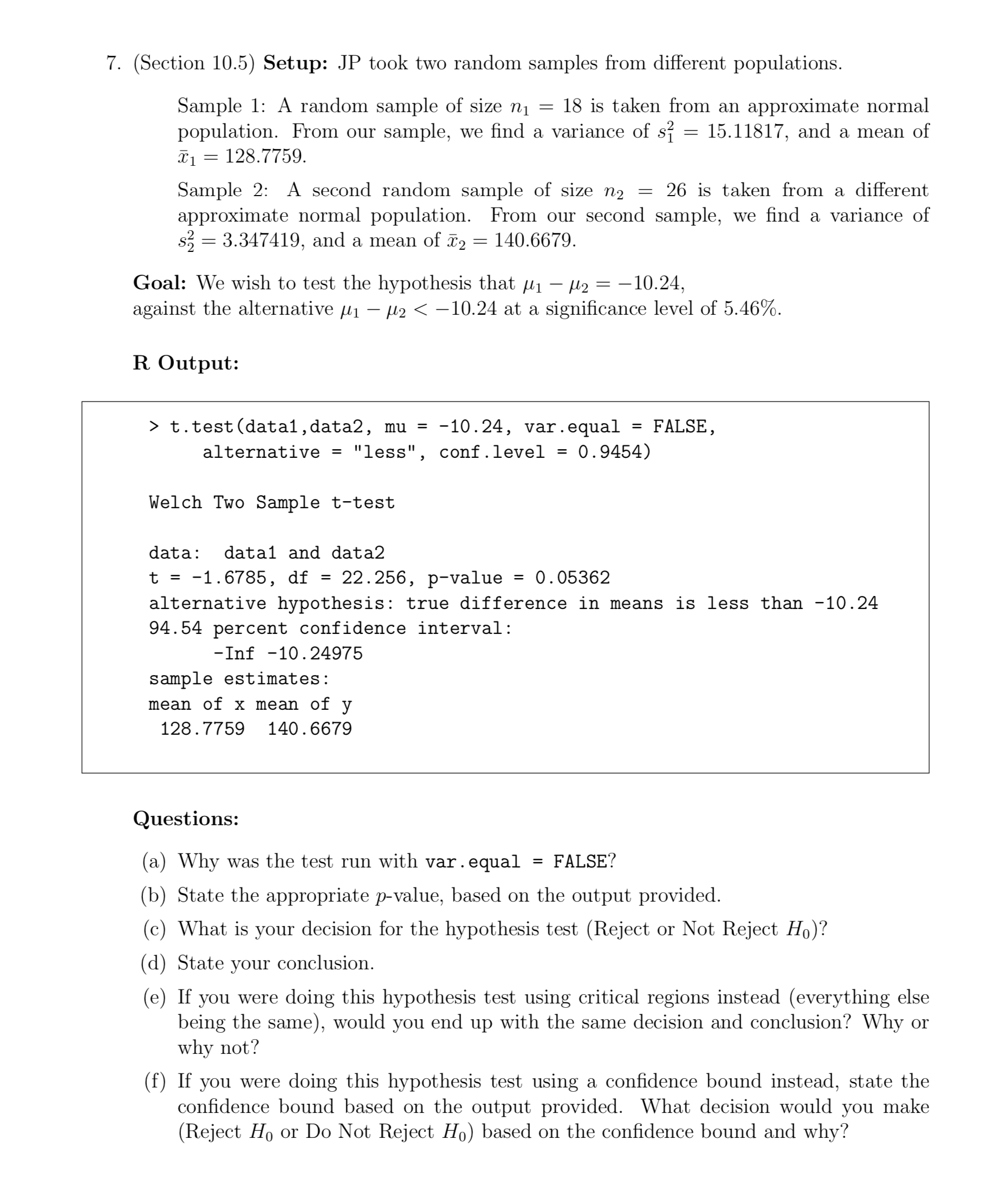
7. (Section 10.5) Setup: JP took two random samples from different populations. = 18 is taken from an approximate normal 15.11817, and a mean of Sample 1: A random sample of size n population. From our sample, we find a variance of s x1 == 128.7759. == Sample 2: A second random sample of size n2 = 26 is taken from a different approximate normal population. From our second sample, we find a variance of s2 = 3.347419, and a mean of 2 = 140.6679. Goal: We wish to test the hypothesis that 1 - 2 = -10.24, against the alternative 2 < 10.24 at a significance level of 5.46%. - R Output: > t.test(data1, data2, mu alternative = = -10.24, var.equal "less", conf.level = = FALSE, = 0.9454) Welch Two Sample t-test data: datal and data2 t = -1.6785, df = 22.256, p-value = 0.05362 alternative hypothesis: true difference in means is less than -10.24 94.54 percent confidence interval: -Inf -10.24975 sample estimates: mean of x mean of y 128.7759 140.6679 Questions: (a) Why was the test run with var.equal = FALSE? (b) State the appropriate p-value, based on the output provided. (c) What is your decision for the hypothesis test (Reject or Not Reject H)? (d) State your conclusion. (e) If you were doing this hypothesis test using critical regions instead (everything else being the same), would you end up with the same decision and conclusion? Why or why not? (f) If you were doing this hypothesis test using a confidence bound instead, state the confidence bound based on the output provided. What decision would you make (Reject Ho or Do Not Reject Ho) based on the confidence bound and why?
Step by Step Solution
There are 3 Steps involved in it

Get step-by-step solutions from verified subject matter experts
 Study Help