







Question: 7531/Lessons/Problem 9%20sets/Problem 4. Assume the Fed buys a bond from a US bank for $1000, this becomes excess reserves for the bank and get loaned
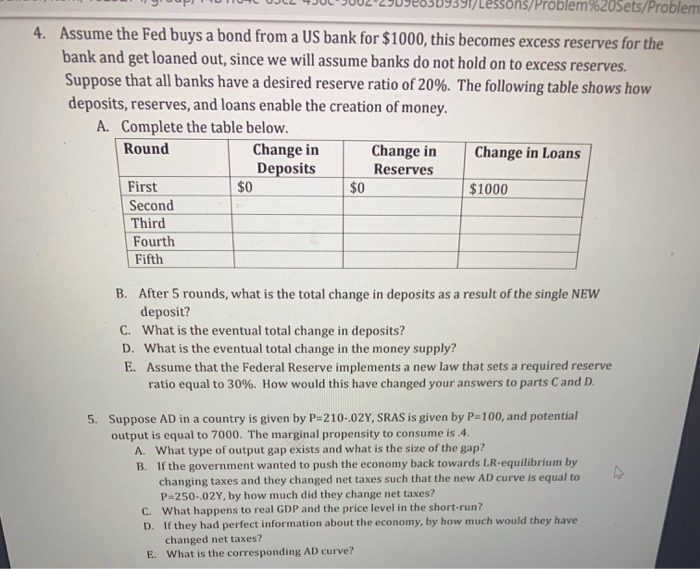
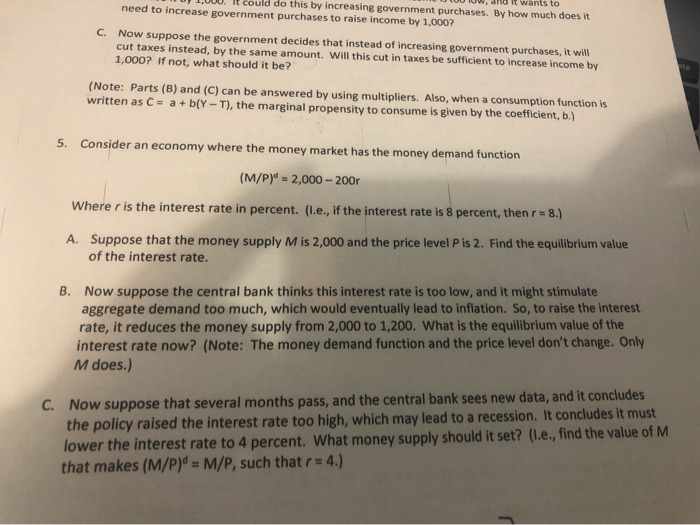
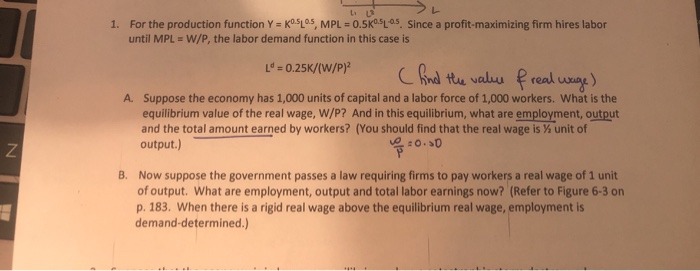
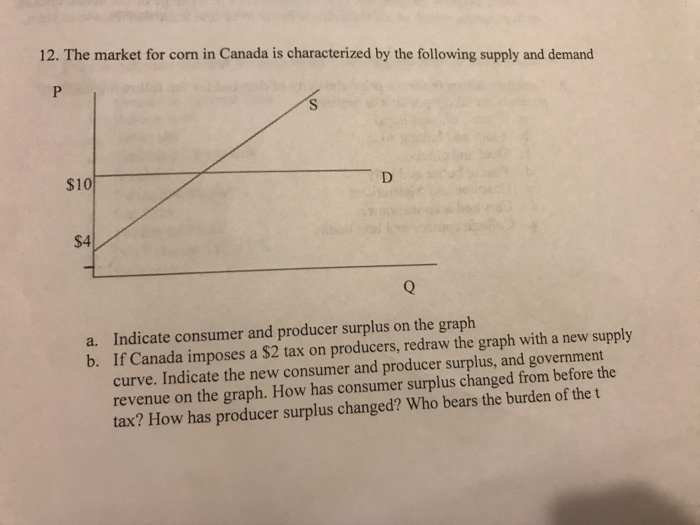
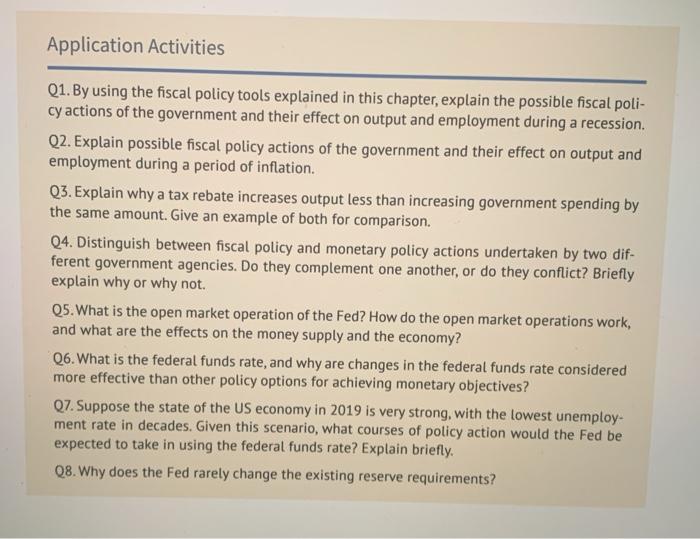
7531/Lessons/Problem 9%20sets/Problem 4. Assume the Fed buys a bond from a US bank for $1000, this becomes excess reserves for the bank and get loaned out, since we will assume banks do not hold on to excess reserves. Suppose that all banks have a desired reserve ratio of 20%. The following table shows how deposits, reserves, and loans enable the creation of money. A. Complete the table below. Round Change in Change in Change in Loans Deposits Reserves First $0 $1000 Second Third Fourth Fifth B. After 5 rounds, what is the total change in deposits as a result of the single NEW deposit? C. What is the eventual total change in deposits? D. What is the eventual total change in the money supply? E. Assume that the Federal Reserve implements a new law that sets a required reserve ratio equal to 30%. How would this have changed your answers to parts Cand D. 5. Suppose AD in a country is given by P=210-.02Y, SRAS is given by P=100, and potential output is equal to 7000. The marginal propensity to consume is .4. A. What type of output gap exists and what is the size of the gap? B. If the government wanted to push the economy back towards LR-equilibrium by changing taxes and they changed net taxes such that the new AD curve is equal to P=250-,02Y, by how much did they change net taxes? C. What happens to real GDP and the price level in the short-run? D. If they had perfect information about the economy, by how much would they have changed net taxes? E. What is the corresponding AD curve?wants to could do this by increasing government purchases. By how much does it need to increase government purchases to raise income by 1,0007 C. Now suppose the government decides that instead of increasing government purchases, it will cut taxes instead, by the same amount. Will this cut in taxes be sufficient to increase income by 1,000? If not, what should it be? (Note: Parts (B) and (C) can be answered by using multipliers. Also, when a consumption function is written as C = a + b(Y - T), the marginal propensity to consume is given by the coefficient, b.\\ 5. Consider an economy where the money market has the money demand function (M/p) = 2,000 - 200r Where r is the interest rate in percent. (1.e., if the interest rate is 8 percent, then r = 8.) A. Suppose that the money supply M is 2,000 and the price level P is 2. Find the equilibrium value of the interest rate. B. Now suppose the central bank thinks this interest rate is too low, and it might stimulate aggregate demand too much, which would eventually lead to inflation. So, to raise the interest rate, it reduces the money supply from 2,000 to 1,200. What is the equilibrium value of the interest rate now? (Note: The money demand function and the price level don't change. Only M does.) C. Now suppose that several months pass, and the central bank sees new data, and it concludes the policy raised the interest rate too high, which may lead to a recession. It concludes it must lower the interest rate to 4 percent. What money supply should it set? (L.e., find the value of M that makes (M/P) = M/P, such that r = 4.)L 1. For the production function Y = KO5105, MPL = 0.5K05195. Since a profit-maximizing firm hires labor until MPL = W/P, the labor demand function in this case is L' = 0.25K/(W/P)> ( find the value freal wage ) A. Suppose the economy has 1,000 units of capital and a labor force of 1,000 workers. What is the equilibrium value of the real wage, W/P? And in this equilibrium, what are employment, output and the total amount earned by workers? (You should find that the real wage is ), unit of Z output.) 2 :0.30 B. Now suppose the government passes a law requiring firms to pay workers a real wage of 1 unit of output. What are employment, output and total labor earnings now? (Refer to Figure 6-3 on p. 183. When there is a rigid real wage above the equilibrium real wage, employment is demand-determined.)12. The market for corn in Canada is characterized by the following supply and demand P S $10 D $4 Q a. Indicate consumer and producer surplus on the graph b. If Canada imposes a $2 tax on producers, redraw the graph with a new supply curve. Indicate the new consumer and producer surplus, and government revenue on the graph. How has consumer surplus changed from before the tax? How has producer surplus changed? Who bears the burden of the tApplication Activities Q1. By using the fiscal policy tools explained in this chapter, explain the possible fiscal poli- cy actions of the government and their effect on output and employment during a recession. Q2. Explain possible fiscal policy actions of the government and their effect on output and employment during a period of inflation. Q3. Explain why a tax rebate increases output less than increasing government spending by the same amount. Give an example of both for comparison. Q4. Distinguish between fiscal policy and monetary policy actions undertaken by two dif- ferent government agencies. Do they complement one another, or do they conflict? Briefly explain why or why not. Q5. What is the open market operation of the Fed? How do the open market operations work, and what are the effects on the money supply and the economy? Q6. What is the federal funds rate, and why are changes in the federal funds rate considered more effective than other policy options for achieving monetary objectives? Q7. Suppose the state of the US economy in 2019 is very strong, with the lowest unemploy- ment rate in decades. Given this scenario, what courses of policy action would the Fed be expected to take in using the federal funds rate? Explain briefly. Q8. Why does the Fed rarely change the existing reserve requirements?Application Activities Q1. By using the fiscal policy tools explained in this chapter, explain the possible fiscal poli- cy actions of the government and their effect on output and employment during a recession. Q2. Explain possible fiscal policy actions of the government and their effect on output and employment during a period of inflation. Q3. Explain why a tax rebate increases output less than increasing government spending by the same amount. Give an example of both for comparison. Q4. Distinguish between fiscal policy and monetary policy actions undertaken by two dif- ferent government agencies. Do they complement one another, or do they conflict? Briefly explain why or why not. Q5. What is the open market operation of the Fed? How do the open market operations work, and what are the effects on the money supply and the economy? Q6. What is the federal funds rate, and why are changes in the federal funds rate considered more effective than other policy options for achieving monetary objectives? Q7. Suppose the state of the US economy in 2019 is very strong, with the lowest unemploy- ment rate in decades. Given this scenario, what courses of policy action would the Fed be expected to take in using the federal funds rate? Explain briefly. Q8. Why does the Fed rarely change the existing reserve requirements
Step by Step Solution
There are 3 Steps involved in it

Get step-by-step solutions from verified subject matter experts
 Study Help