







Question: 8. Problems and Applications Q8 As described in the chapter, the Federal Reserve in 2008 faced a decrease in aggregate demand caused by the housing

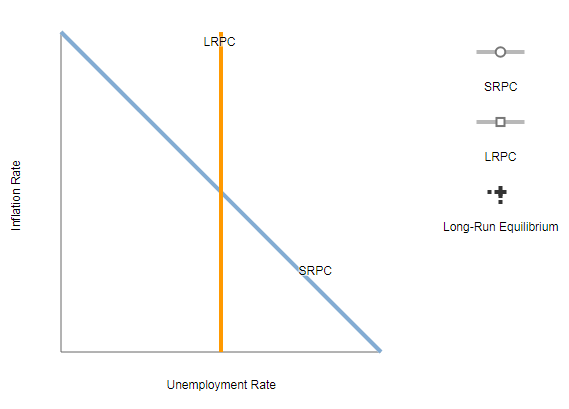
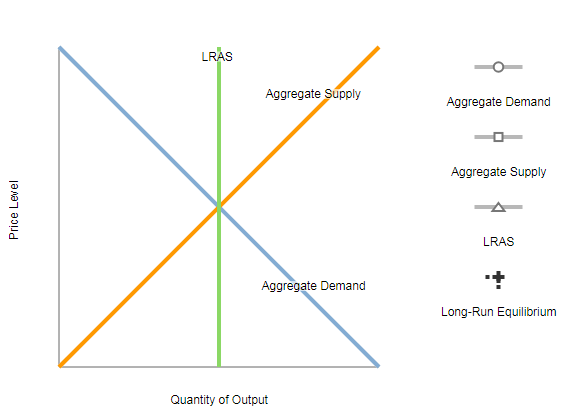
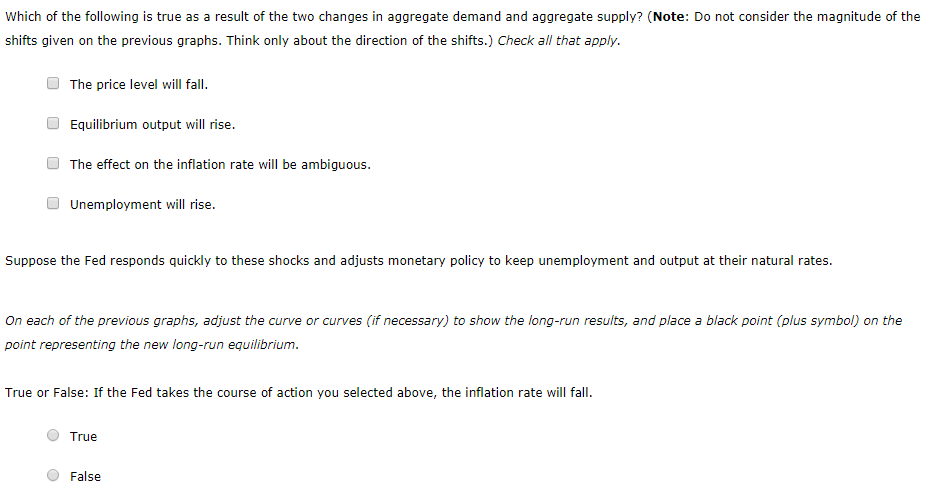

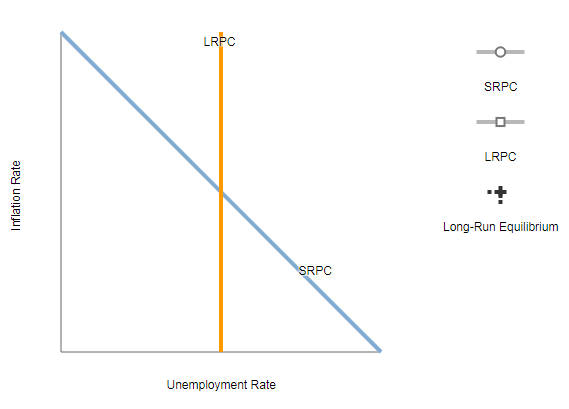
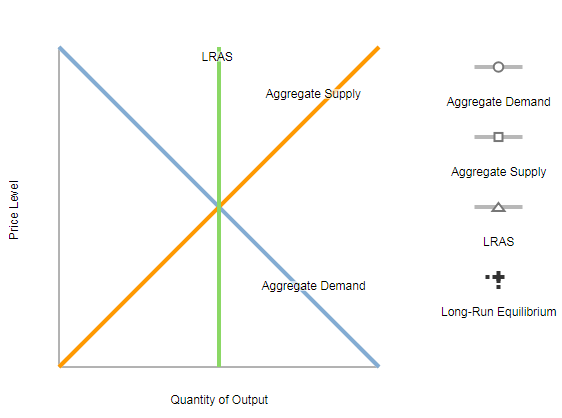
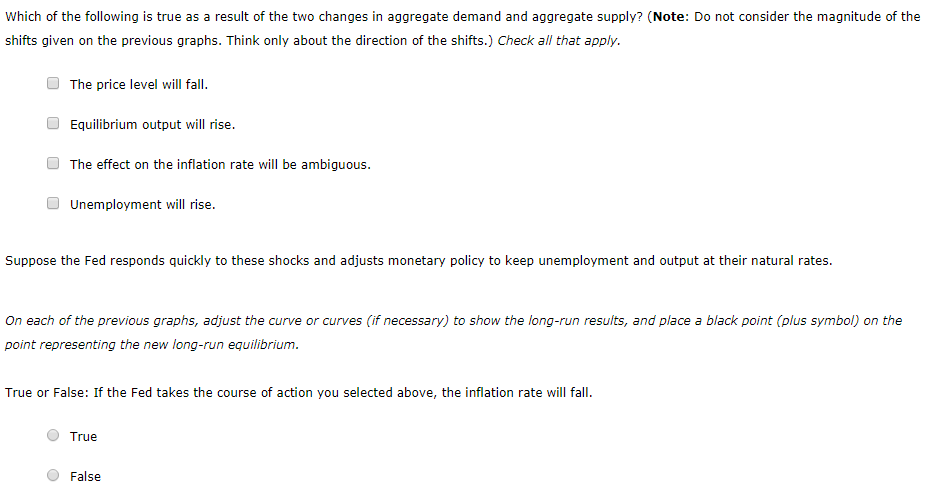
8. Problems and Applications Q8 As described in the chapter, the Federal Reserve in 2008 faced a decrease in aggregate demand caused by the housing and nancial crises and a decrease in shortrun aggregate supply caused by rising commodity prices. Starting hem a long-run equilibrium, illustrate the eiacts of these two changes on aggregate supply and aggregate demand an the following graph. Then on the subsequent graph, indicate what happens in a Phillipscurve diagram. \fLRAS O Aggregate Supply Aggregate Demand O Aggregate Supply Price Level A LRAS Aggregate Demand -+ Long-Run Equilibrium Quantity of OutputWhich of the following is true as a result of the two changes in aggregate demand and aggregate supply? (Note: Do not consider the magnitude of the shifts given on the previous graphs. Think only about the direction of the shifts.) Check ah' that apply. C] The price level Iwill fall. C] Equilibrium output will rise. C] The effect on the ination rate will be ambiguous. C] Unemployment will rise. Suppose the Fed responds quickly to these shocks and adjusts monetary policy to keep unemployment and output at their natural rates. On each of the previous graphs, adjust the curve or curves (if necessary) to show the long-run results, and piece a black point (plus symbol) on the point representing the new long-run equilibrium. True or False: If the Fed takes the course of acon you selected above, the ination rate will fall. 0 True 0 False
Step by Step Solution
There are 3 Steps involved in it

Get step-by-step solutions from verified subject matter experts
 Study Help