







Question: 8. trim-to (symbol list) Write a function named trim-to that takes a symbol and list as parameters. Return a new list starting from the first
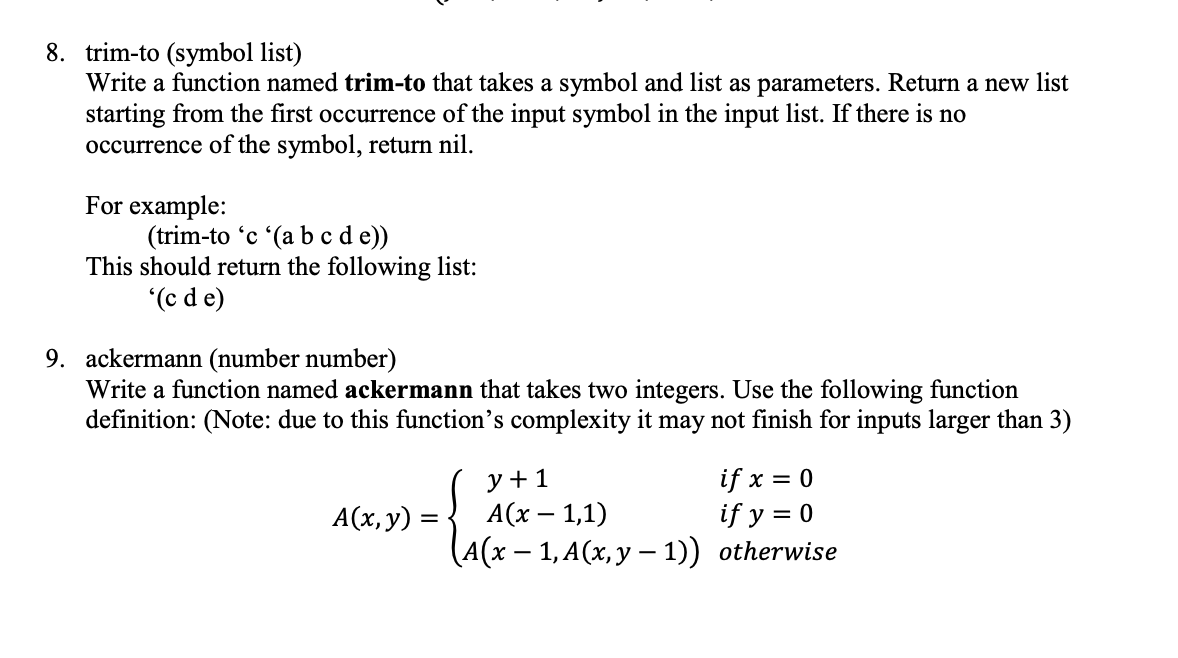
8. trim-to (symbol list) Write a function named trim-to that takes a symbol and list as parameters. Return a new list starting from the first occurrence of the input symbol in the input list. If there is no occurrence of the symbol, return nil. For example: (trim-toc '(a b c d e)) This should return the following list: '(c d e) 9. ackermann (number number) Write a function named ackermann that takes two integers. Use the following function definition: (Note: due to this function's complexity it may not finish for inputs larger than 3) A(x, y) = y +1 if x = 0 A(x 1,1) if y = 0 (A(x 1, A(x, y 1)) otherwise 8. trim-to (symbol list) Write a function named trim-to that takes a symbol and list as parameters. Return a new list starting from the first occurrence of the input symbol in the input list. If there is no occurrence of the symbol, return nil. For example: (trim-toc '(a b c d e)) This should return the following list: '(c d e) 9. ackermann (number number) Write a function named ackermann that takes two integers. Use the following function definition: (Note: due to this function's complexity it may not finish for inputs larger than 3) A(x, y) = y +1 if x = 0 A(x 1,1) if y = 0 (A(x 1, A(x, y 1)) otherwise
Step by Step Solution
There are 3 Steps involved in it

Get step-by-step solutions from verified subject matter experts
 Study Help