







Question: 9 . 1 3 LAB: Binary search Binary search can be implemented as a recursive algonthm Each call makes a recursive call on one half
LAB: Binary search
Binary search can be implemented as a recursive algonthm Each call makes a recursive call on one half of the list the call received as an argument
Complete the recursive function BinarySearcho with the following specifications:
Parameters:
a target integer
a vector of integers
lower and upper bounds within which the recursive call will search
Return value:
the index within the vector where the target is located
if target is not found
The template provides the main program and a helper function that reads a vector from input
The algorithm begins by choosing an index midway between the lower and upper bounds.
If target integers. at index retum index
If owe upper, return to indicate not found
Otherwise call the function recursively on half the vector parameter
If integers. at index target, search the vector from index to upper
Integers. at index target, search the vector from lower to index
The vector must be ordered, but duplicates are allowed.
Once the search algorithm works correctly, add the following to BinarySearch:
Count the number of calls to Binarysearch
Count the number of times when the target is compared to an element of the vector. Note: lower upper should not be counted.
Hint Use a global variable to count calls and comparisons
The input of the program consists of:
the number of integers in the vector
the integers in the vector
the target to be located
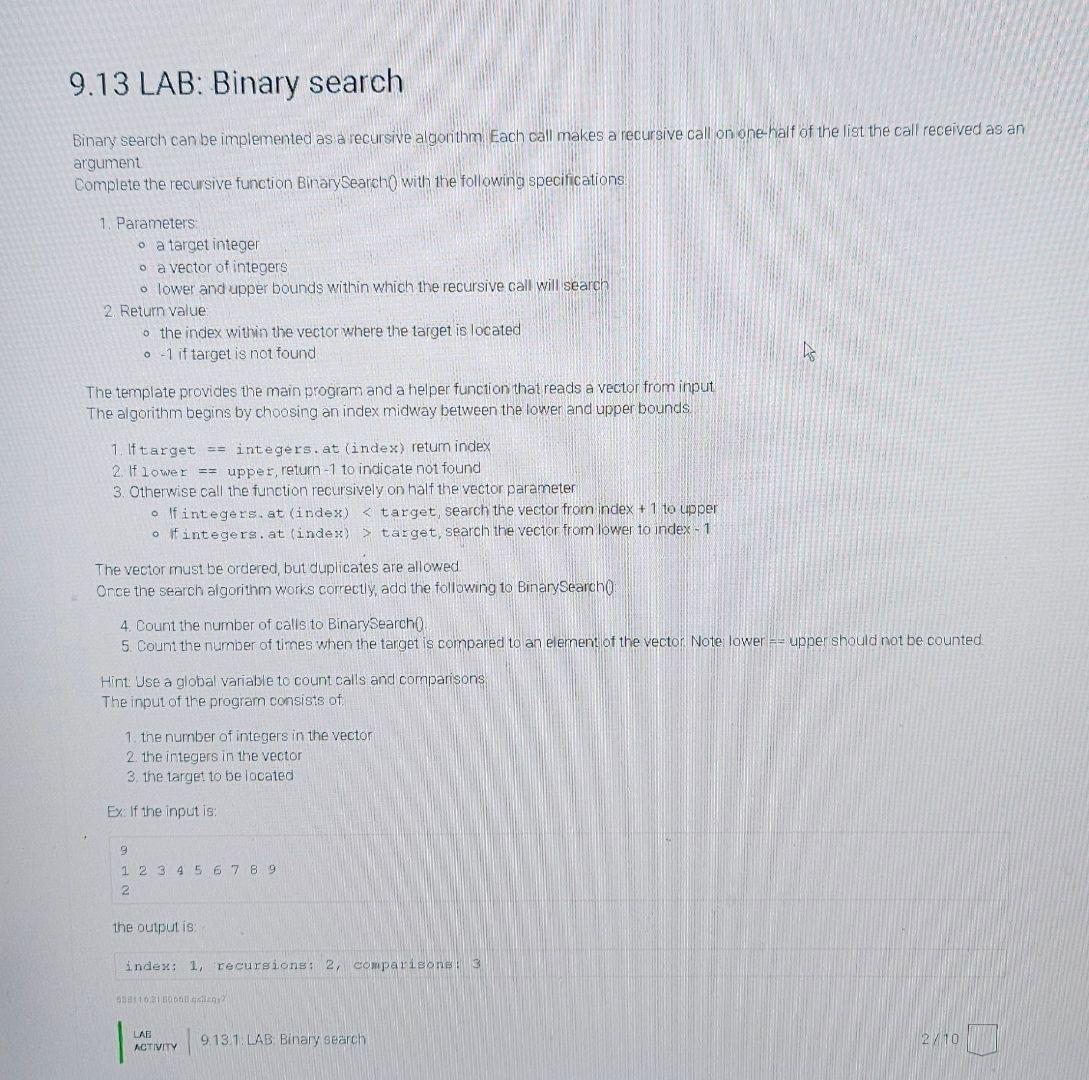
Ex: If the input is:
the output is:
inder: recursions: comparisons:
G
ABE
AGTIVITY
LAB Binary search
Step by Step Solution
There are 3 Steps involved in it
1 Expert Approved Answer
Step: 1 Unlock

Question Has Been Solved by an Expert!
Get step-by-step solutions from verified subject matter experts
Step: 2 Unlock
Step: 3 Unlock
 Study Help