







Question: 9 Attachment Strong affectionate bond that child forms with primary caregiver An emotional bond between parent and child in which the child is able
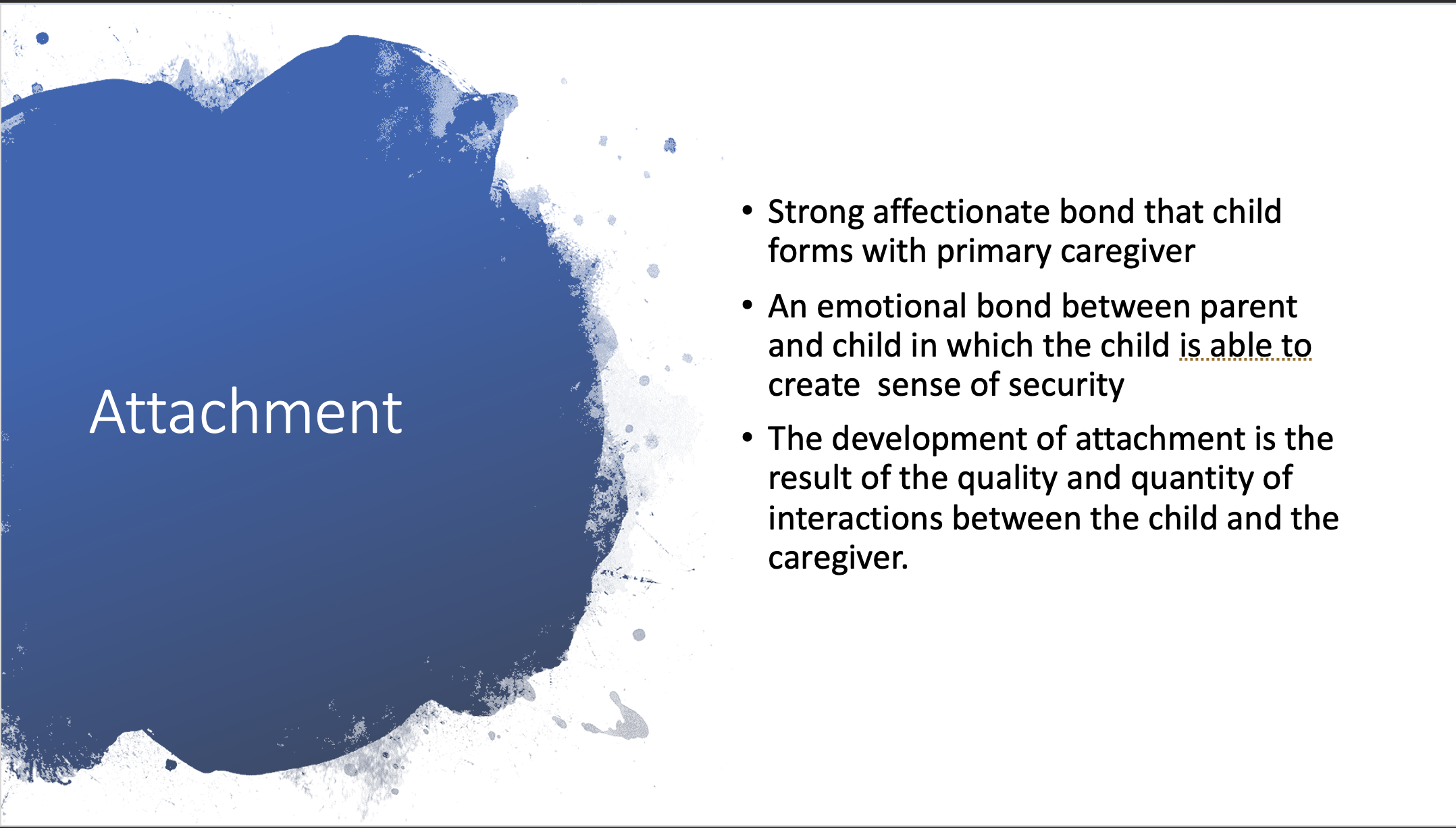
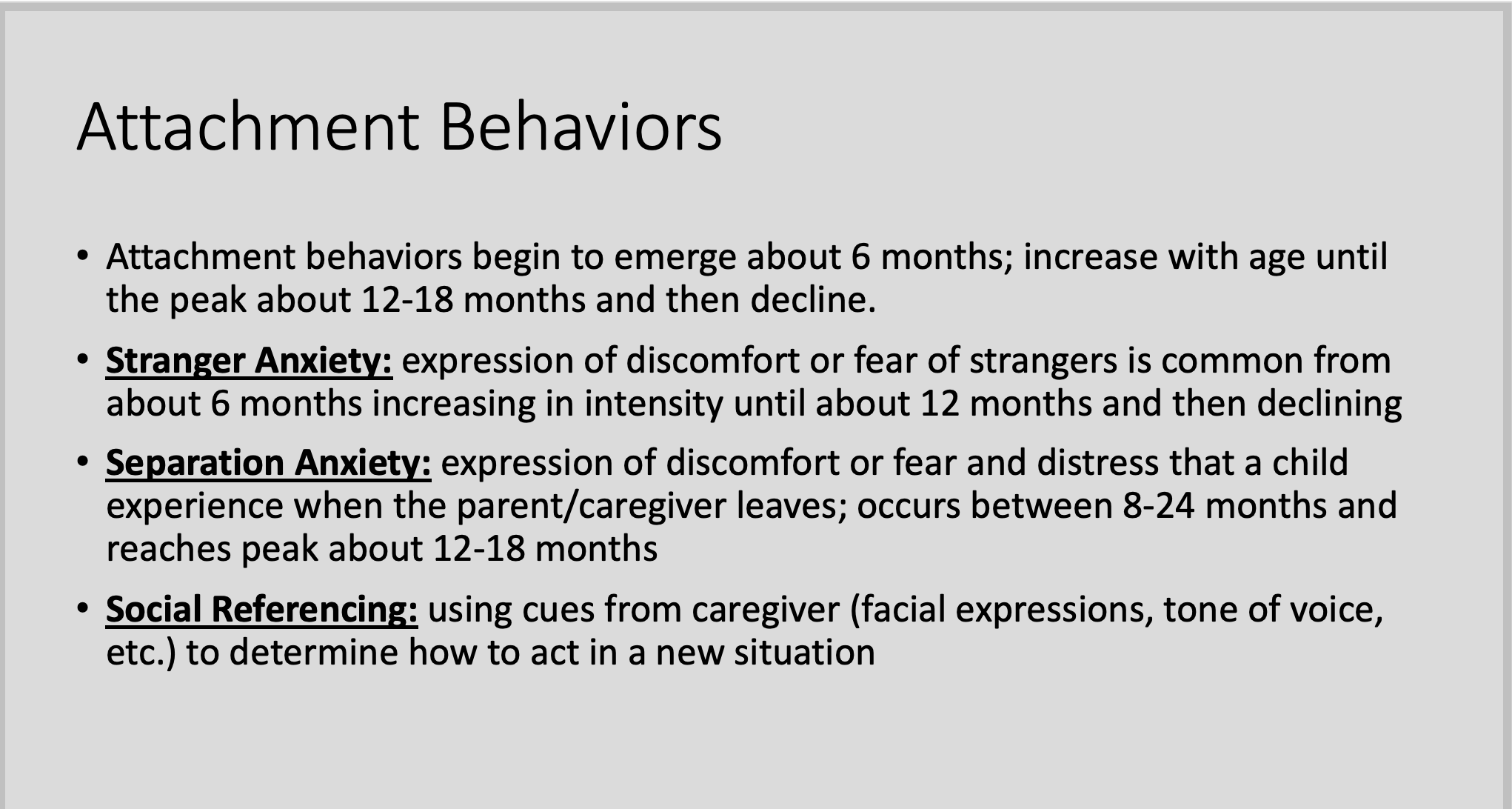
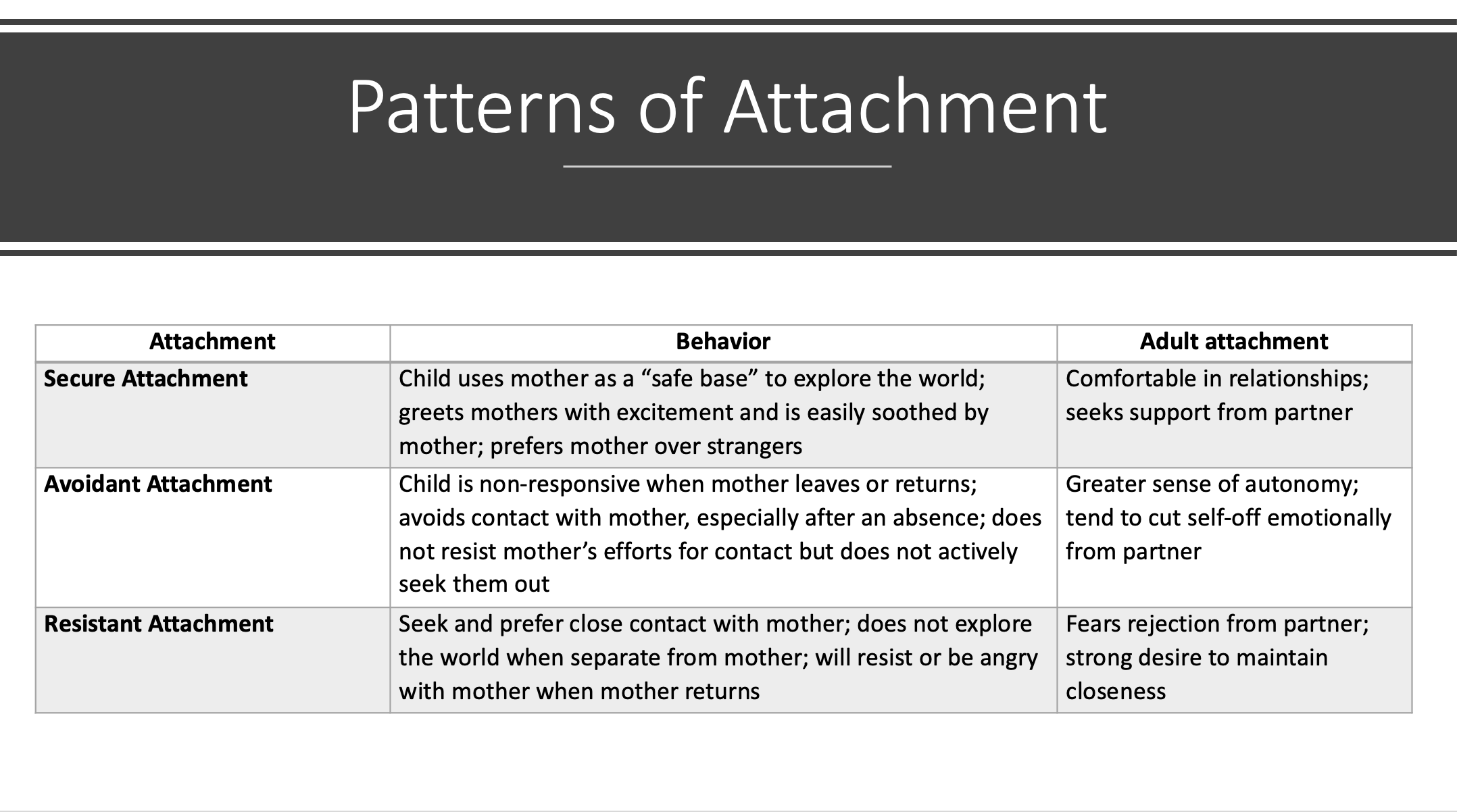
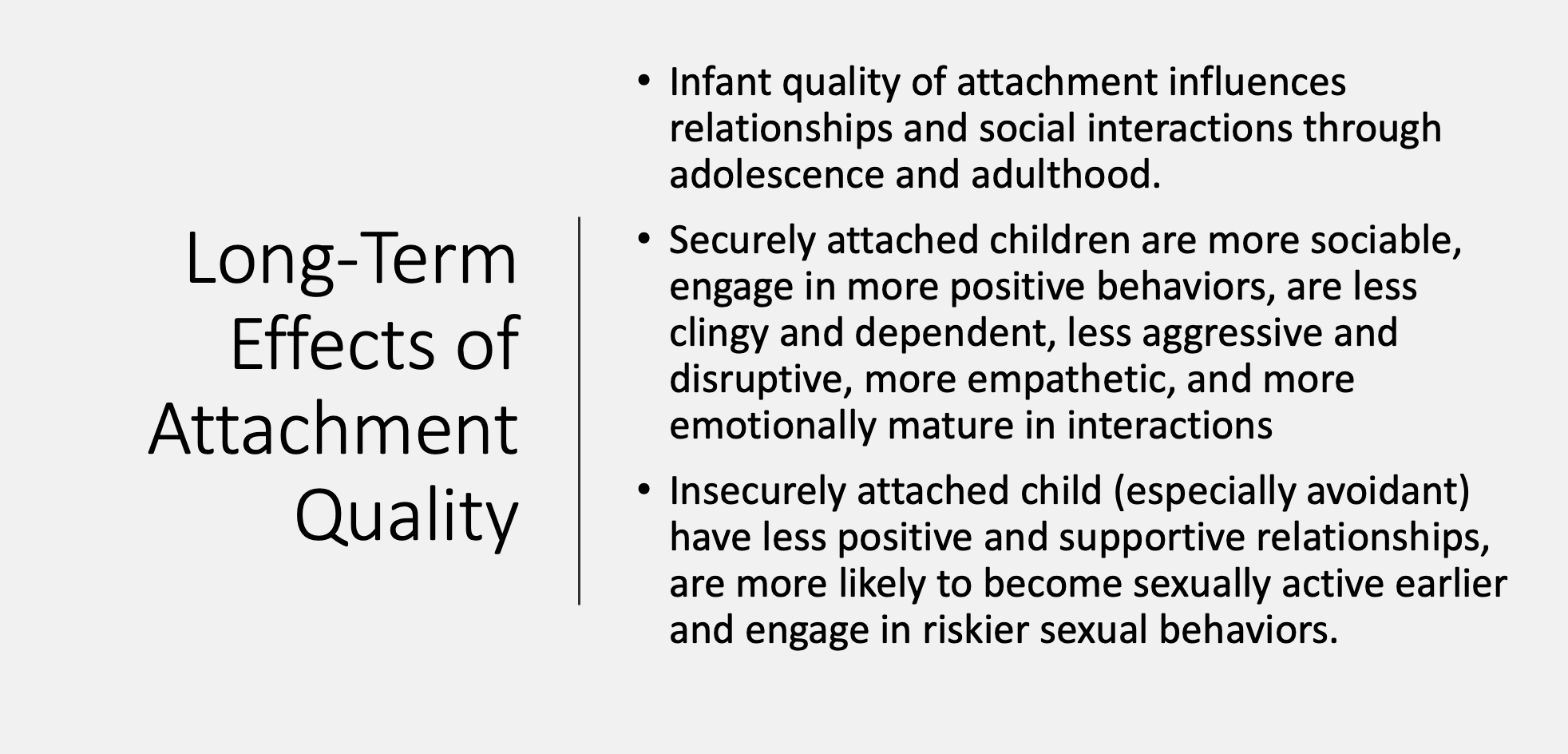
9 Attachment Strong affectionate bond that child forms with primary caregiver An emotional bond between parent and child in which the child is able to create sense of security The development of attachment is the result of the quality and quantity of interactions between the child and the caregiver. Attachment Behaviors Attachment behaviors begin to emerge about 6 months; increase with age until the peak about 12-18 months and then decline. Stranger Anxiety: expression of discomfort or fear of strangers is common from about 6 months increasing in intensity until about 12 months and then declining Separation Anxiety: expression of discomfort or fear and distress that a child experience when the parent/caregiver leaves; occurs between 8-24 months and reaches peak about 12-18 months Social Referencing: using cues from caregiver (facial expressions, tone of voice, etc.) to determine how to act in a new situation Patterns of Attachment Attachment Secure Attachment Avoidant Attachment Resistant Attachment Behavior Child uses mother as a safe base to explore the world; greets mothers with excitement and is easily soothed by mother; prefers mother over strangers Child is non-responsive when mother leaves or returns; avoids contact with mother, especially after an absence; does not resist mother's efforts for contact but does not actively seek them out Seek and prefer close contact with mother; does not explore the world when separate from mother; will resist or be angry with mother when mother returns Adult attachment Comfortable in relationships; seeks support from partner Greater sense of autonomy; tend to cut self-off emotionally from partner Fears rejection from partner; strong desire to maintain closeness Long-Term Effects of Attachment Quality Infant quality of attachment influences relationships and social interactions through adolescence and adulthood. Securely attached children are more sociable, engage in more positive behaviors, are less clingy and dependent, less aggressive and disruptive, more empathetic, and more emotionally mature in interactions Insecurely attached child (especially avoidant) have less positive and supportive relationships, are more likely to become sexually active earlier and engage in riskier sexual behaviors.
Step by Step Solution
There are 3 Steps involved in it

Get step-by-step solutions from verified subject matter experts
 Study Help