







Question: 9. Let us consider a utopian world in which there are only three goods: sake sets. Japanese consume only a locally produced food, called sake,
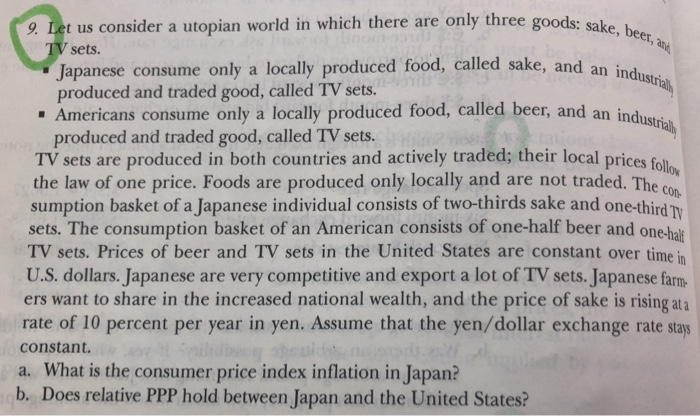
9. Let us consider a utopian world in which there are only three goods: sake sets. Japanese consume only a locally produced food, called sake, and an i ndustri produced and traded good, called TV sets. Americans consume only a locally produced food, called beer, and an indus TV sets are produced in both countries and actively traded; their local prices fol the law of one price. Foods are produced only locally and are not traded. The con sumption basket of a Japanese individual consists of two-thirds sake and one-third sets. The consumption basket of an American consists of one-half beer and onehal produced and traded good, called TV sets. aedn bothcountries and activelyllv and are not t T TV sets. Prices of beer and TV sets in the United States are constant over time in U.S. dollars. Japanese are very competitive and export a lot of TV sets. Japanese farm ers want to share in the increased national wealth, and the price of sake is rising at a rate of 10 percent per year in yen. Assume that the yen/dollar exchange rate stays constant. a. What is the consumer price index inflation in Japan? b. Does relative PPP hold between Japan and the United States? 9. Let us consider a utopian world in which there are only three goods: sake sets. Japanese consume only a locally produced food, called sake, and an i ndustri produced and traded good, called TV sets. Americans consume only a locally produced food, called beer, and an indus TV sets are produced in both countries and actively traded; their local prices fol the law of one price. Foods are produced only locally and are not traded. The con sumption basket of a Japanese individual consists of two-thirds sake and one-third sets. The consumption basket of an American consists of one-half beer and onehal produced and traded good, called TV sets. aedn bothcountries and activelyllv and are not t T TV sets. Prices of beer and TV sets in the United States are constant over time in U.S. dollars. Japanese are very competitive and export a lot of TV sets. Japanese farm ers want to share in the increased national wealth, and the price of sake is rising at a rate of 10 percent per year in yen. Assume that the yen/dollar exchange rate stays constant. a. What is the consumer price index inflation in Japan? b. Does relative PPP hold between Japan and the United States
Step by Step Solution
There are 3 Steps involved in it

Get step-by-step solutions from verified subject matter experts
 Study Help