







Question: 905?url=https%3A%2F%2F43f60dd0-1a11-43d1-b28d-96e9e2abb6d2.sequences.api.brightspace.com%2F1412905%2Factivity%2F220335981%3Ffi laps Google Docs 3.07 Unit Test: Polynomials - Part 1 ST: nomials - Part 1 Does the equation demonstrate closure of polynomials under addition?
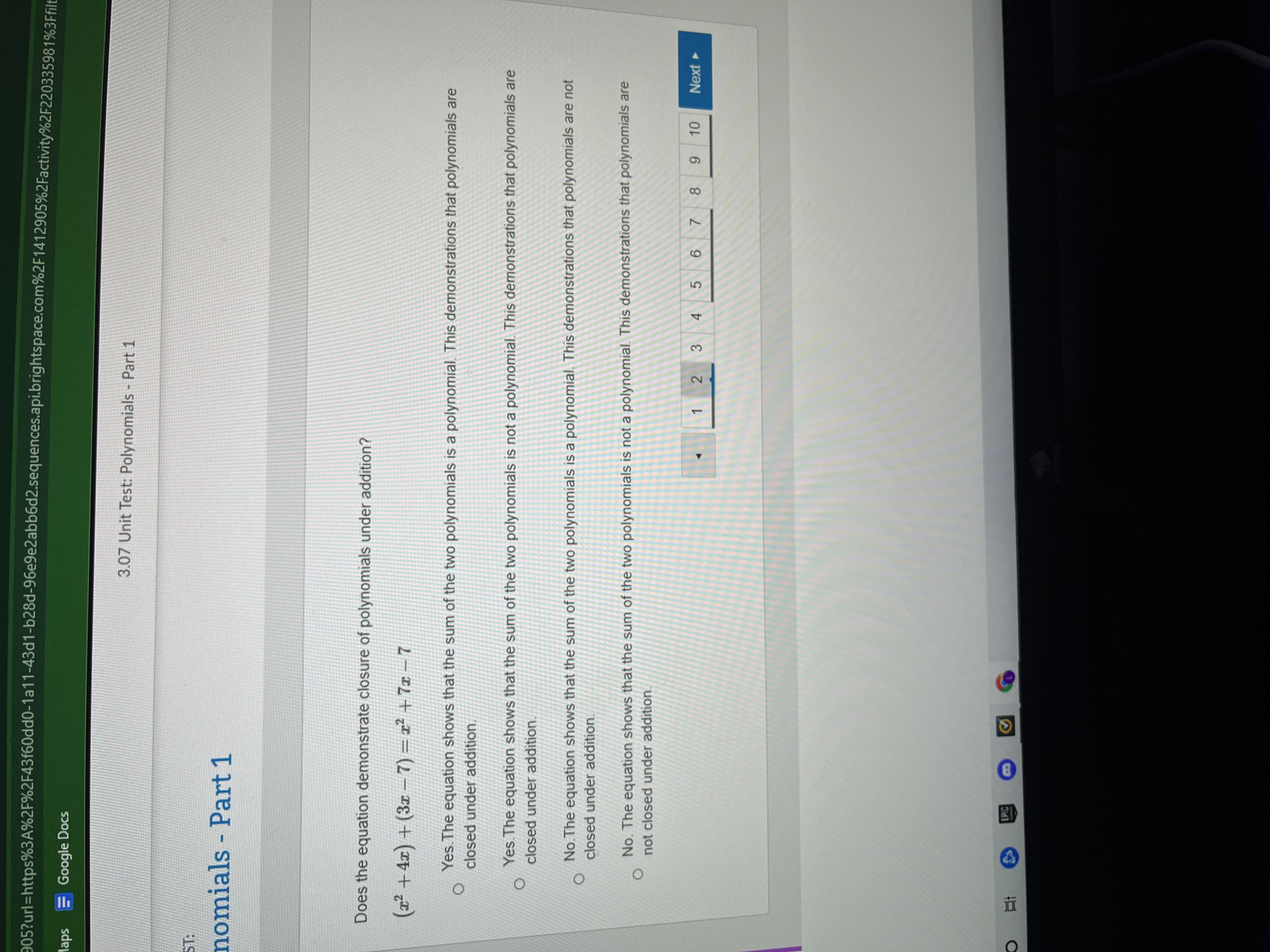
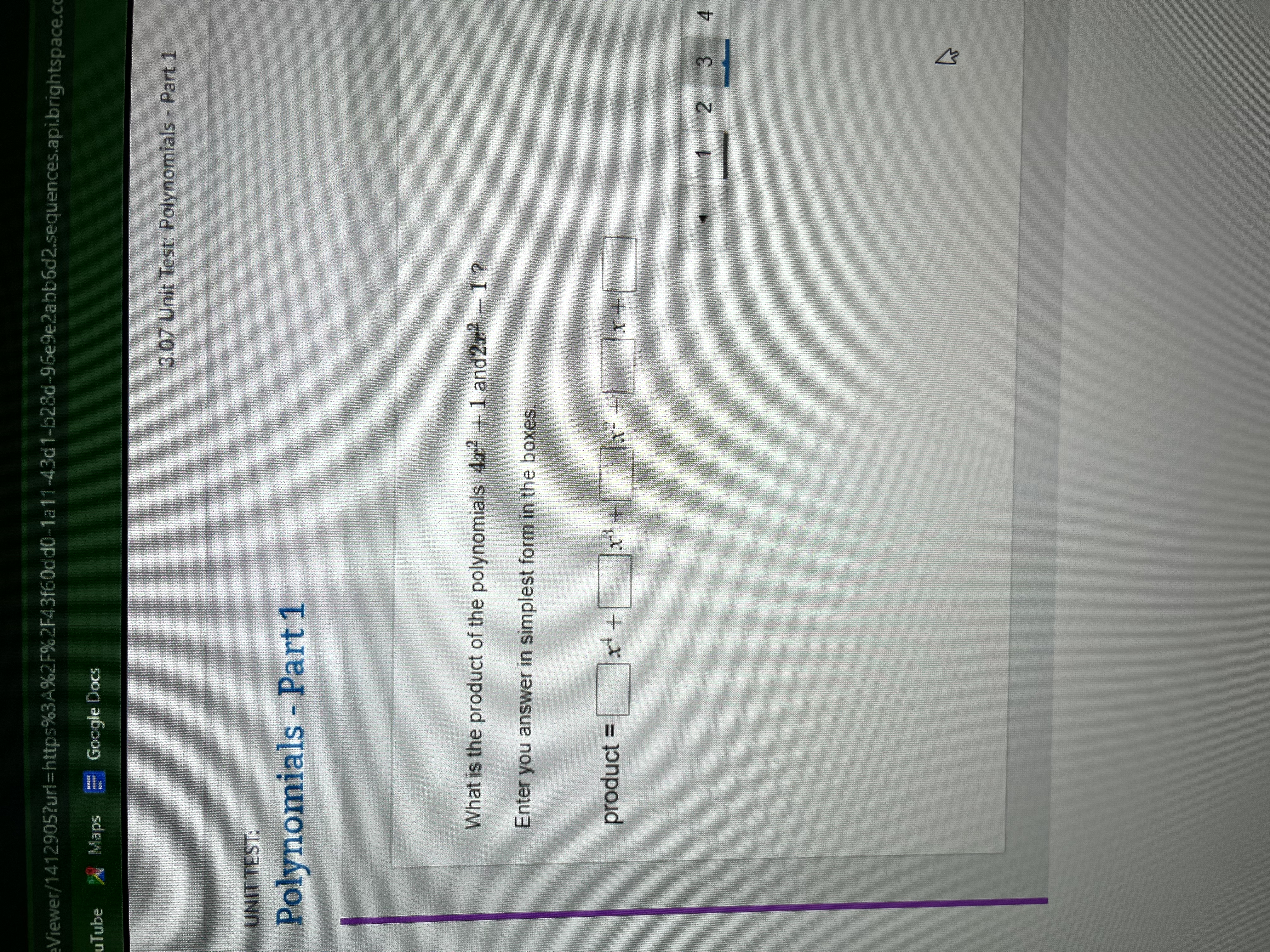
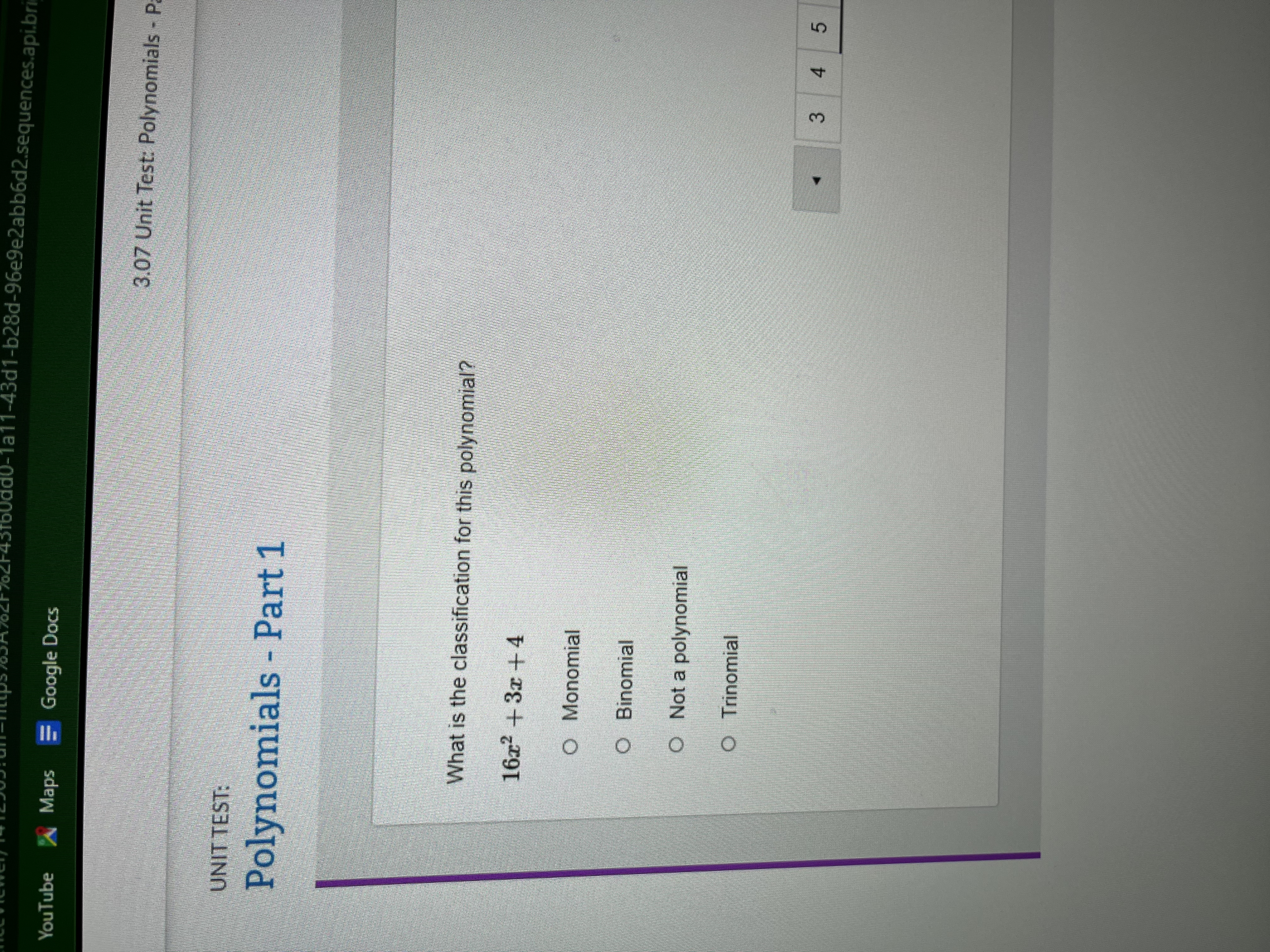
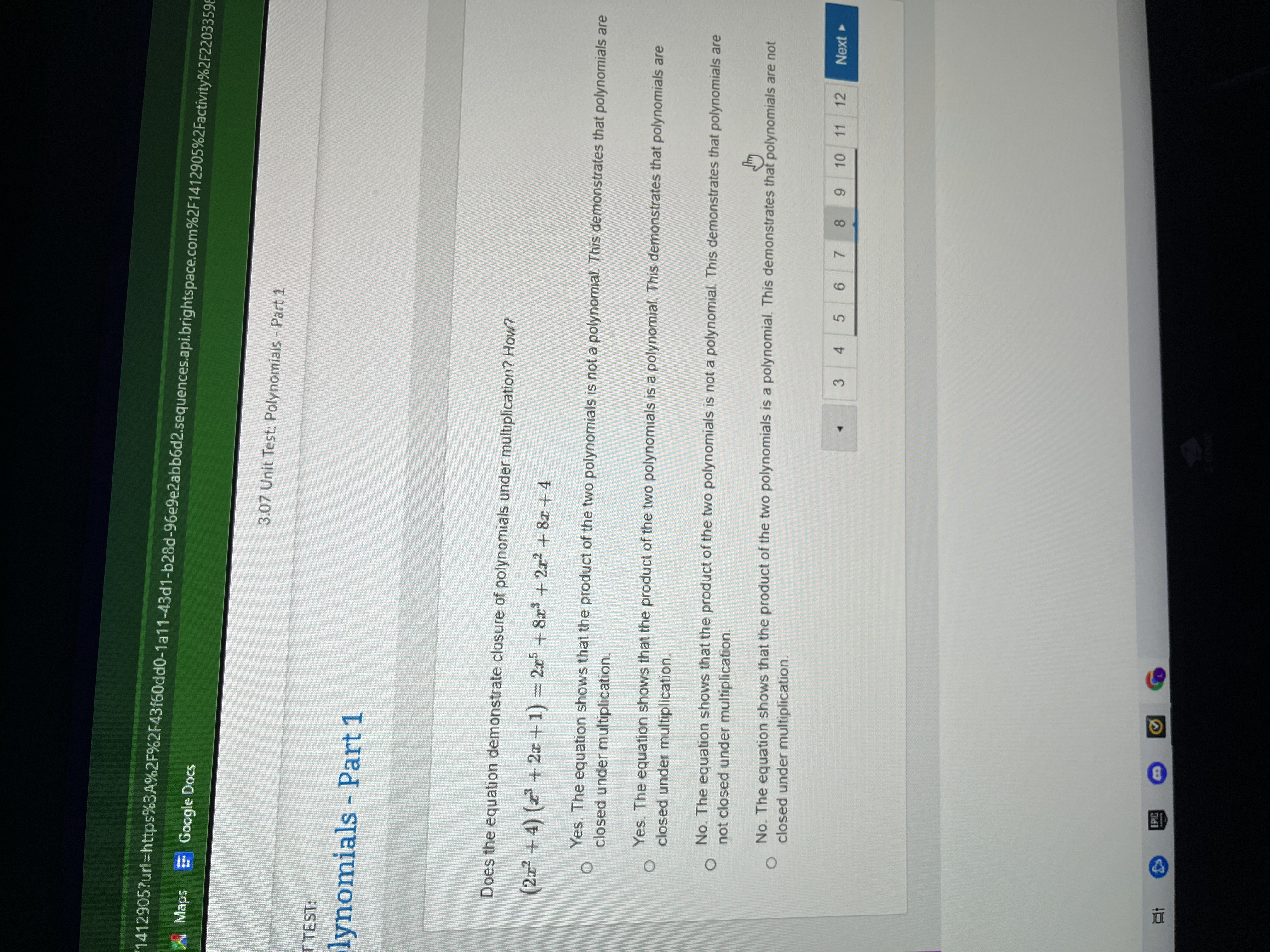
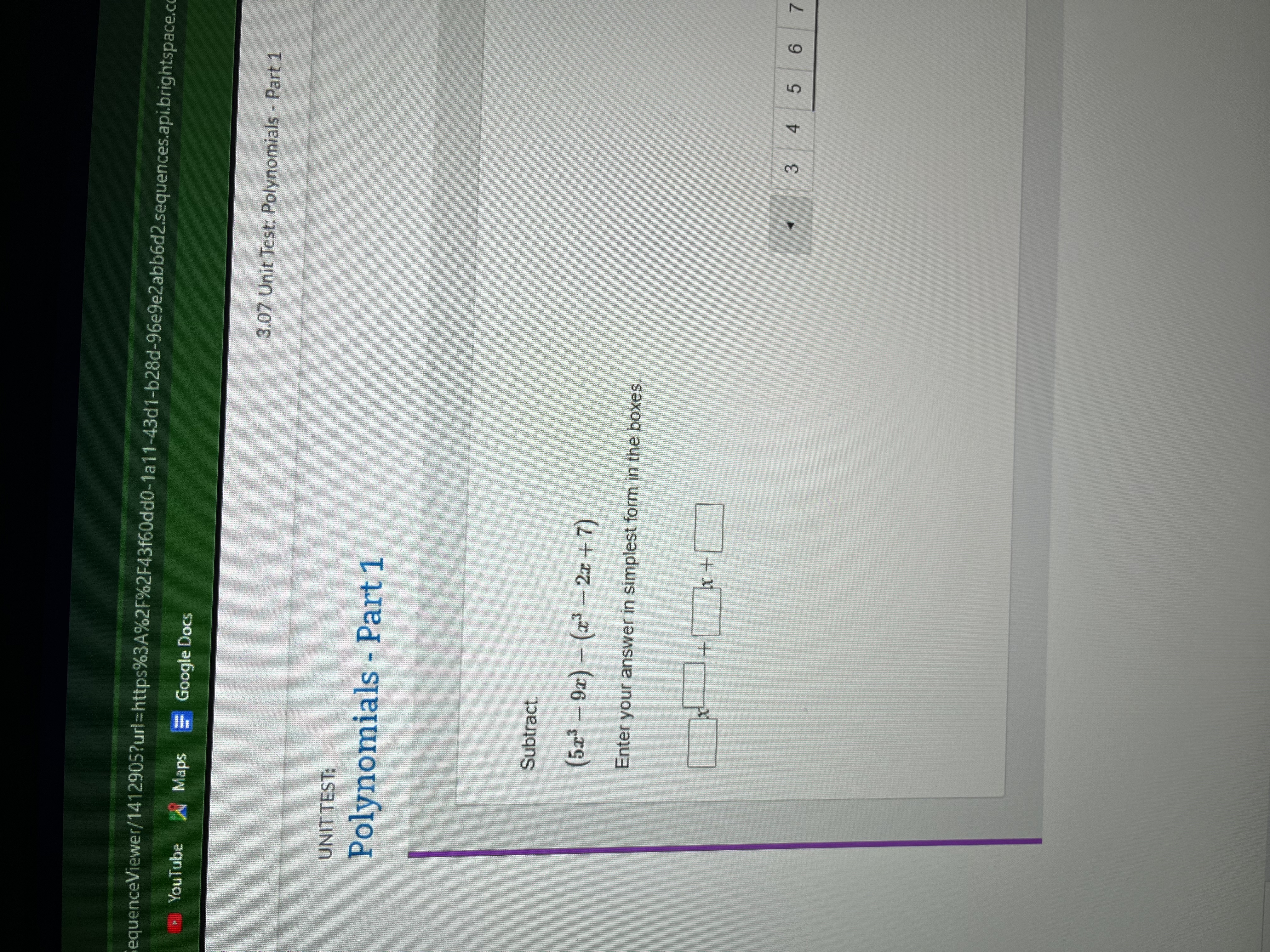
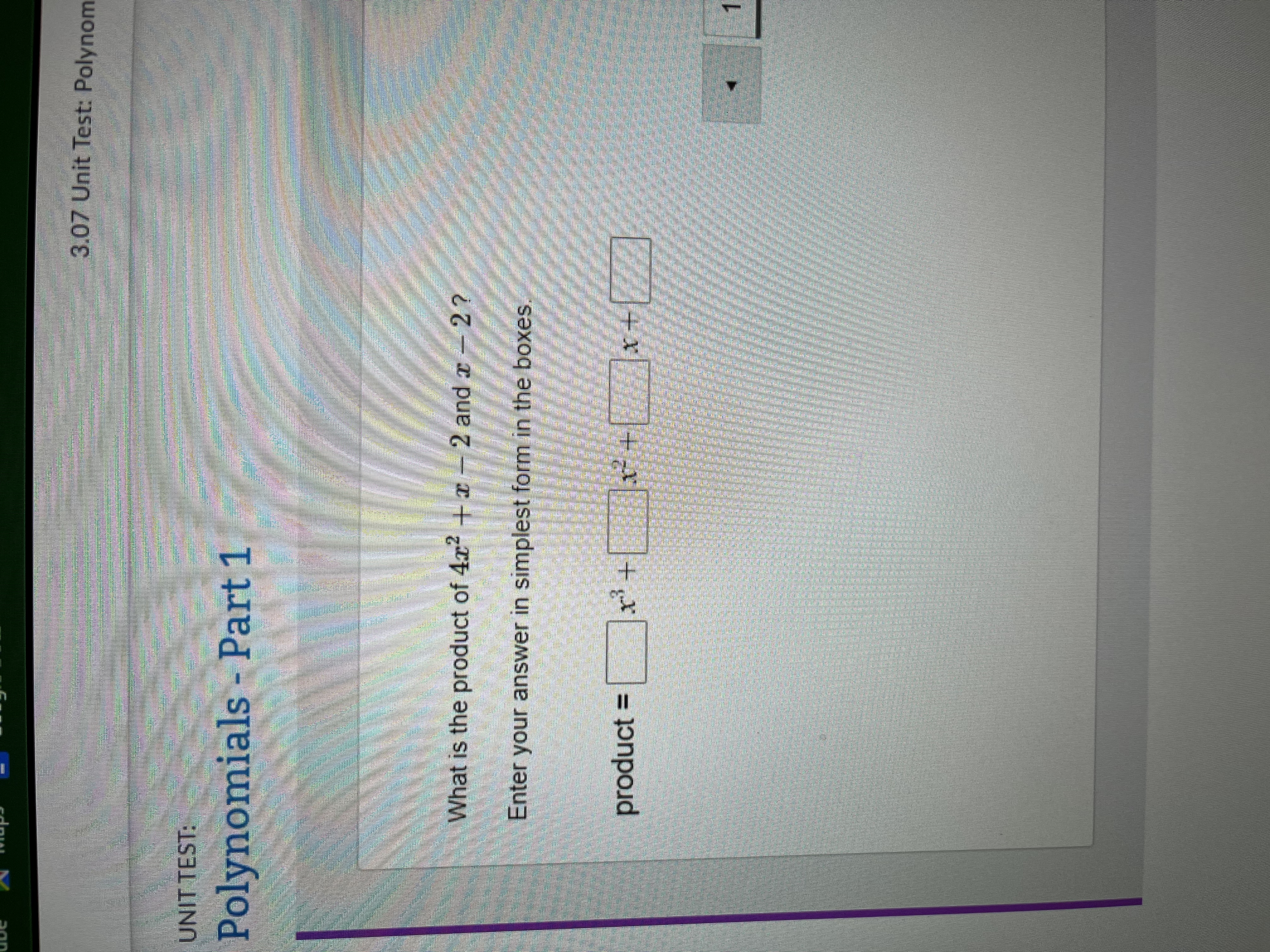
905?url=https%3A%2F%2F43f60dd0-1a11-43d1-b28d-96e9e2abb6d2.sequences.api.brightspace.com%2F1412905%2Factivity%2F220335981%3Ffi laps Google Docs 3.07 Unit Test: Polynomials - Part 1 ST: nomials - Part 1 Does the equation demonstrate closure of polynomials under addition? (x2 + 4x) + (31 -7) =12 +72 -7 Yes. The equation shows that the sum of the two polynomials is a polynomial. This demonstrations that polynomials are closed under addition Yes. The equation shows that the sum of the two polynomials is not a polynomial. This demonstrations that polynomials are closed under addition. O No. The equation shows that the sum of the two polynomials is a polynomial. This demonstrations that polynomials are not closed under addition. No. The equation shows that the sum of the two polynomials is not a polynomial. This demonstrations that polynomials are not closed under addition, 1 2 3 4 5 6 7 8 9 10 NextViewer/1412905?url=https%3A%2F%2F43f60dd0-1a11-43d1-b28d-96ege2abb6d2.sequences.api.brightspace.c Tube Maps # Google Docs 3.07 Unit Test: Polynomials - Part 1 UNIT TEST: Polynomials - Part 1 What is the product of the polynomials 4x2 + 1 and2x? - 1? Enter you answer in simplest form in the boxes product = x' + x + 2 3702F43160dd0-1811-43d1-b28d-96ege2abb6d2.sequences.api.br YouTube Maps Google Docs 3.07 Unit Test: Polynomials - P UNIT TEST: Polynomials - Part 1 What is the classification for this polynomial? 16x2 + 3x +4 O Monomial O Binomial O Not a polynomial O Trinomial 3 4 51412905?url=https%3A%2F%2F43f60dd0-1a11-43d1-b28d-96ege2abb6d2.sequences.api.brightspace.com%2F1412905%2Factivity%2F2203359 Maps Google Docs 3.07 Unit Test: Polynomials - Part 1 TEST: lynomials - Part 1 Does the equation demonstrate closure of polynomials under multiplication? How? (2x2 + 4) (23 + 2x +1) = 215 + 823 + 2x2 + 82+4 Yes. The equation shows that the product of the two polynomials is not a polynomial. This demonstrates that polynomials are closed under multiplication. O Yes. The equation shows that the product of the two polynomials is a polynomial. This demonstrates that polynomials are closed under multiplication O No. The equation shows that the product of the two polynomials is not a polynomial. This demonstrates that polynomials are not closed under multiplication. O No. The equation shows that the product of the two polynomials is a polynomial. This demonstrates that polynomials are not closed under multiplication. 3 4 5 6 7 8 9 10 11 12 Next COequenceViewer/1412905?url=https%3A%2F%2F43f60dd0-1a11-43d1-b28d-96ege2abb6d2.sequences.api.brightspace.c YouTube Maps Google Docs 3.07 Unit Test: Polynomials - Part 1 UNIT TEST: Polynomials - Part 1 Subtract. (523 - 9x) - (23 - 21 + 7) Enter your answer in simplest form in the boxes. a + 3 4 5 6\f
Step by Step Solution
There are 3 Steps involved in it

Get step-by-step solutions from verified subject matter experts
 Study Help