



Question: A 0.3413 b. A=0.4357 C. A=0.4382 a. 15. Find the area between z=1.52 and z-2.5. a. A=0.04810 b. A=0.9295 C. A=0581 d. A=0.0995 16. What
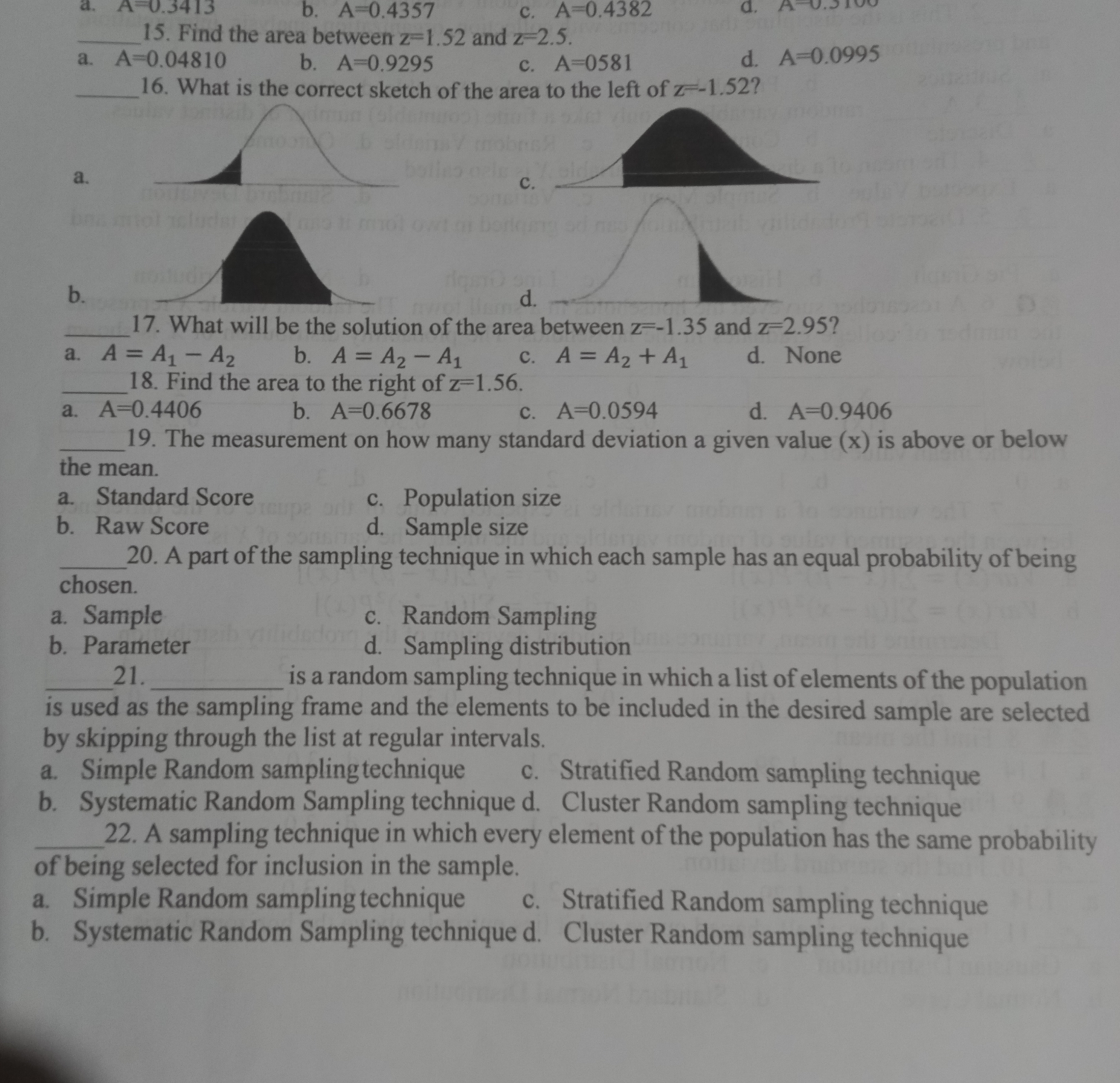
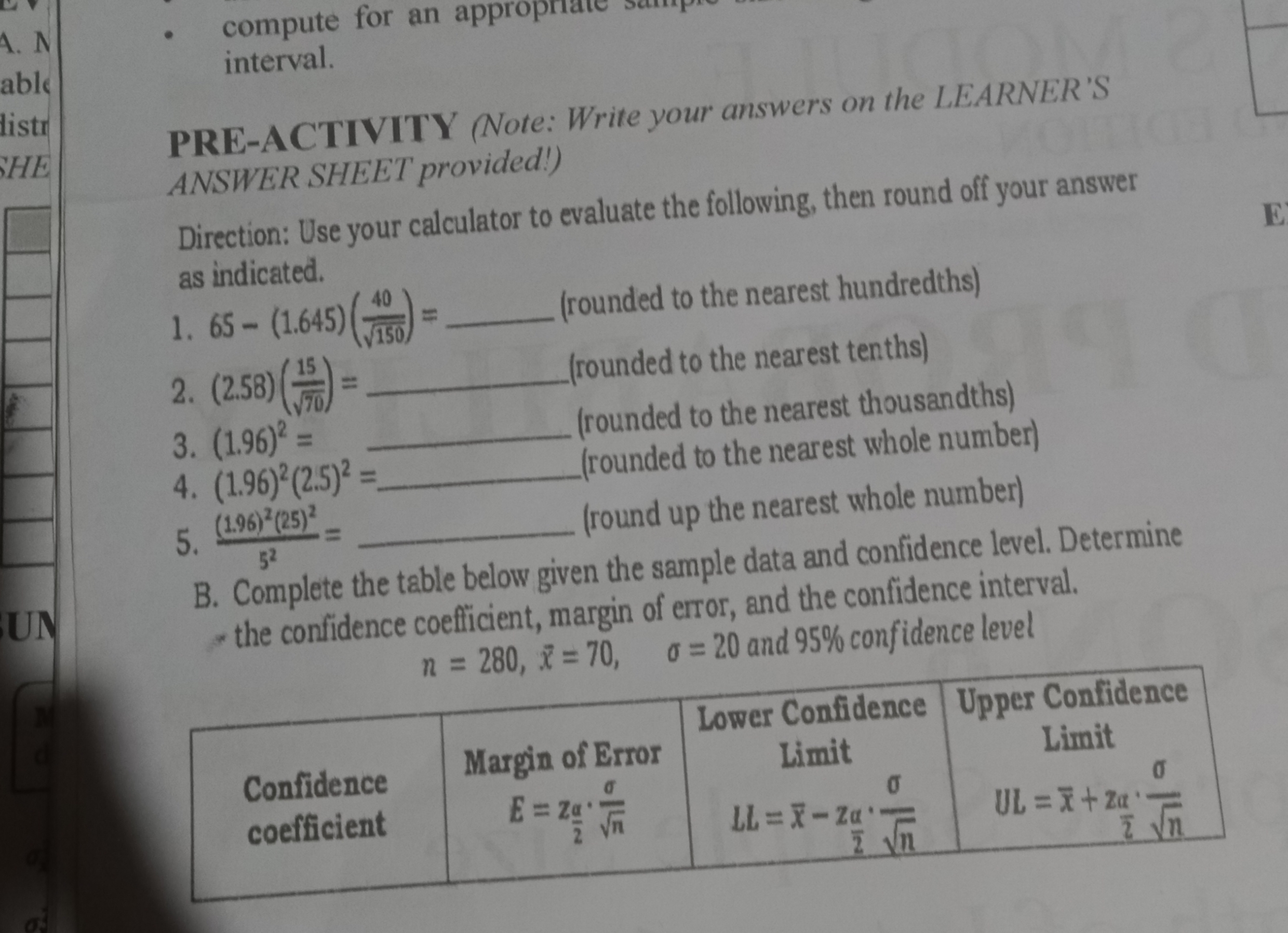
A 0.3413 b. A=0.4357 C. A=0.4382 a. 15. Find the area between z=1.52 and z-2.5. a. A=0.04810 b. A=0.9295 C. A=0581 d. A=0.0995 16. What is the correct sketch of the area to the left of z=-1.52? a b 17. What will be the solution of the area between z--1.35 and z-2.95? a. A = A1 - Az b. A = A2 - A1 C. A = A2 + A1 d. None 18. Find the area to the right of z=1.56. a. A=0.4406 b. A=0.6678 C. A=0.0594 d. A=0.9406 19. The measurement on how many standard deviation a given value (x) is above or below the mean. a. Standard Score c. Population size b. Raw Score d. Sample size 20. A part of the sampling technique in which each sample has an equal probability of being chosen. a. Sample c. Random Sampling b. Parameter d. Sampling distribution 21. is a random sampling technique in which a list of elements of the population is used as the sampling frame and the elements to be included in the desired sample are selected by skipping through the list at regular intervals. a. Simple Random sampling technique c. Stratified Random sampling technique b. Systematic Random Sampling technique d. Cluster Random sampling technique 22. A sampling technique in which every element of the population has the same probability of being selected for inclusion in the sample. a. Simple Random sampling technique c. Stratified Random sampling technique b. Systematic Random Sampling technique d. Cluster Random sampling techniqueA. N compute for an appropriate able interval. listr SHE PRE-ACTIVITY (Note: Write your answers on the LEARNER'S ANSWER SHEET provided!) Direction: Use your calculator to evaluate the following, then round off your answer as indicated. E 1. 65 - (1.645)( 150 (rounded to the nearest hundredths) 2. (2.58) 15 (rounded to the nearest tenths) 3. (1.96) = (rounded to the nearest thousandths) 4. (1.96) 2(2.5) 2 (rounded to the nearest whole number) 5. (1.96)2(25) = (round up the nearest whole number) 52 UN B. Complete the table below given the sample data and confidence level. Determine the confidence coefficient, margin of error, and the confidence interval. n = 280, X = 70, . = 20 and 95% confidence level Lower Confidence Upper Confidence Confidence Margin of Error Limit Limit coefficient E = 20' LL = X - 20 UL = X+ za! - 2 Vn
Step by Step Solution
There are 3 Steps involved in it

Get step-by-step solutions from verified subject matter experts