





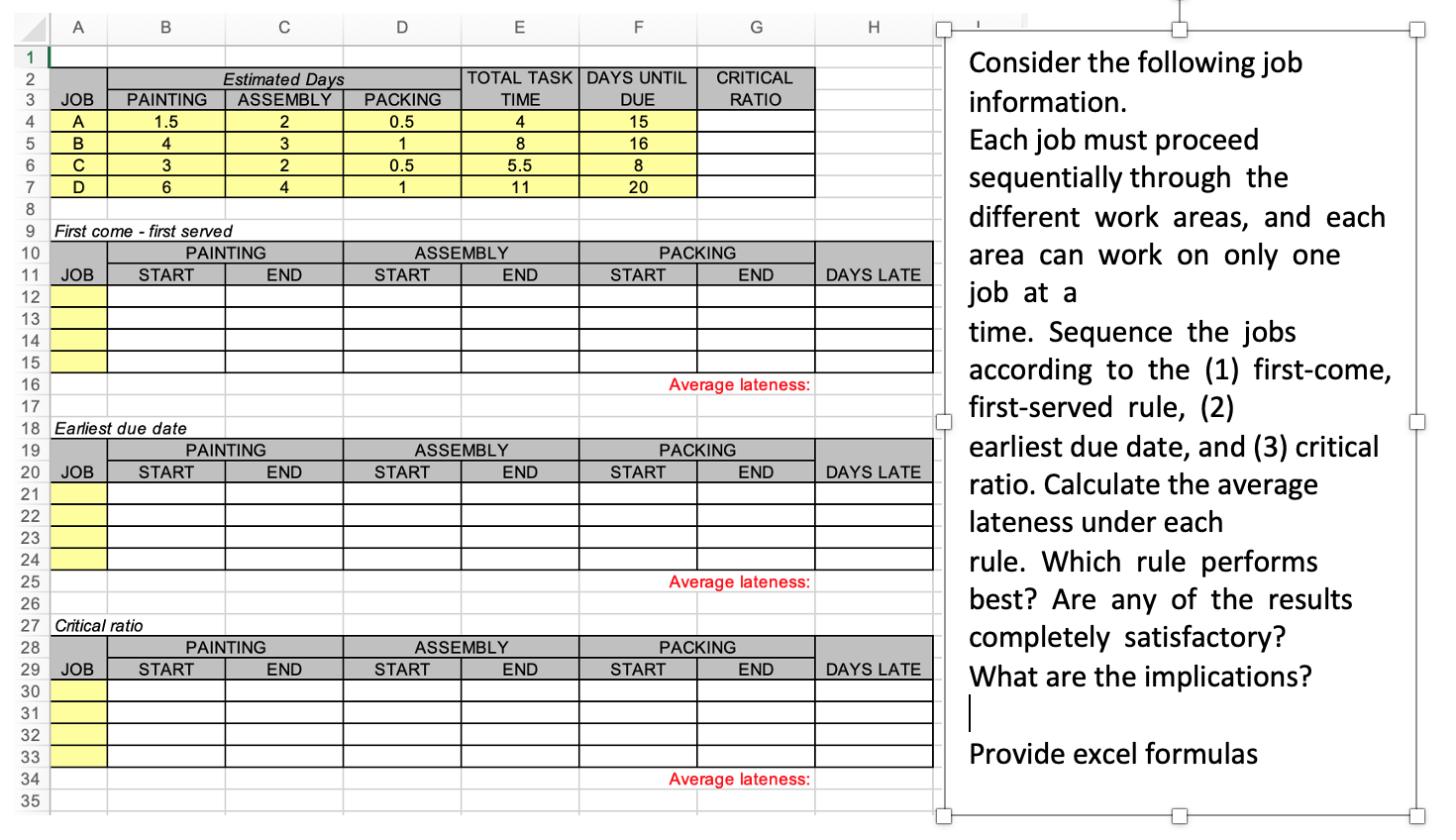
Question: A A 00 B C D E F G H CRITICAL RATIO PACKING 0.5 1 0.5 1 TOTAL TASK DAYS UNTIL TIME DUE 4 15
A A 00 B C D E F G H CRITICAL RATIO PACKING 0.5 1

A A 00 B C D E F G H CRITICAL RATIO PACKING 0.5 1 0.5 1 TOTAL TASK DAYS UNTIL TIME DUE 4 15 8 5.5 8 11 20 16 ASSEMBLY START END PACKING START END DAYS LATE Consider the following job information. Each job must proceed sequentially through the different work areas, and each area can work on only one job at a time. Sequence the jobs according to the (1) first-come, first-served rule, (2) earliest due date, and (3) critical ratio. Calculate the average lateness under each rule. Which rule performs best? Are any of the results completely satisfactory? What are the implications? 1 2. Estimated Days 3 JOB PAINTING ASSEMBLY 4 A 1.5 2 5 B 4 3 6 3 2 7 D 6 4 8 9 First come first served 10 PAINTING 11 START END 12 13 14 15 16 17 18 Earliest due date 19 PAINTING 20 JOB START END 21 22 23 24 25 26 27 Critical ratio 28 PAINTING 29 JOB START END 30 31 32 33 34 35 Average lateness: ASSEMBLY START END PACKING START END DAYS LATE Average lateness: ASSEMBLY START END PACKING START END DAYS LATE Provide excel formulas Average lateness

Step by Step Solution

There are 3 Steps involved in it

1 Expert Approved Answer
Step: 1 Unlock blur-text-image

Question Has Been Solved by an Expert!

Get step-by-step solutions from verified subject matter experts

Step: 2 Unlock
Step: 3 Unlock

Students Have Also Explored These Related General Management Questions!