







Question: (a) Assume a binomial distribution with parameter p: We want to estimate the parameter p which is P(outcome 1). Assume you have a training set
(a) Assume a binomial distribution with parameter p:
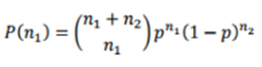
We want to estimate the parameter p which is P(outcome 1). Assume you have a training set of n data points of which n 1 are outcome 1 and n 2 are outcome 2. Derive the maximum likelihood estimator for p given these data.
(b) Recall that the beta distribution is the conjugate prior for the binomial.
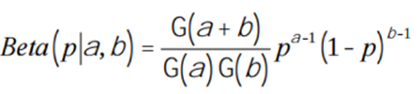
Show that if the prior probability of p follows a beta with parameters (u.[) and the likelihood of p given the data set from (a) follows a binomial, the posterior probability of p given the data set is a beta distribution with parameters (N 1 + ?, N2 + (?)
(c) Given a posterior distribution of p that follows beta(?, (?), derive the expected value of p.
P(n) = (1+2) p (1-p)" G(a+b) a-1 Beta (pla, b) = G(a) G(b) p (1-p)-1
Step by Step Solution
3.41 Rating (151 Votes )
There are 3 Steps involved in it
To solve this problem we need to go through each part systematically a Deriving the Maximum Likeliho... View full answer

Get step-by-step solutions from verified subject matter experts
 Study Help