



Question: A biologist conjectures that there are 10 possible genes which may cause Alzheimer's disease. So she conducted a clinical trial and then performed a hypothesis
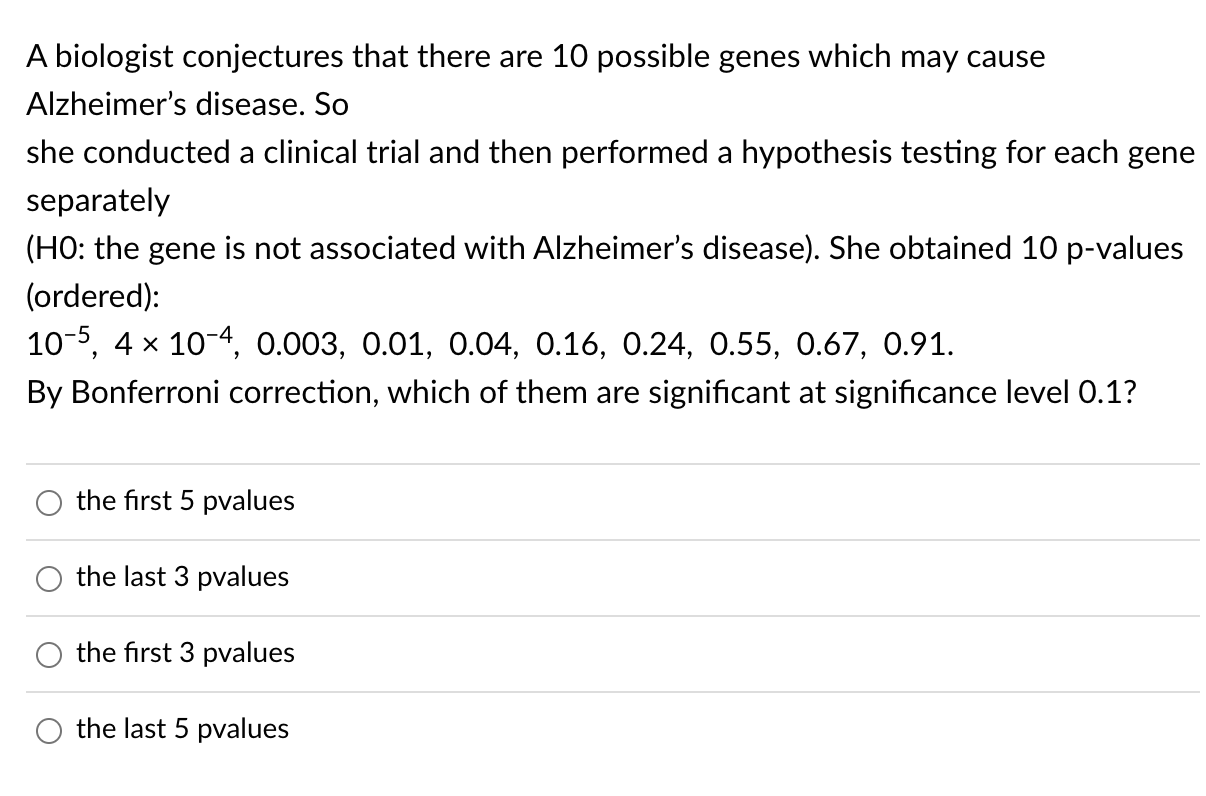
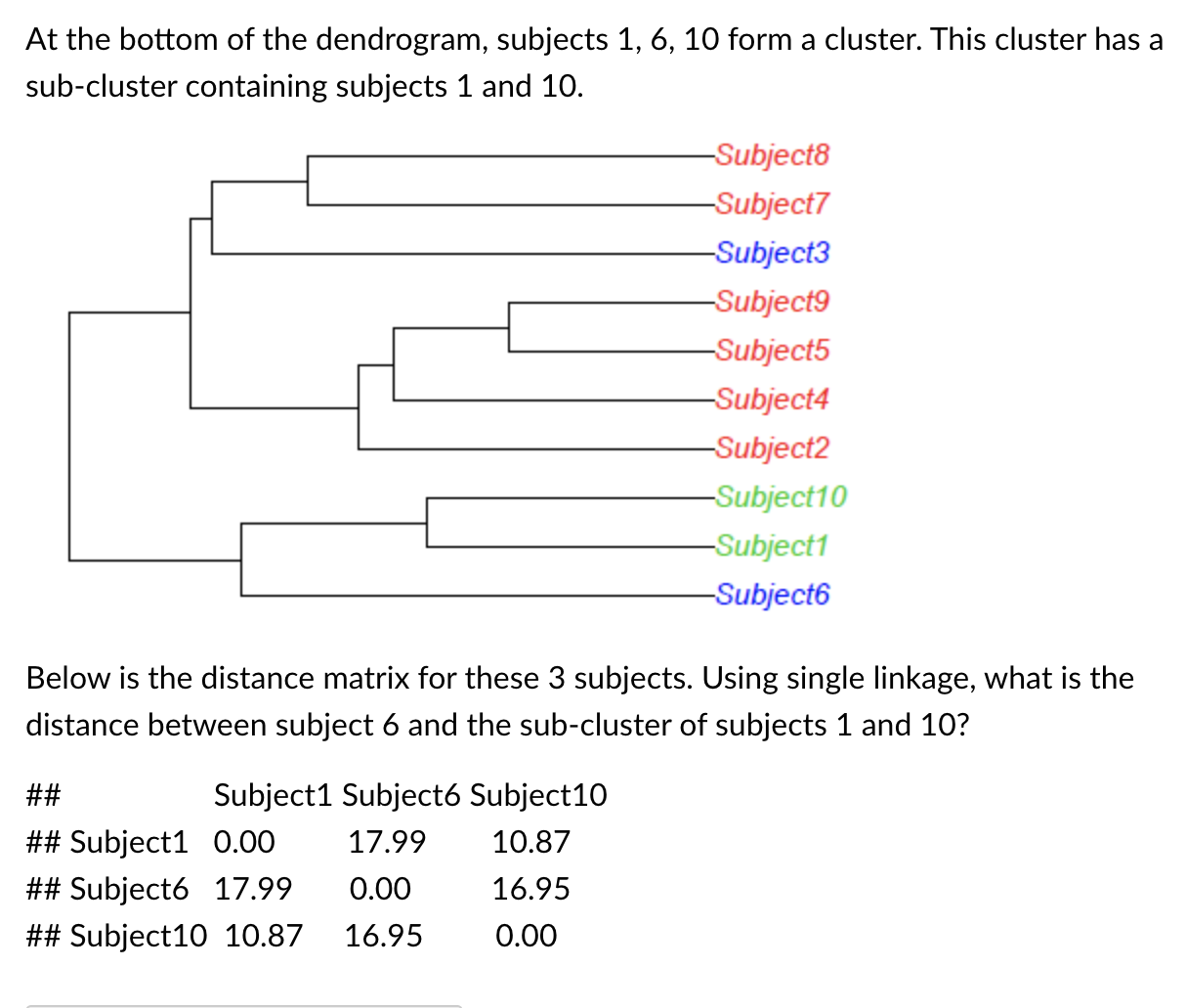

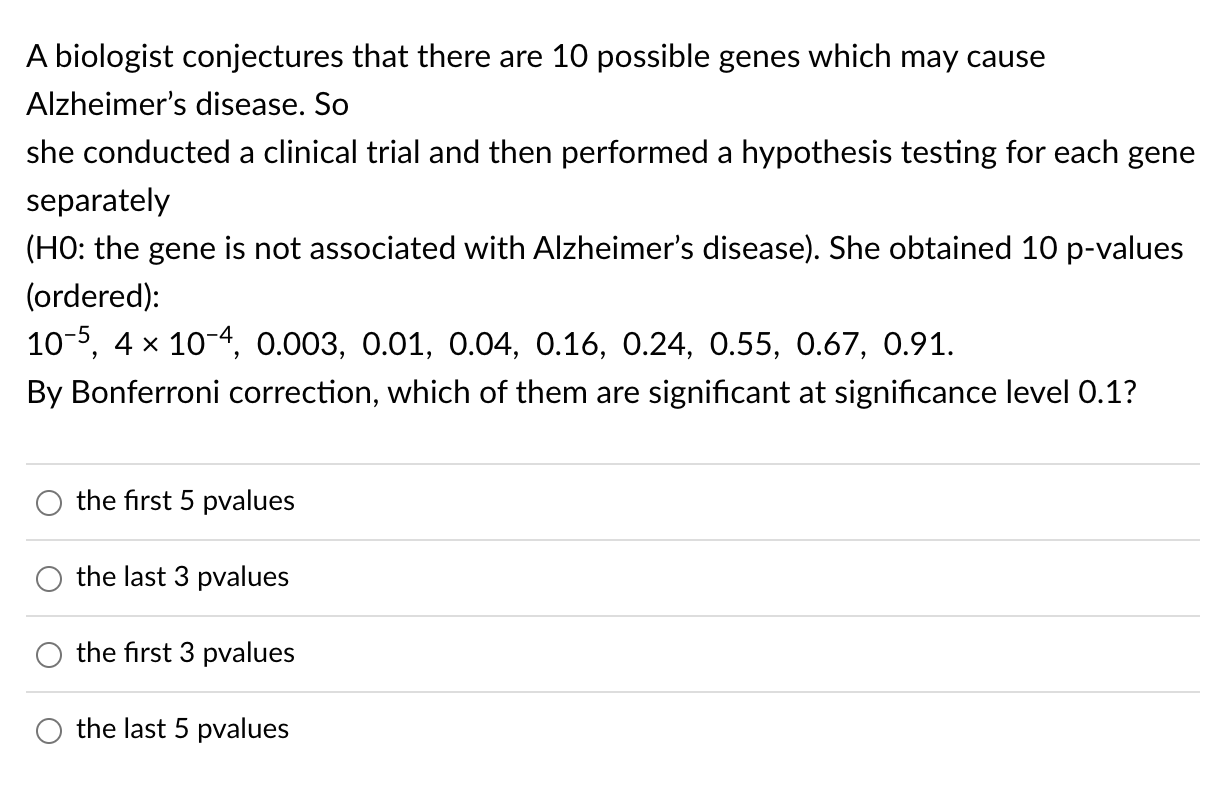
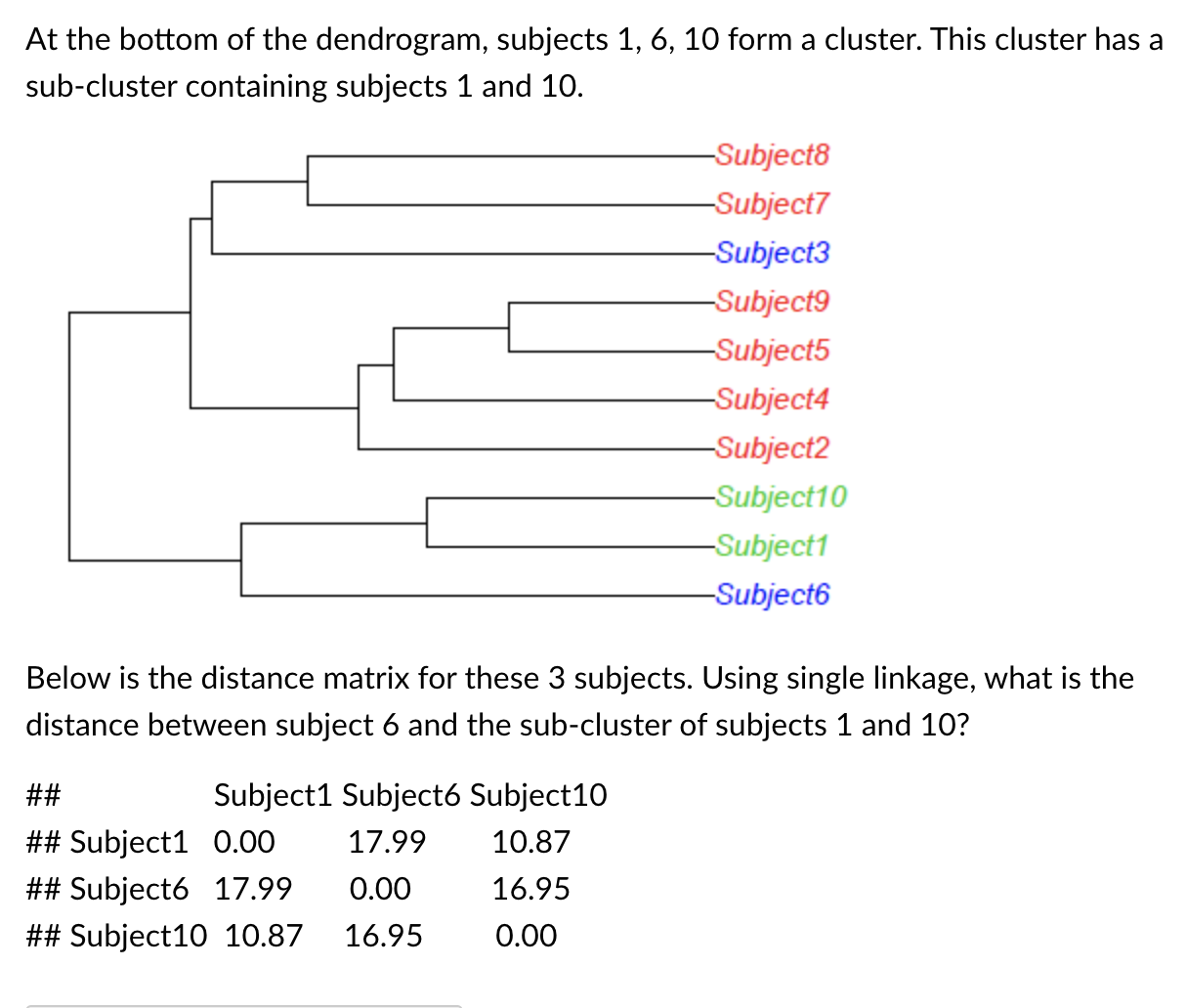

A biologist conjectures that there are 10 possible genes which may cause Alzheimer's disease. So she conducted a clinical trial and then performed a hypothesis testing for each gene separately (HO: the gene is not associated with Alzheimer's disease). She obtained 10 p-values (ordered): 10-5, 4 x 10⁻⁴, 0.003, 0.01, 0.04, 0.16, 0.24, 0.55, 0.67, 0.91. By Bonferroni correction, which of them are significant at significance level 0.1? O the first 5 pvalues O the last 3 pvalues O the first 3 pvalues O the last 5 pvaluesAt the bottom of the dendrogram, subjects 1, 6, 10 form a cluster. This cluster has a sub-cluster containing subjects 1 and 10. Subject8 Subject7 Subject3 Subject9 Subject5 Subject4 Subject2 Subject10 Subject1 Subject6 Below is the distance matrix for these 3 subjects. Using single linkage, what is the distance between subject 6 and the sub-cluster of subjects 1 and 10? # # Subject1 Subject6 Subject10 ## Subject1 0.00 17.99 10.87 ## Subject6 17.99 0.00 16.95 ## Subject10 10.87 16.95 0.00Compute the Jaccard distance between two binary subjects: Subject1 = 01001 Subject2 = 01000
Step by Step Solution
There are 3 Steps involved in it

Get step-by-step solutions from verified subject matter experts