







Question: A body moves on a coordinate line such that it has a position 5 = f(t) = t2 - 8t + 7 on the interval

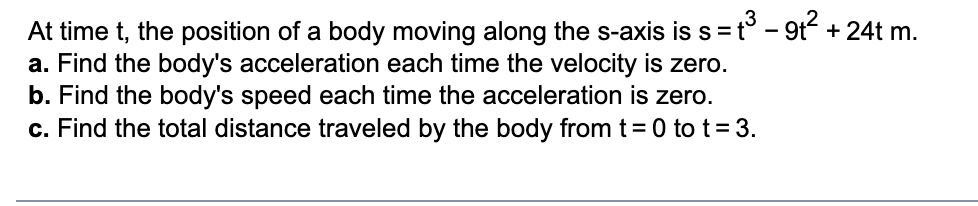


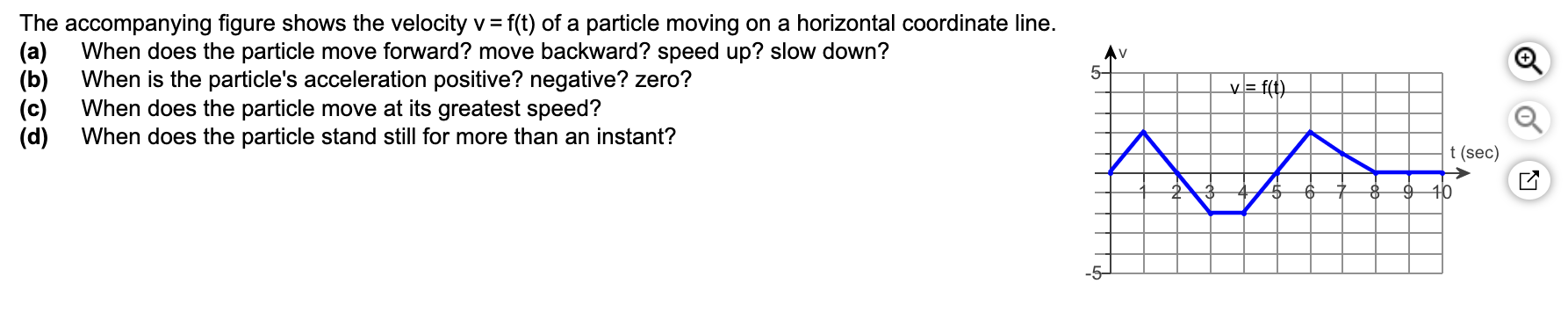


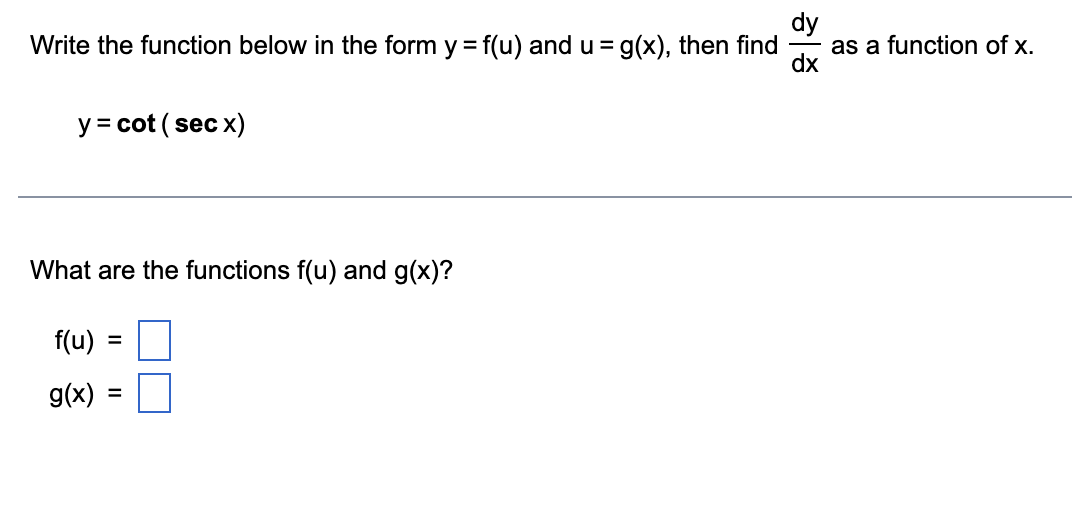
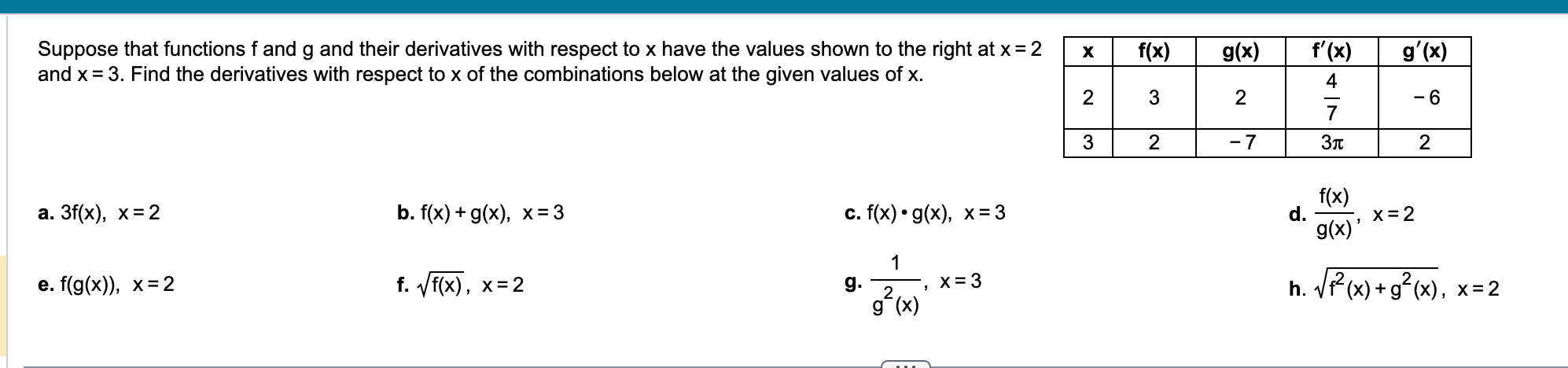


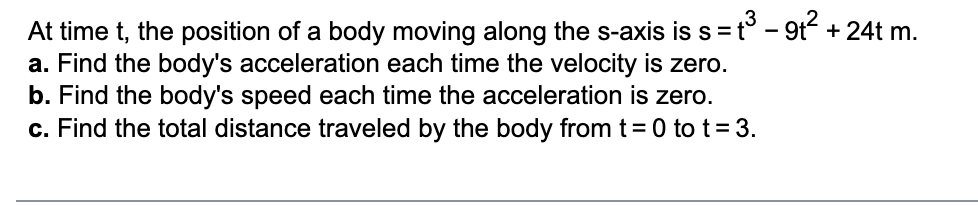


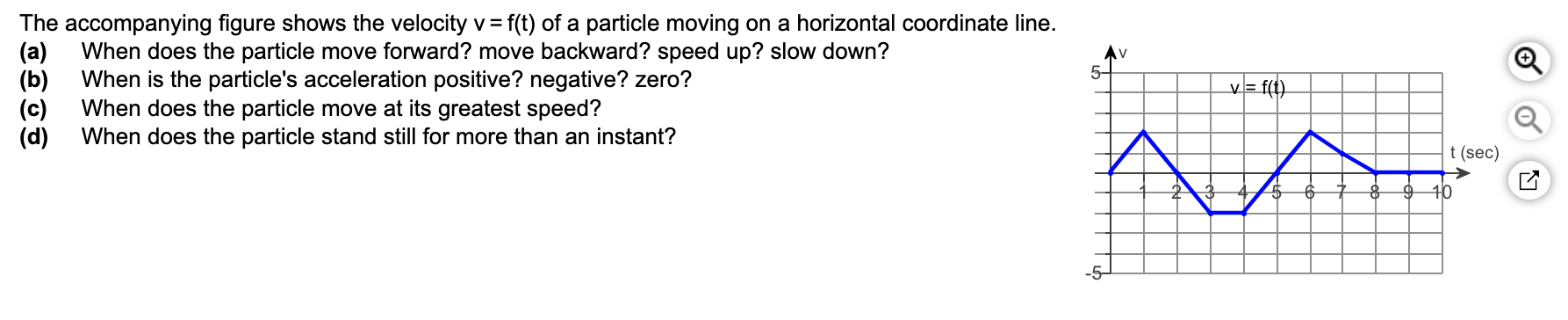


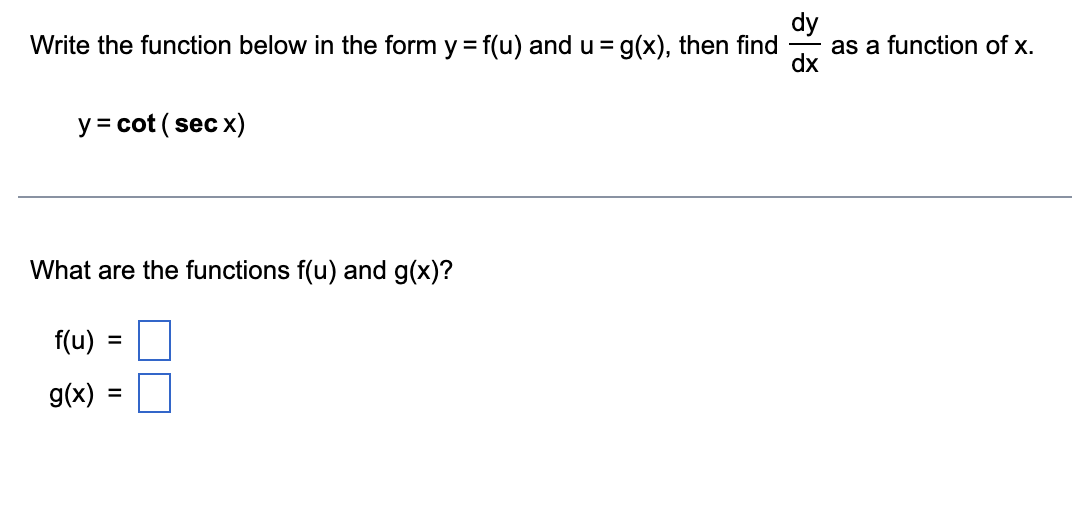
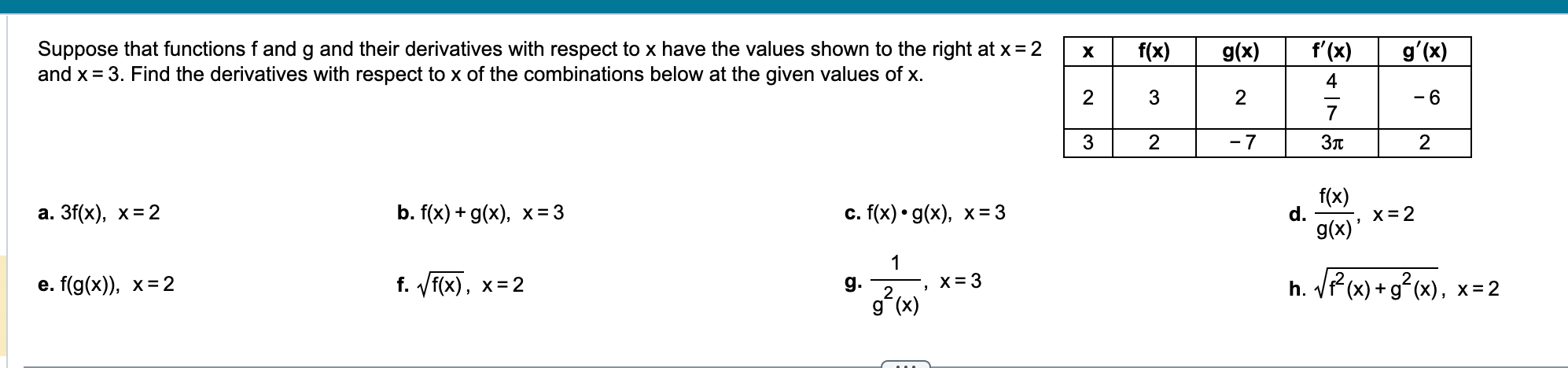

A body moves on a coordinate line such that it has a position 5 = f(t) = t2 - 8t + 7 on the interval 0 5 ts 7, with s in meters and t in seconds. 3. Find the body's displacement and average velocity for the given time interval. b. Find the body's speed and acceleration at the endpoints of the interval. 0. When, if ever. during the interval does the body change direction? At time t, the position of a body moving along the saxis is s = t3 - 'Siit2 + 24t m. a. Find the body's acceleration each time the velocity is zero. b. Find the body's speed each time the acceleration is zero. 0. Find the total distance traveled by the body from t= 0 to t= 3. A rock thrown vertically upward from the surface of the moon at a velocity of 16 mlsec reaches a height of s = 16t 0.8t2 meters in t sec. a. Find the rock's velocity and acceleration at time t. b. How long does it take the rock to reach its highest point? c. How high does the rock go? d. How long does it take the rock to reach half its maximum height? e. How long is the rock aloft? An object is dropped from a tower, 152 ft above the ground. The object's height above ground t sec into the fall is s = 152 - 16t2. a. What is the object's velocity, speed, and acceleration at time t? b. About how long does it take the object to hit the ground? 0. What is the object's velocity at the moment of impact? The accompanying figure shows the velocity v = f(t) of a particle moving on a horizontal coordinate line. (a) When does the particle move forward? move backward? speed up? slow down? v (b) When is the particle's acceleration positive? negative? zero? ' (c) When does the particle move at its greatest speed? (d) When does the particle stand still for more than an instant? Suppose that the dollar cost of producing x appliances is c(x) = 1500 + 130x - 0.4x2. a. Find the average cost per appliance of producing the first 150 appliances. b. Find the marginal cost when 150 appliances are produced. c. Show that the marginal cost when 150 appliances are produced is approximately the cost of producing one more appliance after the rst 150 have been made, by calculating the latter cost directly. TI: The equation below gives the position 5 = f(t) of a body moving on a coordinate line (5 in meters, t in seconds). Find the body's velocity, speed, acceleration, and jerk at time t = 5 sec. s=2-35in t it The velocity of the body at t= E sec is :l m/sec. d Write the function below in the form y = f(u) and u = g(x), then find i as a function of x. y= cot ( sec x) What are the functions f(u) and g(x)? Suppose that functions f and g and their derivatives with respect to x have the values shown to the right at x = 2 and x = 3. Find the derivatives with respect to x of the combinations below at the given values of x. a.3f(x), x=2 b. f(x)+g(x), x=3 c.f(x)-g(x), x=3 1 e-f(g(x)), x=2 Mm, x=2 g. 2 x) 90') f' (X) 9'0) 3 2 - 6 2 - 7 2 d. E X 2 2 The position of a particle moving along a coordinate line is s = 148 + 4t, with s in meters and t in seconds. Find the particle's velocity and acceleration at t = 4 sec
Step by Step Solution
There are 3 Steps involved in it

Get step-by-step solutions from verified subject matter experts
 Study Help