



Question: a . Calculate the enterprise value using the APV method( Enterprise Value = Value of the Unlevered Free Cash Flows for the Planning Period +
a. Calculate the enterprise value using the APV method( Enterprise Value = Value of the Unlevered Free Cash Flows for the Planning Period + Value of the Planning Period Interest Tax Saving + Present Value of the Estimated Terminal Value).
Hints: CAPEX for year t= PP&E for year t-PP&E for year t-1+ Depreciation expense for year t
Changes in NWC for year t= NWC for year tNWC for year t-1
When you measure the terminal value, please use 13% of the WACC.
b. From (a), calculate the value of equity after deducting the value of book debt from enterprise value. Use the market value of equity and book value of debt as weights to compute WACC.
Hints: When you measure the WACC, please use the levered equity cost of capital, 15.28% as the cost of equity.
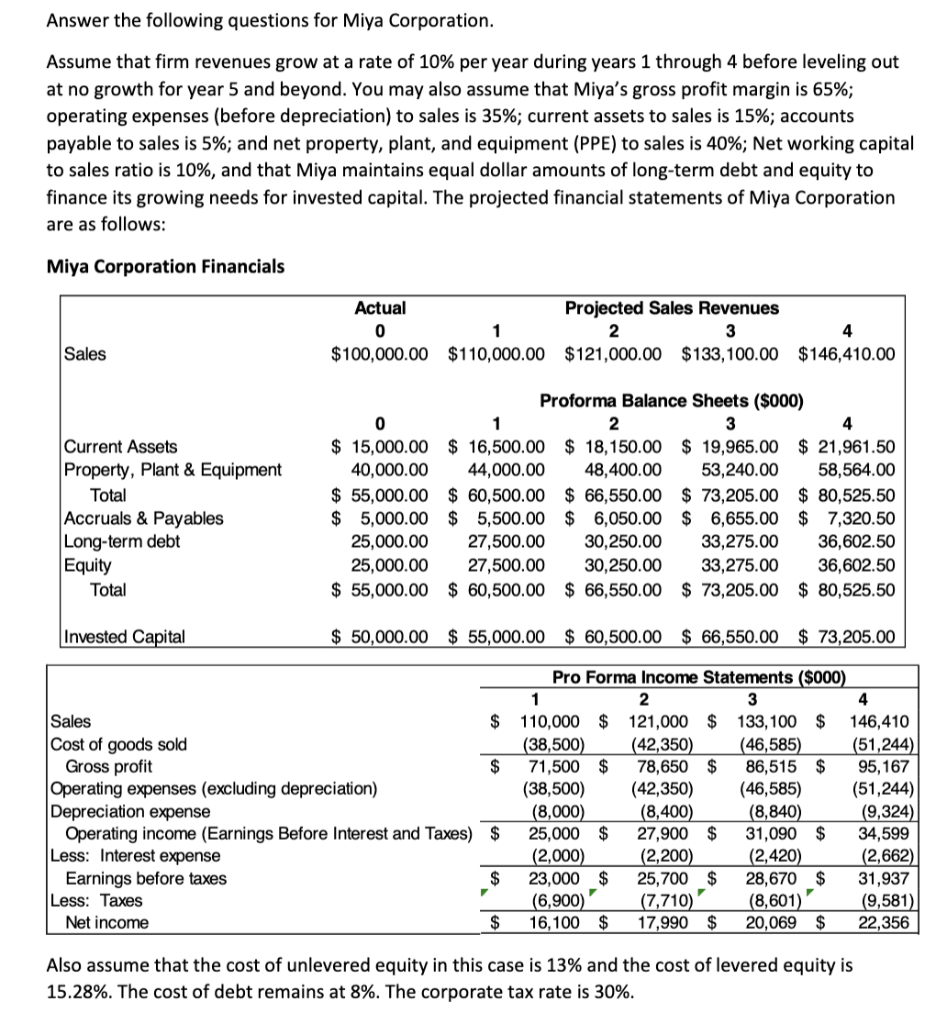
Answer the following questions for Miya Corporation. Assume that firm revenues grow at a rate of 10% per year during years 1 through 4 before leveling out at no growth for year 5 and beyond. You may also assume that Miya's gross profit margin is 65%; operating expenses (before depreciation) to sales is 35%; current assets to sales is 15%; accounts payable to sales is 5%; and net property, plant, and equipment (PPE) to sales is 40%; Net working capital to sales ratio is 10%, and that Miya maintains equal dollar amounts of long-term debt and equity to finance its growing needs for invested capital. The projected financial statements of Miya Corporation are as follows: Miya Corporation Financials Actual Projected Sales Revenues 0 1 2 3 4 $100,000.00 $110,000.00 $121,000.00 $133,100.00 $146,410.00 Sales Current Assets Property, Plant & Equipment Total Accruals & Payables Long-term debt Equity Total Proforma Balance Sheets ($000) 0 1 2 3 4 $ 15,000.00 $ 16,500.00 $ 18,150.00 $ 19,965.00 $ 21,961.50 40,000.00 44,000.00 48,400.00 53,240.00 58,564.00 $ 55,000.00 $ 60,500.00 $ 66,550.00 $ 73,205.00 $ 80,525.50 $ 5,000.00 $ 5,500.00 $ 6,050.00 $ 6,655.00 $ 7,320.50 25,000.00 27,500.00 30,250.00 33,275.00 36,602.50 25,000.00 27,500.00 30,250.00 33,275.00 36,602.50 $ 55,000.00 $ 60,500.00 $ 66,550.00 $ 73,205.00 $ 80,525.50 Invested Capital $ 50,000.00 $ 55,000.00 $ 60,500.00 $ 66,550.00 $ 73,205.00 Pro Forma Income Statements ($000) 1 2 3 4 Sales $ 110,000 $ 121,000 $ 133,100 $ 146,410 Cost of goods sold (38,500) (42,350) (46,585) (51,244) Gross profit $ 71,500 $ 78,650 $ 86,515 $ 95, 167 Operating expenses (excluding depreciation) (38,500) (42,350) (46,585) (51,244) Depreciation expense (8,000) (8,400) (8,840) (9,324) Operating income (Earnings Before Interest and Taxes) $ 25,000 $ 27,900 $ 31,090 $ 34,599 Less: Interest expense (2,000) (2,200) (2,420) (2,662) Earnings before taxes $ 23,000 $ 25,700 $ 28,670 $ 31,937 Less: Taxes (6,900) (7,710) (8,601) (9,581) Net income $ 16,100 $ 17,990 $ 20,069 $ 22,356 Also assume that the cost of unlevered equity in this case is 13% and the cost of levered equity is 15.28%. The cost of debt remains at 8%. The corporate tax rate is 30%. Answer the following questions for Miya Corporation. Assume that firm revenues grow at a rate of 10% per year during years 1 through 4 before leveling out at no growth for year 5 and beyond. You may also assume that Miya's gross profit margin is 65%; operating expenses (before depreciation) to sales is 35%; current assets to sales is 15%; accounts payable to sales is 5%; and net property, plant, and equipment (PPE) to sales is 40%; Net working capital to sales ratio is 10%, and that Miya maintains equal dollar amounts of long-term debt and equity to finance its growing needs for invested capital. The projected financial statements of Miya Corporation are as follows: Miya Corporation Financials Actual Projected Sales Revenues 0 1 2 3 4 $100,000.00 $110,000.00 $121,000.00 $133,100.00 $146,410.00 Sales Current Assets Property, Plant & Equipment Total Accruals & Payables Long-term debt Equity Total Proforma Balance Sheets ($000) 0 1 2 3 4 $ 15,000.00 $ 16,500.00 $ 18,150.00 $ 19,965.00 $ 21,961.50 40,000.00 44,000.00 48,400.00 53,240.00 58,564.00 $ 55,000.00 $ 60,500.00 $ 66,550.00 $ 73,205.00 $ 80,525.50 $ 5,000.00 $ 5,500.00 $ 6,050.00 $ 6,655.00 $ 7,320.50 25,000.00 27,500.00 30,250.00 33,275.00 36,602.50 25,000.00 27,500.00 30,250.00 33,275.00 36,602.50 $ 55,000.00 $ 60,500.00 $ 66,550.00 $ 73,205.00 $ 80,525.50 Invested Capital $ 50,000.00 $ 55,000.00 $ 60,500.00 $ 66,550.00 $ 73,205.00 Pro Forma Income Statements ($000) 1 2 3 4 Sales $ 110,000 $ 121,000 $ 133,100 $ 146,410 Cost of goods sold (38,500) (42,350) (46,585) (51,244) Gross profit $ 71,500 $ 78,650 $ 86,515 $ 95, 167 Operating expenses (excluding depreciation) (38,500) (42,350) (46,585) (51,244) Depreciation expense (8,000) (8,400) (8,840) (9,324) Operating income (Earnings Before Interest and Taxes) $ 25,000 $ 27,900 $ 31,090 $ 34,599 Less: Interest expense (2,000) (2,200) (2,420) (2,662) Earnings before taxes $ 23,000 $ 25,700 $ 28,670 $ 31,937 Less: Taxes (6,900) (7,710) (8,601) (9,581) Net income $ 16,100 $ 17,990 $ 20,069 $ 22,356 Also assume that the cost of unlevered equity in this case is 13% and the cost of levered equity is 15.28%. The cost of debt remains at 8%. The corporate tax rate is 30%
Step by Step Solution
There are 3 Steps involved in it

Get step-by-step solutions from verified subject matter experts