







Question: A company is considering two mutually exclusive machines. Machine A has an up-front cost of $110,000 and produces positive after-tax cash inflows of $40,000 a
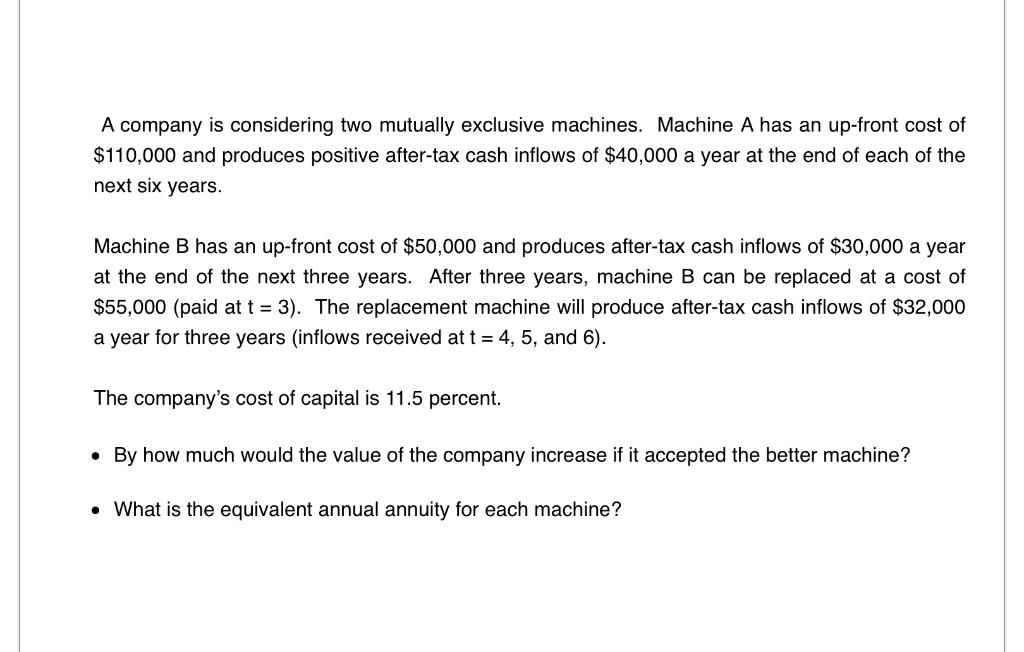
A company is considering two mutually exclusive machines. Machine A has an up-front cost of $110,000 and produces positive after-tax cash inflows of $40,000 a year at the end of each of the next six years. Machine B has an up-front cost of $50,000 and produces after-tax cash inflows of $30,000 a year at the end of the next three years. After three years, machine B can be replaced at a cost of $55,000 (paid at t = 3). The replacement machine will produce after-tax cash inflows of $32,000 a year for three years (inflows received at t = 4, 5, and 6). The company's cost of capital is 11.5 percent. By how much would the value of the company increase if it accepted the better machine? What is the equivalent annual annuity for each machine? A company is considering two mutually exclusive machines. Machine A has an up-front cost of $110,000 and produces positive after-tax cash inflows of $40,000 a year at the end of each of the next six years. Machine B has an up-front cost of $50,000 and produces after-tax cash inflows of $30,000 a year at the end of the next three years. After three years, machine B can be replaced at a cost of $55,000 (paid at t = 3). The replacement machine will produce after-tax cash inflows of $32,000 a year for three years (inflows received at t = 4, 5, and 6). The company's cost of capital is 11.5 percent. By how much would the value of the company increase if it accepted the better machine? What is the equivalent annual annuity for each machine
Step by Step Solution
There are 3 Steps involved in it

Get step-by-step solutions from verified subject matter experts
 Study Help