







Question: a. Construct an expected frequencies crosstaby based on the sample size and the statewide re cycling rate. [4- pts] b. Construct an observed frequencies crosstab,
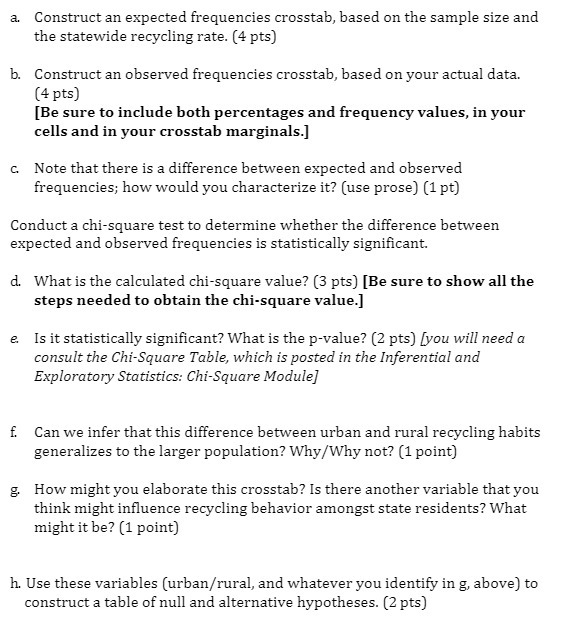
a. Construct an expected frequencies crosstaby based on the sample size and the statewide re cycling rate. [4- pts] b. Construct an observed frequencies crosstab, based on your actual data. [4- eta] [Be sure to include both percentages and frequency values. in your cells and in your crosstab marginals.] c. Note that there is a dierence between expected and observed Frequencies; how would you characterize it? [use prose] {1 pt] Conduct a chi-square test to determine whether the di'erence between expected and observed frequencies is statistically signicant d. What is the calculated chi-square value? [3 pts] [Be sure to show all the steps needed to obtain the chi-square value.] e Is it statistically signicant? What is the p-value? [2 pts] [you will neeeil o consult the ChiSquare Tobie; which is posted in the inferential end Exploratory Statistics: Chi-Square l'l-i'odtrlejr E Can we infer that this dieren ce between urban and rural re cycling habits generalizes to the larger population? \"rhyf'i-Vhy not? [1 point] g, How might you elaborate this crosstab? Is there another variable that you think might inuence re cycling behavior amongst state residents? What might it be? [1 point] h. Use these variables [urbanfruraL and whatever you identify in g, above] to construct a table of null and alternative hypotheses. [2 pts}
Step by Step Solution
There are 3 Steps involved in it

Get step-by-step solutions from verified subject matter experts
 Study Help