







Question: A consumer maximizes an additively separable utility function, V(c1,c2)=u(c1)+1+u(c2), given wealth in period one, W1, and an interest rate, r, where c1 is consumption in
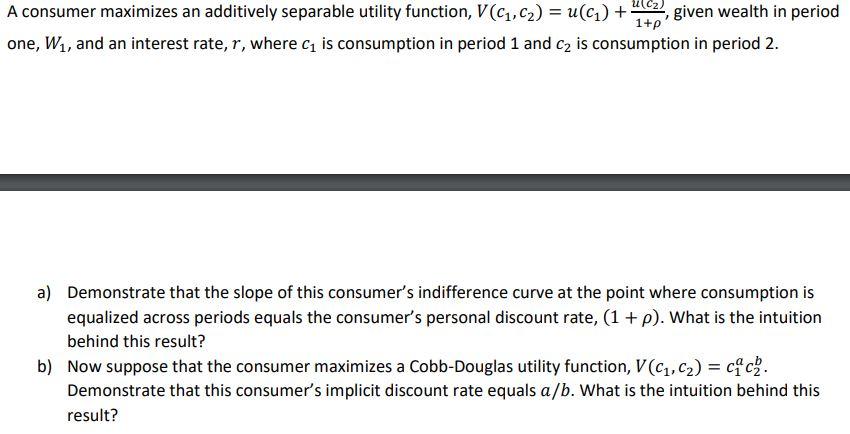
A consumer maximizes an additively separable utility function, V(c1,c2)=u(c1)+1+u(c2), given wealth in period one, W1, and an interest rate, r, where c1 is consumption in period 1 and c2 is consumption in period 2. a) Demonstrate that the slope of this consumer's indifference curve at the point where consumption is equalized across periods equals the consumer's personal discount rate, (1+). What is the intuition behind this result? b) Now suppose that the consumer maximizes a Cobb-Douglas utility function, V(c1,c2)=c1ac2b. Demonstrate that this consumer's implicit discount rate equals a/b. What is the intuition behind this result? A consumer maximizes an additively separable utility function, V(c1,c2)=u(c1)+1+u(c2), given wealth in period one, W1, and an interest rate, r, where c1 is consumption in period 1 and c2 is consumption in period 2. a) Demonstrate that the slope of this consumer's indifference curve at the point where consumption is equalized across periods equals the consumer's personal discount rate, (1+). What is the intuition behind this result? b) Now suppose that the consumer maximizes a Cobb-Douglas utility function, V(c1,c2)=c1ac2b. Demonstrate that this consumer's implicit discount rate equals a/b. What is the intuition behind this result
Step by Step Solution
There are 3 Steps involved in it

Get step-by-step solutions from verified subject matter experts
 Study Help