



Question: A contractor entered into a $6,755,000 subcontract with a subcontractor, who furnished a performance bond of 100% of the subcontract price. After the contractor paid
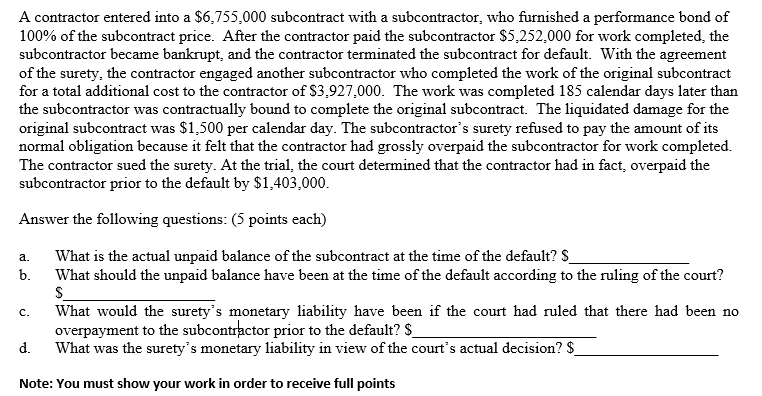
A contractor entered into a $6,755,000 subcontract with a subcontractor, who furnished a performance bond of 100% of the subcontract price. After the contractor paid the subcontractor $5.252.000 for work completed, the subcontractor became bankrupt, and the contractor terminated the subcontract for default. With the agreement of the surety, the contractor engaged another subcontractor who completed the work of the original subcontract for a total additional cost to the contractor of $3.927.000. The work was completed 185 calendar days later than the subcontractor was contractually bound to complete the original subcontract. The liquidated damage for the original subcontract was $1,500 per calendar day. The subcontractor's surety refused to pay the amount of its normal obligation because it felt that the contractor had grossly overpaid the subcontractor for work completed. The contractor sued the surety. At the trial, the court determined that the contractor had in fact, overpaid the subcontractor prior to the default by $1,403,000. a. Answer the following questions: (5 points each) What is the actual unpaid balance of the subcontract at the time of the default? S b. What should the unpaid balance have been at the time of the default according to the ruling of the court? S What would the surety's monetary liability have been if the court had ruled that there had been no overpayment to the subcontractor prior to the default? $_ d. What was the surety's monetary liability in view of the court's actual decision? $ C. Note: You must show your work in order to receive full points A contractor entered into a $6,755,000 subcontract with a subcontractor, who furnished a performance bond of 100% of the subcontract price. After the contractor paid the subcontractor $5.252.000 for work completed, the subcontractor became bankrupt, and the contractor terminated the subcontract for default. With the agreement of the surety, the contractor engaged another subcontractor who completed the work of the original subcontract for a total additional cost to the contractor of $3.927.000. The work was completed 185 calendar days later than the subcontractor was contractually bound to complete the original subcontract. The liquidated damage for the original subcontract was $1,500 per calendar day. The subcontractor's surety refused to pay the amount of its normal obligation because it felt that the contractor had grossly overpaid the subcontractor for work completed. The contractor sued the surety. At the trial, the court determined that the contractor had in fact, overpaid the subcontractor prior to the default by $1,403,000. a. Answer the following questions: (5 points each) What is the actual unpaid balance of the subcontract at the time of the default? S b. What should the unpaid balance have been at the time of the default according to the ruling of the court? S What would the surety's monetary liability have been if the court had ruled that there had been no overpayment to the subcontractor prior to the default? $_ d. What was the surety's monetary liability in view of the court's actual decision? $ C. Note: You must show your work in order to receive full points
Step by Step Solution
There are 3 Steps involved in it

Get step-by-step solutions from verified subject matter experts