







Question: A data type defines a collection of data values and a set of predefined operations on those values. True False QUESTION 2 A (variable) is
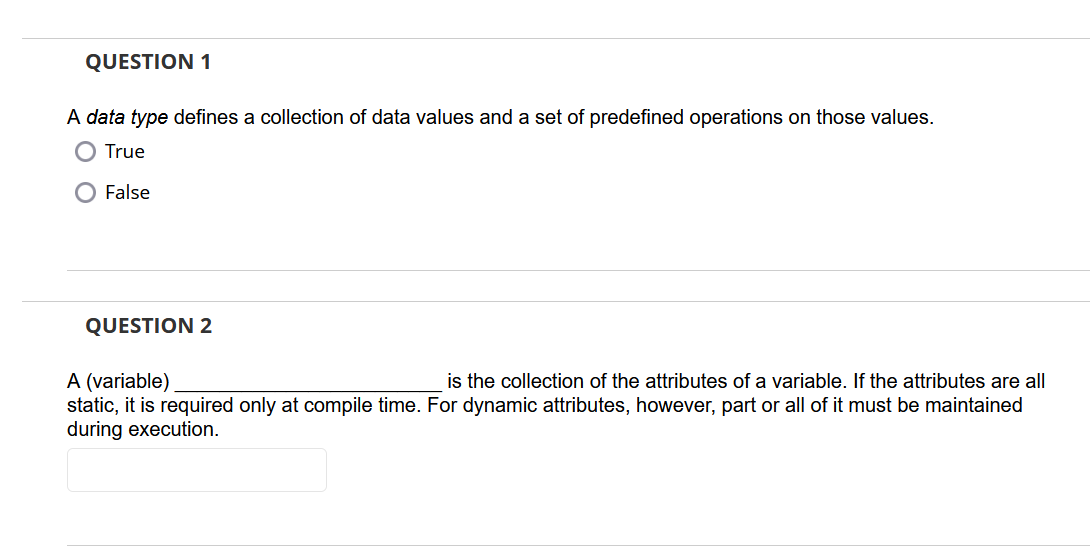
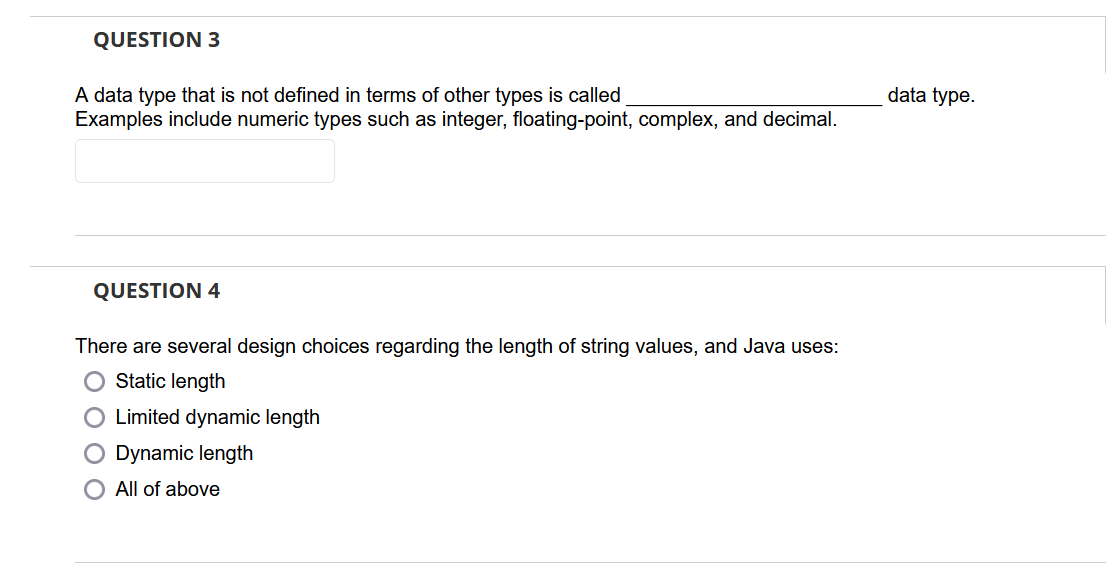
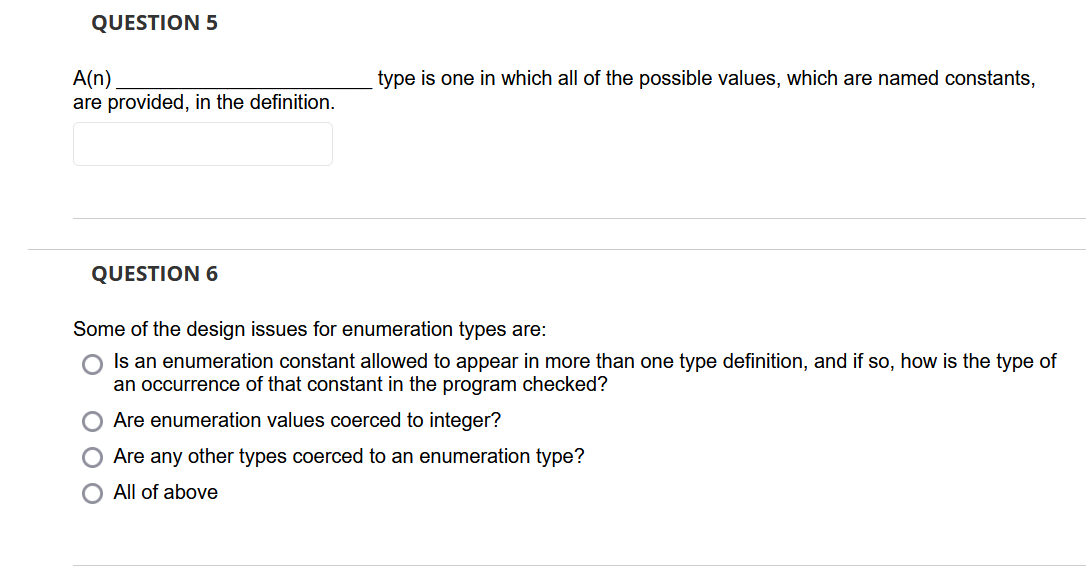
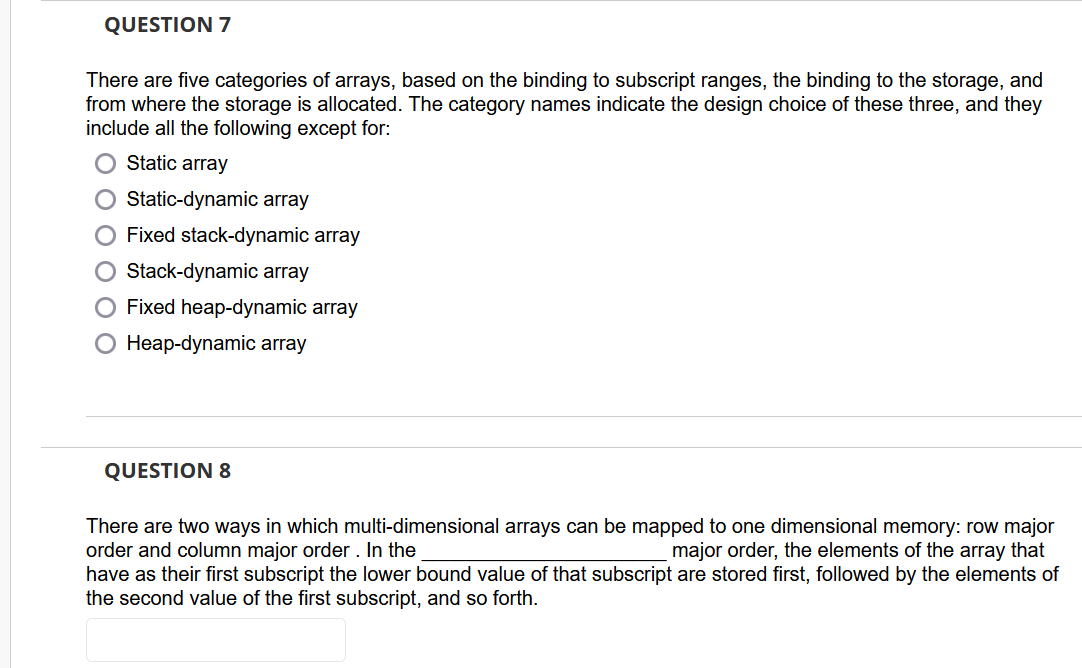
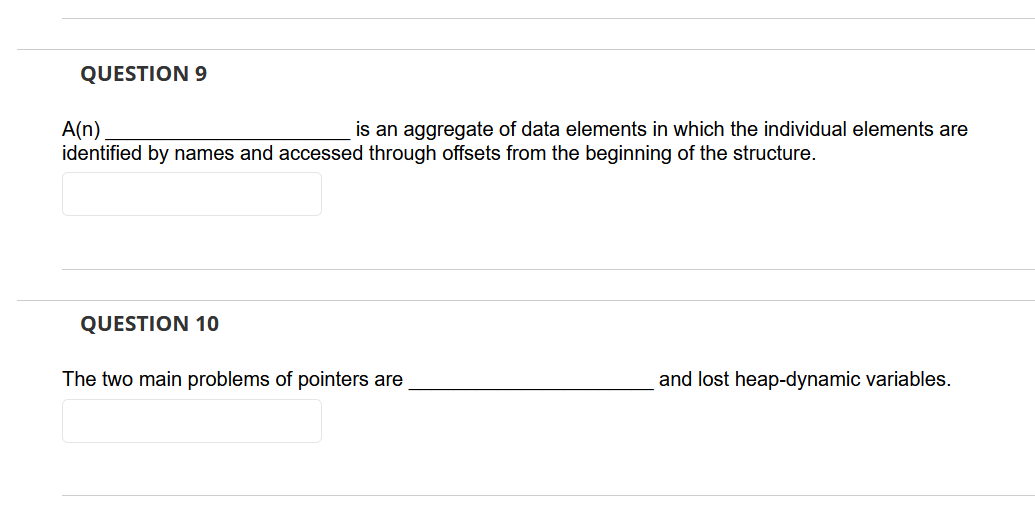
A data type defines a collection of data values and a set of predefined operations on those values. True False QUESTION 2 A (variable) is the collection of the attributes of a variable. If the attributes are all static, it is required only at compile time. For dynamic attributes, however, part or all of it must be maintained during execution. A data type that is not defined in terms of other types is called data type. Examples include numeric types such as integer, floating-point, complex, and decimal. QUESTION 4 There are several design choices regarding the length of string values, and Java uses: Static length Limited dynamic length Dynamic length All of above A(n) - type is one in which all of the possible values, which are named constants, are provided, in the definition. QUESTION 6 Some of the design issues for enumeration types are: Is an enumeration constant allowed to appear in more than one type definition, and if so, how is the type of an occurrence of that constant in the program checked? Are enumeration values coerced to integer? Are any other types coerced to an enumeration type? All of above There are five categories of arrays, based on the binding to subscript ranges, the binding to the storage, and from where the storage is allocated. The category names indicate the design choice of these three, and they include all the following except for: Static array Static-dynamic array Fixed stack-dynamic array Stack-dynamic array Fixed heap-dynamic array Heap-dynamic array QUESTION 8 There are two ways in which multi-dimensional arrays can be mapped to one dimensional memory: row major order and column major order. In the __ major order, the elements of the array that have as their first subscript the lower bound value of that subscript are stored first, followed by the elements of the second value of the first subscript, and so forth. A(n) is an aggregate of data elements in which the individual elements are identified by names and accessed through offsets from the beginning of the structure. QUESTION 10 The two main problems of pointers are and lost heap-dynamic variables
Step by Step Solution
There are 3 Steps involved in it

Get step-by-step solutions from verified subject matter experts
 Study Help