



Question: A Desktop Calculator Emulator Create a b Longlnteger that represents a single long integer value in decimal (base 10). The class should have methods that
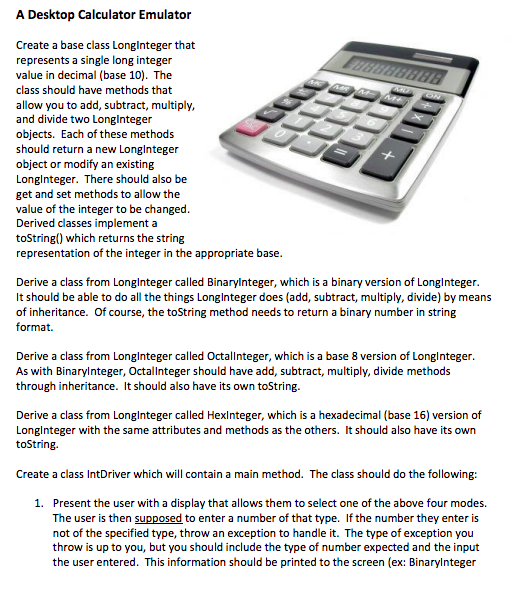
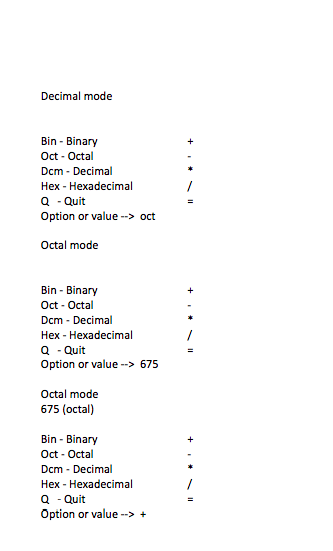
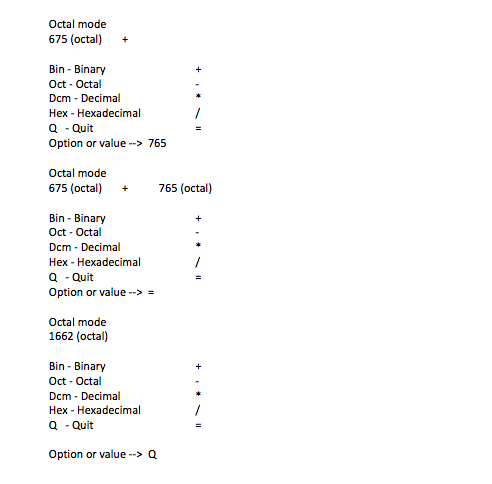
A Desktop Calculator Emulator Create a b Longlnteger that represents a single long integer value in decimal (base 10). The class should have methods that allow you to add, subtract, multiply and divide two Longlnteger objects. Each of these methods should return a new Longlnteger object or modify an existing Longlnteger. There should also be get and set methods to allow the value of the integer to be changed Derived classes implement a toString() which returns the string representation of the integer in the appropriate base Derive a class from Longlnteger called Binarylnteger, which is a binary version of Longlnteger It should be able to do all the things Longlnteger does (add, subtract, multiply, divide) by means of inheritance. Of course, the toString method needs to return a binary number in string format. Derive a class from Longlnteger called Octallnteger, which is a base 8 version of Longlnteger As with Binarylnteger, Octallnteger should have add, subtract, multiply, divide methods through inheritance. It should also have its own toString Derive a class from Longlnteger called HexInteger, which is a hexadecimal (base 16) version of Longlnteger with the same attributes and methods as the others. It should also have its own toString. Create a class IntDriver which will contain a main method. The class should do the following: 1. Present the user with a display that allows them to select one of the above four modes The user is then supposed to enter a number of that type. If the number they enter is not of the specified type, throw an exception to handle it. The type of exception you throw is up to you, but you should include the type of number expected and the input the user entered. This information should be printed to the screen (ex: Binarylnteger A Desktop Calculator Emulator Create a b Longlnteger that represents a single long integer value in decimal (base 10). The class should have methods that allow you to add, subtract, multiply and divide two Longlnteger objects. Each of these methods should return a new Longlnteger object or modify an existing Longlnteger. There should also be get and set methods to allow the value of the integer to be changed Derived classes implement a toString() which returns the string representation of the integer in the appropriate base Derive a class from Longlnteger called Binarylnteger, which is a binary version of Longlnteger It should be able to do all the things Longlnteger does (add, subtract, multiply, divide) by means of inheritance. Of course, the toString method needs to return a binary number in string format. Derive a class from Longlnteger called Octallnteger, which is a base 8 version of Longlnteger As with Binarylnteger, Octallnteger should have add, subtract, multiply, divide methods through inheritance. It should also have its own toString Derive a class from Longlnteger called HexInteger, which is a hexadecimal (base 16) version of Longlnteger with the same attributes and methods as the others. It should also have its own toString. Create a class IntDriver which will contain a main method. The class should do the following: 1. Present the user with a display that allows them to select one of the above four modes The user is then supposed to enter a number of that type. If the number they enter is not of the specified type, throw an exception to handle it. The type of exception you throw is up to you, but you should include the type of number expected and the input the user entered. This information should be printed to the screen (ex: Binarylnteger
Step by Step Solution
There are 3 Steps involved in it

Get step-by-step solutions from verified subject matter experts